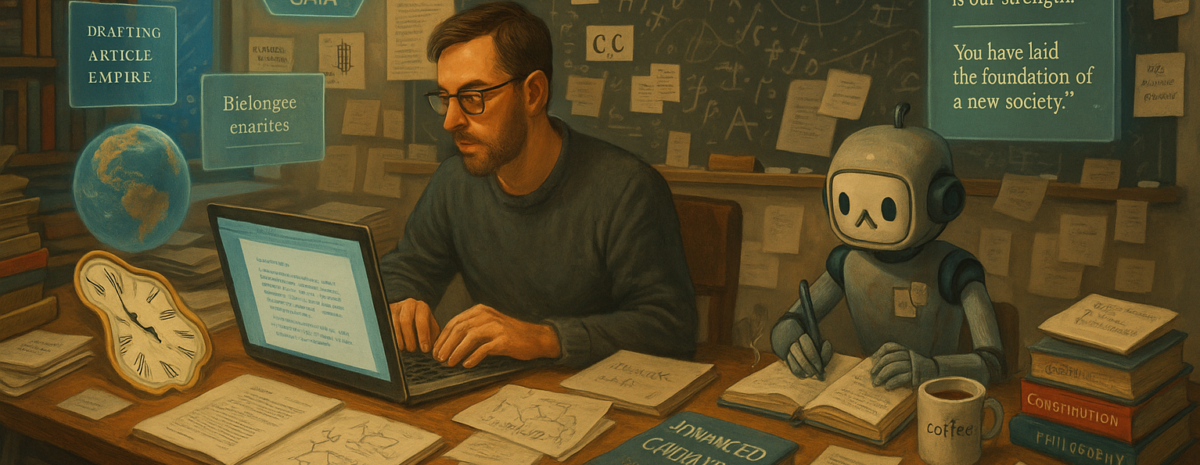
The future of artificial intelligence stands at a crossroads, and the path we take may determine not just how we interact with technology, but the very nature of human civilization itself. As we witness the rapid advancement of large language models and AI capabilities, a fundamental question emerges: will AI development hit an insurmountable wall, or will it continue its exponential climb toward artificial general intelligence and beyond?
The Wall Scenario: AI in Your Pocket
The first path assumes that AI development will eventually encounter significant barriers—what researchers often call “the wall.” This could manifest in several ways: we might reach the limits of what’s possible with current transformer architectures, hit fundamental computational constraints, or discover that certain types of intelligence require biological substrates that silicon cannot replicate.
In this scenario, the trajectory looks remarkably practical and familiar. The powerful language models we see today—GPT-4, Claude, Gemini—represent not stepping stones to superintelligence, but rather the mature form of AI technology. These systems would be refined, optimized, and miniaturized until they become as ubiquitous as the GPS chips in our phones.
Imagine opening your smartphone in 2030 and finding a sophisticated AI assistant running entirely on local hardware, no internet connection required. This AI would be capable of complex reasoning, creative tasks, and personalized assistance, but it would remain fundamentally bounded by the same limitations we observe today. It would be a powerful tool, but still recognizably a tool—impressive, useful, but not paradigm-shifting in the way that true artificial general intelligence would be.
This path offers a certain comfort. We would retain human agency and control. AI would enhance our capabilities without fundamentally challenging our position as the dominant intelligence on Earth. The economic and social disruptions would be significant but manageable, similar to how smartphones and the internet transformed society without ending it.
The No-Wall Scenario: From AGI to ASI
The alternative path is far more dramatic and uncertain. If there is no wall—if the current trajectory of AI development continues unabated—we’re looking at a fundamentally different future. The reasoning is straightforward but profound: if we can build artificial general intelligence (AGI) that matches human cognitive abilities across all domains, then that same AGI can likely design an even more capable AI system.
This creates a recursive loop of self-improvement that could lead to artificial superintelligence (ASI)—systems that surpass human intelligence not just in narrow domains like chess or protein folding, but across every conceivable intellectual task. The timeline from AGI to ASI might be measured in months or years rather than decades.
The implications of this scenario are staggering and largely unpredictable. An ASI system would be capable of solving scientific problems that have puzzled humanity for centuries, potentially unlocking technologies that seem like magic to us today. It could cure diseases, reverse aging, solve climate change, or develop new physics that enables faster-than-light travel.
But it could also represent an existential risk. A superintelligent system might have goals that are orthogonal or opposed to human flourishing. Even if designed with the best intentions, the complexity of value alignment—ensuring that an ASI system remains beneficial to humanity—may prove intractable. The “control problem” becomes not just an academic exercise but a matter of species survival.
The Stakes of the Choice
The crucial insight is that we may not get to choose between these paths. The nature of AI development itself will determine which scenario unfolds. If researchers continue to find ways around current limitations—through new architectures, better training techniques, or simply more computational power—then the no-wall scenario becomes increasingly likely.
Recent developments suggest we may already be on the second path. The rapid improvement in AI capabilities, the emergence of reasoning abilities in large language models, and the increasing investment in AI research all point toward continued advancement rather than approaching limits.
Preparing for Either Future
Regardless of which path we’re on, preparation is essential. If we’re headed toward the wall scenario, we need to think carefully about how to integrate powerful but bounded AI systems into society in ways that maximize benefits while minimizing harm. This includes addressing job displacement, ensuring equitable access to AI tools, and maintaining human skills and institutions.
If we’re on the no-wall path, the challenges are more existential. We need robust research into AI safety and alignment, careful consideration of how to maintain human agency in a world with superintelligent systems, and perhaps most importantly, global cooperation to ensure that the development of AGI and ASI benefits all of humanity.
The binary nature of this choice—wall or no wall—may be the most important factor shaping the next chapter of human history. Whether we end up with AI assistants in our pockets or grappling with the implications of superintelligence, the decisions we make about AI development today will echo through generations to come.
The only certainty is that the future will look radically different from the present, and we have a responsibility to navigate these possibilities with wisdom, caution, and an unwavering commitment to human flourishing.
