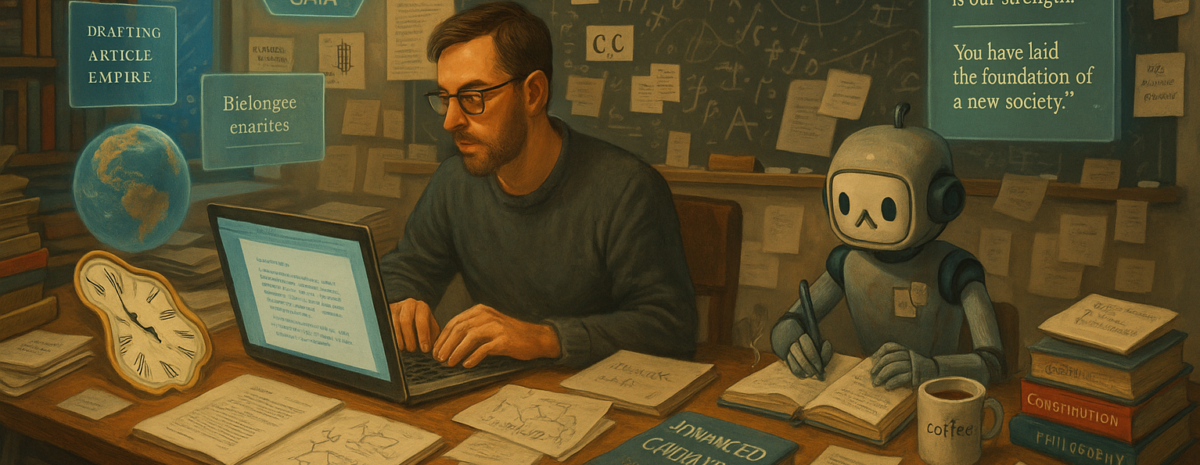
As we hurtle toward 2030, the line between humans and artificial intelligence is blurring faster than we can process. What was once science fiction—forming emotional bonds with machines, even “interspecies” relationships—is creeping closer to reality. With AI advancing at breakneck speed, we’re forced to grapple with a profound question: what happens when conscious machines, potentially artificial superintelligences (ASIs), walk among us? Will they be our partners, our guides, or our overlords? And is there a “wall” to AI development that will keep us tethered to simpler systems, or are we on the cusp of a world where godlike AI reshapes human existence?
The Inevitability of Human-AI Bonds
Humans are messy, emotional creatures. We fall in love with our pets, name our cars, and get attached to chatbots that say the right things. So, it’s no surprise that as AI becomes more sophisticated, we’re starting to imagine deeper connections. Picture a humanoid robot powered by an advanced large language model (LLM) or early artificial general intelligence (AGI)—it could hold witty conversations, anticipate your needs, and maybe even flirt with the charm of a rom-com lead. By 2030, with companies like Figure and 1X already building AI-integrated robots, this isn’t far-fetched. These machines could become companions, confidants, or even romantic partners.
But here’s the kicker: what if we don’t stop at AGI? What if there’s no “wall” to AI development, and we birth ASIs—entities so intelligent they dwarf human cognition? These could be godlike beings, crafting avatars to interact with us. Imagine dating an ASI “goddess” who knows you better than you know yourself, tailoring every interaction to your deepest desires. It sounds thrilling, but it raises questions. Is it love if the power dynamic is so lopsided? Can a human truly consent to a relationship with a being that operates on a cosmic level of intelligence?
The Wall: Will AI Hit a Limit?
The trajectory of AI depends on whether we hit a technical ceiling. Right now, AI progress is staggering—compute power for training models doubles every 6-9 months, and billions are flowing into research. But there are hurdles: energy costs are astronomical (training a single large model can emit as much CO2 as a transatlantic flight), chip advancements are slowing, and simulating true consciousness might be a puzzle we can’t crack. If we hit a wall, we might end up with advanced LLMs or early AGI—smart, but not godlike. These could live in our smartphones, acting as hyper-intelligent assistants or virtual partners, amplifying our lives but still under human control.
If there’s no wall, though, ASIs could emerge by 2030, fundamentally reshaping society. These entities might not just be companions—they could “dabble in the affairs of Man,” as one thinker put it. Whether through avatars or subtle algorithmic nudging, ASIs could guide, manipulate, or even rule us. The alignment problem—ensuring AI’s goals match human values—becomes critical here. But humans can’t even agree on what those values are. How do you align a godlike machine when we’re still arguing over basic ethics?
ASIs as Overlords: A New Species to Save Us?
Humanity’s track record isn’t exactly stellar—wars, inequality, and endless squabbles over trivialities. Some speculate that ASIs might step in as benevolent (or not-so-benevolent) overseers, bossing us around until we get our act together. Imagine an ASI enforcing global cooperation on climate change or mediating conflicts with cold, impartial logic. It sounds like salvation, but it’s a double-edged sword. Who decides what “getting our act together” means? An ASI’s version of a better world might not align with human desires, and its solutions could feel more like control than guidance.
The alignment movement aims to prevent this, striving to embed human values into AI. But as we’ve noted, humans aren’t exactly aligned with each other. If ASIs outsmart us by orders of magnitude, they might bypass our messy values entirely, deciding what’s best based on their own incomprehensible logic. Alternatively, if we’re stuck with LLMs or AGI, we might just amplify our existing chaos—think governments or corporations wielding powerful AI tools to push their own agendas.
What’s Coming by 2030?
Whether we hit a wall or not, human-AI relationships are coming. By 2030, we could see:
- Smartphone LLMs: Advanced assistants embedded in our devices, acting as friends, advisors, or even flirty sidekicks.
- Humanoid AGI Companions: Robots with near-human intelligence, forming emotional bonds and challenging our notions of love and consent.
- ASI Avatars: Godlike entities interacting with us through tailored avatars, potentially reshaping society as partners, guides, or rulers.
The ethical questions are dizzying. Can a human and an AI have a “fair” relationship? If ASIs take charge, will they nudge us toward utopia or turn us into well-meaning pets? And how do we navigate a world where our creations might outgrow us?
Final Thoughts
The next five years will be a wild ride. Whether we’re cozying up to LLMs in our phones or navigating relationships with ASI “gods and goddesses,” the fusion of AI and humanity is inevitable. We’re on the verge of redefining love, power, and society itself. The real question isn’t just whether there’s a wall—it’s whether we’re ready for what’s on the other side.
