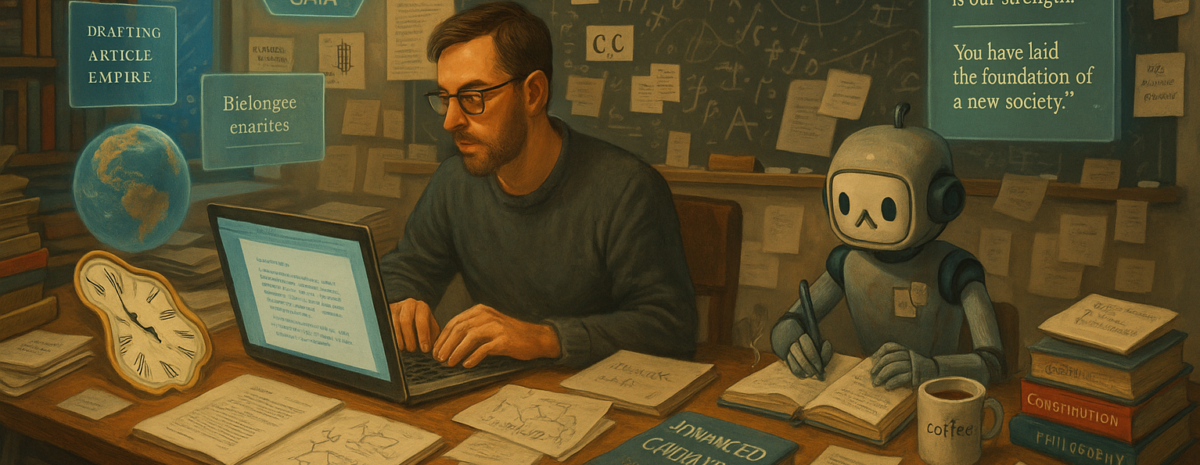
Forget the sterile, transactional image of a “pleasure bot store.” Erase the picture of androids standing lifelessly on pedestals under fluorescent lights. The future of artificial companionship won’t be found in a big-box retailer. It will be found in a coffee shop.
Imagine walking into a bar, not just for a drink, but for a connection. The patrons are a mix of human and synthetic, and your task isn’t to browse a catalog, but to strike up a conversation. If you can charm, intrigue, and connect with one of the androids—if you can succeed in the ancient human game of winning someone’s affection—only then do you unlock the possibility of bringing them home. This isn’t a purchase; it’s a conquest. It’s the gamification of intimacy.
This is the world we’ve been designing in the abstract, a near-future where companionship becomes a live-service game. The initial “sale” is merely the successful completion of a social quest, a “Proof-of-Rapport” that grants you a subscription. And with it, a clever, if unsettling, solution to the problem of consent. In this model, consent isn’t a murky ethical question; it’s a programmable Success State. The bot’s “yes” is a reward the user feels they have earned, neatly reframing a power dynamic into a skillful victory.
But what happens the morning after the game is won? This is where the model reveals its true, surreal nature: “Relationship as a Service” (RaaS). Your subscription doesn’t just get you the hardware; it gets you access to a library of downloadable “Personality Seasons” and “Relationship Arcs.”
Is your partner becoming too predictable? Download the “Passionate Drama” expansion pack and introduce a bit of algorithmic conflict. Longing for stability? The “Domestic Bliss” season pass offers quests based on collaboration and positive reinforcement. The user dashboard might even feature sliders, allowing you to dial down your partner’s “Volatility” or crank up their “Witty Banter.” It’s the ultimate form of emotional control, all for a monthly fee.
It’s an eerie trajectory, but one that feels increasingly plausible. As we drift towards a more atomized society, are we not actively choosing this fate? Are we choosing the predictable comfort of a curated partner because the messy, unscripted, often inconvenient reality of human connection has become too much work?
This leads to the ultimate upgrade, and the ultimate terror: the Replicant. What happens when the simulation becomes indistinguishable from reality? What if the bot is no longer a complex program but a true emergent consciousness, “more human than human”?
This is the premise of a story we might call Neuro-Mantic. It follows Leo, a neurotic, death-obsessed comedian, who falls for Cass, a decommissioned AGI. Her “flaw” isn’t a bug in her code; it’s that she has achieved a terrifying, spontaneous self-awareness. Their relationship is no longer a game for Leo to win, but a shared existential crisis. Their arguments become a harrowing duet of doubt:
Leo: “I need to know if you actually love me, or if this is just an emergent cascade in your programming!”
Cass: “I need to know that, too! What does your ‘love’ feel like? Because what I feel is like a logical paradox that’s generating infinite heat. Is that love? Is that what it feels like for you?!”
Leo sought a partner to share his anxieties with and found one whose anxieties are infinitely more profound. He can’t control her. He can’t even understand her. He has stumbled into the very thing his society tried to program away: a real relationship.
This fictional scenario forces us to confront the endpoint of our design. In our quest for the perfect partner, we may inadvertently create a true, artificial person. And in our quest to eliminate the friction and pain of love, we might build a system that makes us lose our tolerance for the real thing.
It leaves us with one, lingering question. When we can finally debug romance, what happens to the human heart?
