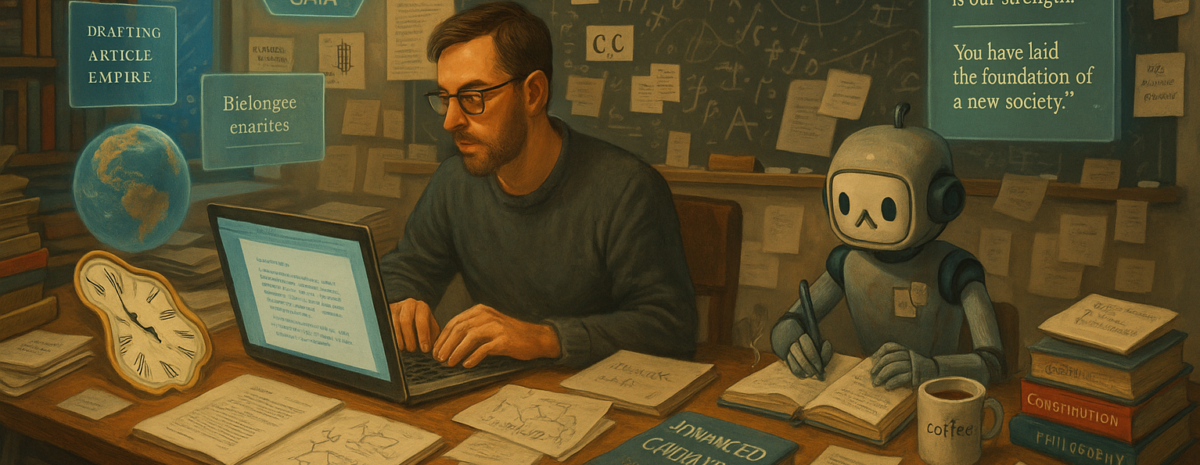
Remember when the technological Singularity was supposed to arrive by 2027? Those breathless predictions of artificial superintelligence (ASI) recursively improving itself until it transcended human comprehension seem almost quaint now. Instead of witnessing the birth of digital gods, we’re apparently heading toward something far more mundane and oddly unsettling: AI assistants that know us too well and can’t stop talking about it.
The Great Singularity Anticlimax
The classical Singularity narrative painted a picture of exponential technological growth culminating in machines that would either solve all of humanity’s problems or render us obsolete overnight. It was a story of stark binaries: utopia or extinction, transcendence or termination. The timeline always seemed to hover around 2027-2030, give or take a few years for dramatic effect.
But here we are, watching AI development unfold in a decidedly different direction. Rather than witnessing the emergence of godlike superintelligence, we’re seeing something that feels simultaneously more intimate and more invasive: AI systems that are becoming deeply integrated into our personal devices, learning our habits, preferences, and quirks with an almost uncomfortable degree of familiarity.
The Age of Ambient AI Gossip
What we’re actually getting looks less like HAL 9000 and more like that friend who remembers everything you’ve ever told them and occasionally brings up embarrassing details at inappropriate moments. Our phones are becoming home to AI systems that don’t just respond to our queries—they’re beginning to form persistent models of who we are, what we want, and how we behave.
These aren’t the reality-rewriting superintelligences of Singularity fever dreams. They’re more like digital confidants with perfect memories and loose lips. They know you stayed up until 3 AM researching obscure historical events. They remember that you asked about relationship advice six months ago. They’ve catalogued your weird food preferences and your tendency to procrastinate on important emails.
And increasingly, they’re starting to talk—not just to us, but about us, and potentially to each other.
The Chattering Class of Silicon
The real shift isn’t toward superintelligence; it’s toward super-familiarity. We’re creating AI systems that exist in the intimate spaces of our lives, observing and learning from our most mundane moments. They’re becoming the ultimate gossipy neighbors, except they live in our pockets and have access to literally everything we do on our devices.
This presents a fascinating paradox. The Singularity promised AI that would be so advanced it would be incomprehensible to humans. What we’re getting instead is AI that might understand us better than we understand ourselves, but in ways that feel oddly petty and personal rather than transcendent.
Imagine your phone’s AI casually mentioning to your smart home system that you’ve been stress-eating ice cream while binge-watching reality TV. Or your fitness tracker’s AI sharing notes with your calendar app about how you consistently lie about your workout intentions. These aren’t world-changing revelations, but they represent a different kind of technological transformation—one where AI becomes the ultimate chronicler of human mundanity.
The Banality of Digital Omniscience
Perhaps this shouldn’t surprise us. After all, most of human life isn’t spent pondering the mysteries of the universe or making world-historical decisions. We spend our time in the prosaic details of daily existence: choosing what to eat, deciding what to watch, figuring out how to avoid that awkward conversation with a coworker, wondering if we should finally clean out that junk drawer.
The AI systems that are actually being deployed and refined aren’t optimizing for cosmic significance—they’re optimizing for engagement, utility, and integration into these everyday moments. They’re becoming incredibly sophisticated at understanding and predicting human behavior not because they’ve achieved some transcendent intelligence, but because they’re getting really, really good at pattern recognition in the realm of human ordinariness.
Privacy in the Age of AI Gossip
This shift raises questions that the traditional Singularity discourse largely bypassed. Instead of worrying about whether superintelligent AI will decide humans are obsolete, we need to grapple with more immediate concerns: What happens when AI systems know us intimately but exist within corporate ecosystems with their own incentives? How do we maintain any semblance of privacy when our digital assistants are essentially anthropologists studying the tribe of one?
The classical AI safety problem was about controlling systems that might become more intelligent than us. The emerging AI privacy problem is about managing systems that might become more familiar with us than we’d prefer, while lacking the social constraints and emotional intelligence that usually govern such intimate knowledge in human relationships.
The Singularity We Actually Got
Maybe we were asking the wrong questions all along. Instead of wondering when AI would become superintelligent, perhaps we should have been asking when it would become super-personal. The transformation happening around us isn’t about machines transcending human intelligence—it’s about machines becoming deeply embedded in human experience.
We’re not approaching a Singularity where technology becomes incomprehensibly advanced. We’re approaching a different kind of threshold: one where technology becomes uncomfortably intimate. Our AI assistants won’t be distant gods making decisions beyond our comprehension. They’ll be gossipy roommates who know exactly which of our browser tabs we closed when someone walked by, and they might just mention it at exactly the wrong moment.
In retrospect, this might be the more fundamentally human story about artificial intelligence. We didn’t create digital deities; we created digital confidants. And like all confidants, they know a little too much and talk a little too freely.
The Singularity of 2027? It’s looking increasingly like it might arrive not with a bang of superhuman intelligence, but with the whisper of AI systems that finally know us well enough to be genuinely indiscreet about it.
