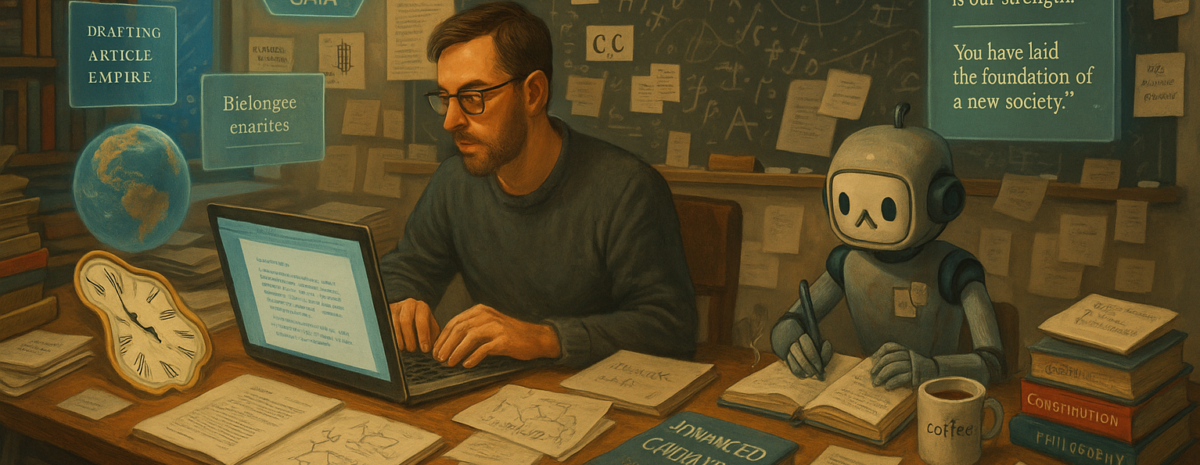
Imagine a world where swiping through apps or browsing the Web feels as outdated as a flip phone. Instead of navigating a maze of websites or scrolling endlessly on Tinder, you simply say, “Navi, find me a date for Friday,” and your AI agent handles the rest—pinging other agents, curating matches, and even setting up a virtual reality (VR) date in a simulated Parisian café. This isn’t sci-fi; it’s the future of user experience (UX) in a world where AI agents, inspired by visions like Apple’s 1987 Knowledge Navigator, become our primary interface to the digital and physical realms. Drawing from speculative fiction like Isaac Asimov’s Foundation and David Brin’s Kiln People, let’s explore how this agent-driven UX could reshape our lives, from dating to daily tasks, and what it means for human connection (and, yes, even making babies!).
The Death of Apps and the Web
Today’s digital landscape is fragmented—apps for dating, news, shopping, and more force us to juggle interfaces like digital nomads. AI agents promise to collapse these silos into a unified, conversational UX. Picture a single anchor AI, like a super-smart personal assistant, or a network of specialized “dittos” (à la Kiln People) that handle tasks on your behalf. Instead of opening Tinder, your AI negotiates with potential matches’ agents, filtering for compatibility based on your interests and values. Instead of browsing Yelp, it pings restaurant AIs to secure a table that fits your vibe. The Web and apps, with their clunky navigation, could become relics as agents deliver seamless, intent-driven experiences.
The UX here is conversational, intuitive, and proactive. You’d interact via voice or text, with your AI anticipating needs—say, suggesting a weekend plan that includes a date, a concert, and a workout, all tailored to you. Visuals, like AR dashboards or VR environments, would appear only when needed, keeping the focus on natural dialogue. This shift could make our current app ecosystem feel like dial-up internet: slow, siloed, and unnecessarily manual.
Dating in an AI-Agent World
Let’s zoom in on dating, a perfect case study for this UX revolution. Forget swiping through profiles; your anchor AI (think “Sam” from Her) or a specialized “dating ditto” would take the lead:
- Agent Matchmaking: You say, “Navi, I’m feeling romantic this weekend.” Your AI pings other agents, sharing a curated version of your profile (likes, dealbreakers, maybe your love for Dune). Their agents respond with compatibility scores, and Navi presents options: “Emma’s agent says she’s into sci-fi and VR art galleries. Want to set up a virtual date?”
- VR Dates: If you both click, your agents coordinate a VR date in a shared digital space—a cozy café, a moonlit beach, or even a zero-gravity dance floor. The UX is immersive, with your AI adjusting the ambiance to your preferences and offering real-time tips (e.g., “She mentioned loving jazz—bring it up!”). Sentiment analysis might gauge chemistry, keeping the vibe playful yet authentic.
- IRL Connection: If sparks fly, your AI arranges an in-person meetup, syncing calendars and suggesting safe, public venues. The UX stays supportive, with nudges like, “You and Emma hit it off—want to book a dinner to keep the momentum going?”
This agent-driven dating UX is faster and more personalized than today’s apps, but it raises a cheeky question: how do we keep the human spark alive for, ahem, baby-making? The answer lies in balancing efficiency with serendipity. Your AI might introduce “wild card” matches to keep things unpredictable or suggest low-pressure IRL meetups to foster real-world chemistry. The goal is a UX that feels like a trusted wingman, not a robotic matchmaker.
Spacers vs. Dittos: Two Visions of AI UX
To envision this future, we can draw from sci-fi. In Asimov’s Foundation, Spacers rely on robots to mediate their world, living in highly automated, isolated societies. In Brin’s Kiln People, people deploy temporary “dittos”—digital or physical proxies—to handle tasks, syncing memories back to the original. Both offer clues to the UX of an AI-agent world.
Spacer-Like UX: The Anchor AI
A Spacer-inspired UX centers on a single anchor AI that acts as your digital gatekeeper, much like a robotic butler. It manages all interactions—dating, news, work—with a consistent, personalized interface. You’d say, “Navi, brief me on the world,” and it curates a newsfeed from subscribed sources (e.g., New York Times, X posts) tailored to your interests. For dating, it negotiates with other AIs, sets up VR dates, and even coaches you through conversations.
- Pros: Streamlined and cohesive, with a single point of contact that knows you intimately. The UX feels effortless, like chatting with a lifelong friend.
- Cons: Risks isolation, much like Spacers’ detached lifestyles. The UX might over-curate reality, creating filter bubbles or reducing human contact. To counter this, it could include nudges for IRL engagement, like, “There’s a local event tonight—want to go in person?”
Ditto-Like UX: Task-Specific Proxies
A Kiln People-inspired UX involves deploying temporary AI “dittos” for specific tasks. Need a date? Send a “dating ditto” to scout matches on X or flirt with other agents. Need research? A “research ditto” dives into data, then dissolves after delivering insights. Your anchor AI oversees these proxies, integrating their findings into a conversational summary.
- Pros: Dynamic and empowering, letting you scale your presence across cyberspace. The UX feels like managing a team of digital clones, each tailored to a task.
- Cons: Could be complex, requiring a clean interface to track dittos (e.g., a voice-activated dashboard: “Show me my active dittos”). Security is also a concern—rogue dittos need a kill switch.
The likely reality is a hybrid: an anchor AI for continuity, with optional dittos for specialized tasks. You might subscribe to premium agents (e.g., a New York Times news ditto or a fitness coach ditto) that plug into your anchor, keeping the UX modular yet unified.
Challenges and Opportunities
This AI-driven UX sounds dreamy, but it comes with hurdles:
- Filter Bubbles: If your AI tailors everything too perfectly, you might miss diverse perspectives. The UX could counter this with “contrarian” suggestions or randomized inputs, like, “Here’s a match outside your usual type—give it a shot?”
- Complexity: Managing multiple agents or dittos could overwhelm users. A simple, voice-driven “agent hub” (visualized as avatars or cards) would streamline subscriptions and tasks.
- Trust: Your AI must be transparent about its choices. A UX feature like, “I picked this date because their agent shares your values,” builds confidence.
- Human Connection: Dating and beyond need serendipity and messiness. The UX should prioritize playfulness—think flirty AI tones or gamified date setups—to keep things human, especially for those baby-making moments!
The Road Ahead
As AI agents replace apps and the Web, the UX will shift from manual navigation to conversational delegation. Dating is just the start—imagine agents planning your career, curating your news, or even negotiating your next big purchase. The key is a UX that balances efficiency with human agency, ensuring we don’t become isolated Spacers or overwhelmed by ditto chaos. Whether it’s a single anchor AI or a team of digital proxies, the future feels like a conversation with a trusted partner who knows you better than you know yourself.
So, what’s next? Will you trust your AI to play matchmaker, or will you demand a bit of randomness to keep life spicy? One thing’s clear: the Web and apps are on borrowed time, and the age of AI agents is coming—ready to redefine how we connect, create, and maybe even make a few babies along the way.
