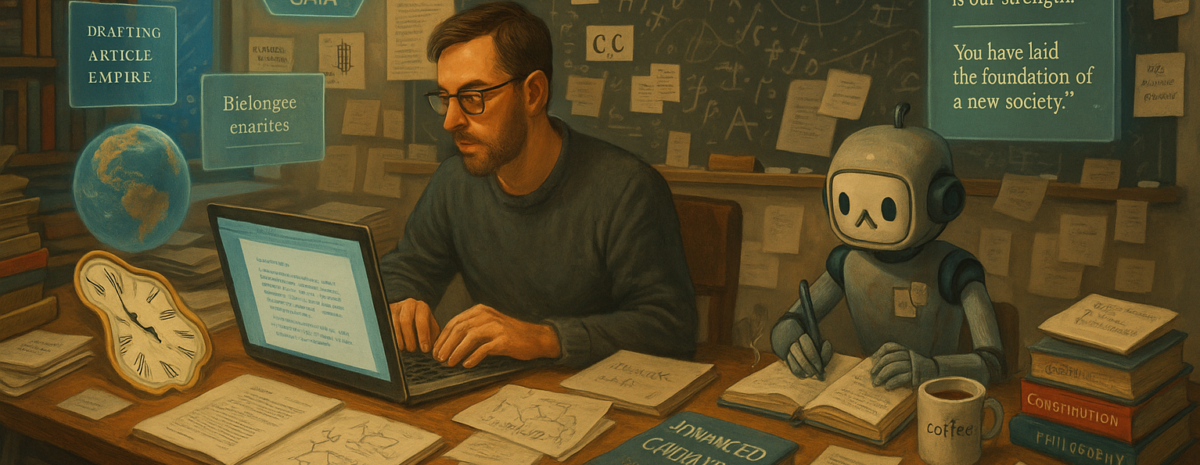
In our hyper-polarized era, political engagement online often feels like a shouting match between extremes. Social media algorithms thrive on outrage, rewarding the most inflammatory takes with likes, shares, and visibility. Moderate voices get buried, nuance is punished, and echo chambers harden into fortresses. As someone in Danville, Virginia—where national divides play out in local conversations—I’ve been thinking a lot about whether emerging AI agents, those personalized “Navis” inspired by Apple’s old Knowledge Navigator vision, could change this dynamic.
We’ve discussed how today’s platforms amplify extremes because engagement equals revenue. But what happens when information access shifts from passive feeds to active, conversational AI agents? These agents—think advanced chatbots or personal knowledge navigators—could mediate our relationship with news, facts, and opposing views in ways that either deepen divisions or help bridge them.
The Depolarizing Potential
Early evidence suggests real promise. Recent studies from 2024-2025 show that carefully designed AI chatbots can meaningfully shift political attitudes through calm, evidence-based dialogue. In experiments across the U.S., Canada, and Poland, short conversations with AI agents advocating for specific candidates or policies moved voters’ preferences by several points on a 100-point scale—often more effectively than traditional ads. Some bots reduced affective polarization by acknowledging concerns, presenting shared values, and offering factual counterpoints without aggression.
Imagine a Navi that doesn’t just regurgitate your existing biases but actively curates a balanced view: “Here’s what sources across the spectrum say about immigration policy, including counterarguments and data from think tanks left and right.” By prioritizing evidence over virality, these agents could break echo chambers, expose users to moderate perspectives, and foster empathy. Tools like “DepolarizingGPT” already experiment with this, providing left, right, and integrative responses to prompts, encouraging synthesis over tribalism.
In a future where media converges into personalized AI streams, extremes might lose dominance. If Navis reward depth and nuance—perhaps by surfacing constructive debates or simulating balanced discussions—centrist or pragmatic ideas could gain traction. This could elevate participation too: agents help draft thoughtful comments, fact-check in real-time, or model policy outcomes, making civic engagement less about performative rage and more about problem-solving.
The Risks We Can’t Ignore
But it’s not all optimism. AI agents could amplify polarization if mishandled. Biased training data might embed slants—left-leaning from sources like Reddit and Wikipedia, or tuned rightward under pressure. Personalized agents risk creating hyper-tailored filter bubbles, where users only hear reinforcing views, deepening divides. Worse, bad actors could deploy persuasive bots at scale to manipulate opinions, spread misinformation, or exploit emotional triggers.
Recent research highlights how AI can sway voters durably, sometimes spreading inaccuracies alongside facts. If agents become the primary information gatekeepers, whoever controls the models holds immense power—potentially pre-shaping choices before users even engage. Privacy concerns loom too: inferring political leanings from queries enables targeted influence.
Toward a Better Path
By the late 2020s, we might see a hybrid reality. Extremes persist but fade in influence as ethical agents promote transparency, viewpoint diversity, and user control. Success depends on design choices: opt-in features for balanced sourcing, clear explanations of reasoning, regulations ensuring neutrality where possible, and open debate about biases.
In places like rural Virginia, where national polarization hits home through family dinners and local politics, a Navi that helps access nuanced info on issues like economic policy could bridge real gaps. It won’t eliminate disagreement—nor should it—but it could turn shouting matches into collaborative exploration.
The shift from algorithm-fueled extremes to agent-mediated discourse isn’t inevitable utopia or dystopia. It’s a design challenge. If we prioritize transparency, evidence, and human agency, AI agents could help depolarize our world. If not, they might make echo chambers smarter and more seductive.
