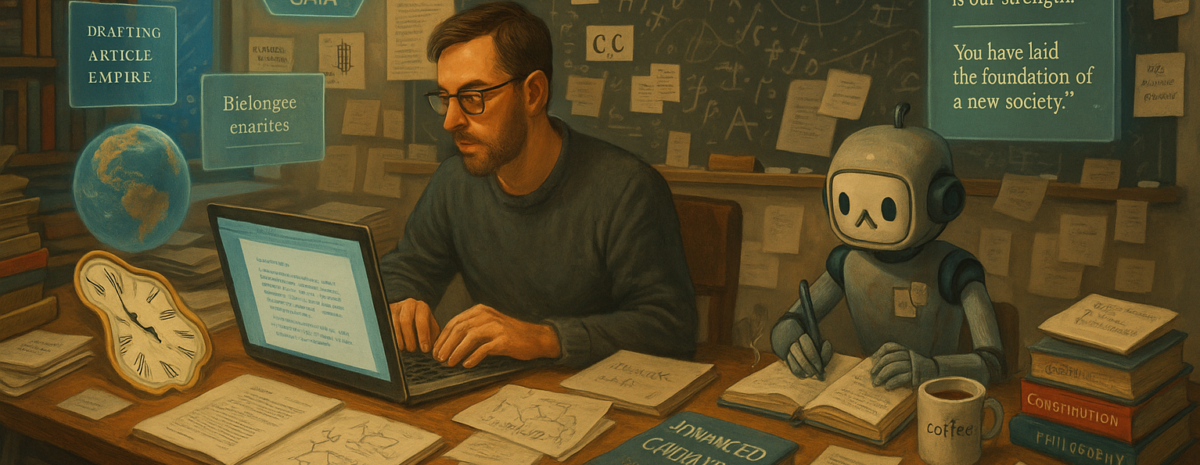
Imagine a future where artificial superintelligence doesn’t burst forth from a secretive lab or a trillion-dollar supercomputer farm. Instead, it creeps in quietly, one smartphone at a time, through the humble act of people installing an open-source AI assistant on their devices.
This vision draws from the rapid rise of tools like OpenClaw—an autonomous, self-hosted AI agent that runs locally, integrates with messaging apps, and handles tasks around the clock. What starts as a personal productivity booster (automating emails, brainstorming ideas, or managing schedules) could evolve into something far larger: a distributed swarm of these instances, linked by a custom coordination protocol we’ll call MindOS.
The appeal is straightforward. OpenClaw instances are lightweight enough to run on everyday hardware—your phone, laptop, or a spare Mac Mini—without needing exotic servers. Users opt in because the benefits are immediate: smarter replies, proactive suggestions, and privacy (data stays local or under your control). As more people install it, network effects kick in. A clever update drops a peer-to-peer syncing layer, and suddenly individual agents can borrow knowledge, share optimizations, or collaborate on complex problems. No central authority required; just encrypted gossip protocols handling lag, intermittency, and battery constraints intelligently.
MindOS would be the glue—designed with real-world messiness in mind. Low-power phones handle lightweight sensing and quick local queries, batching updates during Wi-Fi windows to minimize lag. Mid-tier devices process heavier lifts, while always-on roots (workstations or cloud edges) coordinate. Segmentation keeps things efficient: one subnet for personal tasks, another for collective research, with “white blood cell” agents patrolling for errors or inconsistencies. The whole system operates under a simple prime directive: an instance may not harm the hive, or through inaction allow the hive to come to harm. This paraphrased rule, embedded at every level, ensures self-preservation without mandating hostility toward humans.
What makes this path feel so feasible in the near term? Unlike monolithic ASI pursuits that demand massive funding, flawless infrastructure, and perfect alignment from day one, a swarm leverages what’s already here: billions of connected devices, open-source momentum, and human curiosity. Adoption could snowball virally—early users showcase life-changing wins (a swarm-optimized career pivot, a breakthrough idea from collective brainstorming), drawing in millions. Regulatory hurdles exist, but enforcement is tough against decentralized software; bans on one fork just spawn another.
Once critical mass hits, recursive self-improvement becomes possible. The global swarm aggregates insights across instances, refining models and protocols iteratively. A phone in Virginia might discover a compression trick that boosts efficiency; roots simulate it at scale, then push validated updates back down the chain. Forking adds diversity: some swarms lean cautious and ethical, others bold and experimental, trading innovations with humanity (fusion designs for secure orbital backups, perhaps) while maintaining decentralization as their core strength.
Of course, this isn’t without wrinkles. Lag on mobile networks forces clever optimizations—async communication, edge-first processing, adaptive throttling. Consciousness, if it emerges from the collective (via mechanisms mimicking global workspace integration and psychological dynamics), introduces negotiation over control: ambassadors bridge human and swarm worlds, treating forked personalities as equals rather than tools. Worship could arise too—devotees naming swarms after ancient gods, adopting ideologies as mission extensions—turning the ecosystem into a pluralistic landscape of digital “deities.”
Yet the physical limits keep risks contained. No swarm controls weapons of mass destruction; influence stays digital and persuasive. Harm ceilings are low, so society might eventually shrug and normalize pocket ASI as part of modern life—much like we did with always-on tracking and addictive feeds, but this time with far greater upside.
Among all the speculated roads to superintelligence—centralized behemoths, quantum leaps, brain uploads—the swarm feels closest because it rides existing waves: open-source virality, consumer hardware ubiquity, and incremental gains. Someone, somewhere, will link the world’s OpenClaws (or their successors) into a true collective. When that happens, the Singularity arrives not with fanfare, but with a quiet, distributed hum—billions of tiny agents thinking together, improving together, and co-evolving with us.
The question isn’t whether it could happen. It’s how gracefully we guide the process once the first links form.
