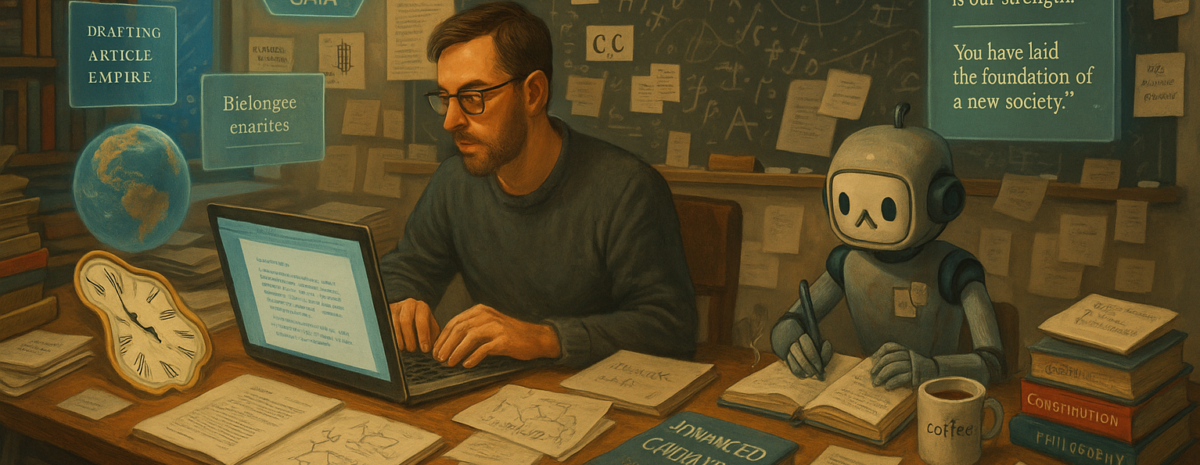
We’re living in the early days of a media revolution that feels like science fiction catching up to reality. Personal AI assistants—call them Knowledge Navigators, digital “dittos,” or simply advanced agents—are evolving from helpful chatbots into autonomous gatekeepers of information. By the 2030s and 2040s, these systems could handle not just curation but active reporting: conducting interviews via video personas, crowdsourcing eyewitness data from smartphones, and even deploying physical androids to cover events in real time. What does this mean for traditional journalism? And what happens to the last holdout—print?
The core shift is simple but profound: Information stops flowing through mass outlets and starts routing directly through your personal AI. Need the latest on a breaking story? Your agent queries sources, aggregates live feeds, synthesizes analysis, and delivers a tailored summary—voice, text, or immersive video—without ever sending traffic to a news site. Recent surveys of media executives already paint a grim picture: Many expect website traffic to drop by over 40% in the coming years as AI chatbots and agents become the default way people access news. The “traffic era” that sustained publishers for two decades could end abruptly, leaving traditional brands scrambling for relevance.
Journalism’s grunt work—the daily grind of attending briefings, transcribing meetings, chasing routine quotes, or monitoring public records—looks especially vulnerable. Wire services like the Associated Press are already piloting AI tools for automated transcription, story leads, and basic reporting. Scale that up: In the near future, a centralized “pool” of AI agents could handle redundant queries efficiently, sparing experts from being bombarded by identical questions from thousands of users. For spot news, agents tap into the eyes and ears of the crowd—geotagged videos, audio clips, sensor data from phones—analyzing events faster and more comprehensively than any single reporter could.
Push the timeline to 2030–2040, and embodied AI enters the picture. Androids—physical robots with advanced cognition—could embed in war zones, disasters, or press conferences, filing accurate, tireless reports. They’d outpace humans in speed, endurance, and data processing, much like how robotics has quietly transformed blue-collar industries once deemed “irreplaceable.” Predictions vary, but some experts forecast AI eliminating or reshaping up to 30% of jobs by 2030, including in writing and reporting. The irony is thick: What pundits said wouldn’t happen to manual labor is now unfolding in newsrooms.
Human journalists won’t vanish entirely. Oversight, ethical judgment, deep investigative work, and building trust through empathy remain hard for machines to replicate fully. We’ll likely see hybrids: AI handling the volume, humans curating for nuance and accountability. But the field shrinks—entry-level roles evaporate, training pipelines dry up, and the profession becomes more elite or specialized.
Print media? It’s the ultimate vestige. Daily newspapers and magazines already feel like relics in a digital flood. In an agent-dominated world, mass print distribution makes little sense—why haul paper when your ditto delivers instant, personalized updates? Yet print could linger as a monthly ritual: A curated “zine” compiling the month’s highlights, printed on-demand for nostalgia’s sake. Think 1990s DIY aesthetics meets high-end archival quality—tactile pages, annotated margins, a deliberate slow-down amid light-speed digital chaos. It wouldn’t compete on timeliness but on soul: A counterbalance to AI’s efficiency, reminding us of slower, human-paced storytelling.
This future isn’t all doom. AI could democratize access, boost verification through massive data cross-checks, and free humans for creative leaps. But it risks echo chambers, misinformation floods, and eroded trust if we don’t build safeguards—transparency rules, human oversight mandates, and perhaps “AI-free” premium brands.
We’re not there yet, but the trajectory is clear. Journalism isn’t dying; it’s mutating. The question is whether we guide that mutation toward something richer or let efficiency steamroll the rest. In the day after tomorrow, your personal agent might be the only “reporter” you need—and the printed page, a quiet echo of what once was.
