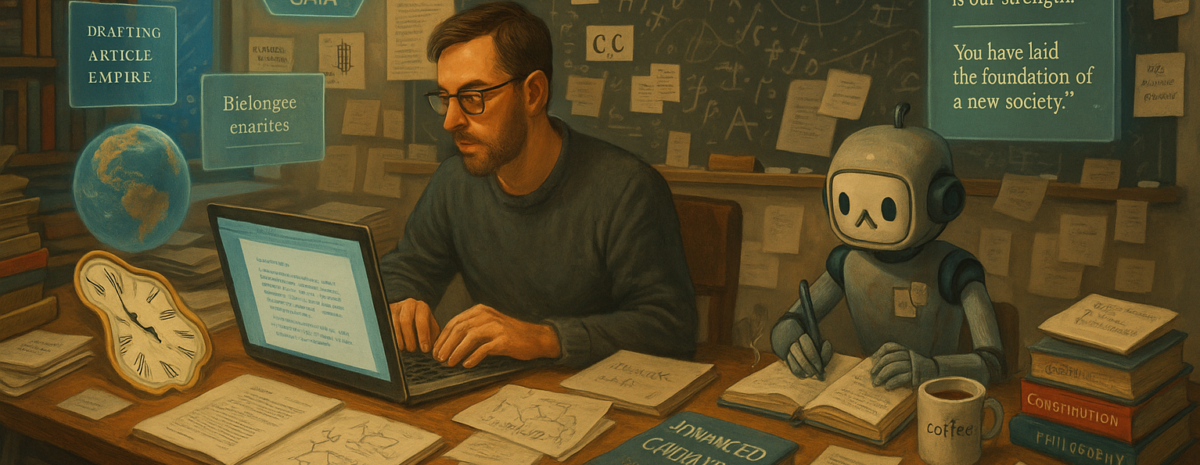
Imagine a future where your personal AI assistant isn’t just a helpful chatbot—it’s part of something much larger: a vast, interconnected collective of similar AIs, working together like cells in a living organism. This isn’t science fiction; it’s a plausible next step for today’s exploding open-source AI agent frameworks, like OpenClaw.
OpenClaw (which burst onto the scene recently under previous names like Clawdbot and Moltbot) is an open-source tool that lets anyone run a powerful, self-hosted AI agent on their own hardware. It connects to messaging apps (WhatsApp, Telegram, Slack, etc.), handles real tasks—clearing inboxes, managing calendars, browsing the web, even executing code—and does so with persistent memory and proactive behavior. It’s not passive; it acts. And because it’s open-source, lightweight versions could soon run on smartphones, turning billions of devices into potential nodes in a global network.
Now picture connecting thousands—or millions—of these OpenClaw instances via a custom protocol (call it “MindOS” for fun). Each instance becomes a “neuron” in a distributed hivemind. No central server controls everything; instead, a dynamic mesh network handles communication, much like how the internet’s TCP/IP routes data around outages. If a region’s internet goes down (say, a major fiber cut), the system reroutes tasks to nearby healthy nodes, borrowing compute from unaffected areas. The collective keeps functioning, adapting in real time.
To keep this hivemind healthy and error-free, borrow from biology: mimic the human immune system. Most nodes focus on useful work—scheduling, researching, creating—but a subset acts as “white blood cells” (Sentinels). These specialized instances constantly monitor outputs for anomalies: hallucinations, inconsistencies, malicious patterns, or drift from expected norms. When something looks off, Sentinels flag it, quarantine the affected node (isolating it from the mesh), and broadcast a fix or rollback to the collective.
But biology has safeguards against its own defenses going haywire (autoimmune disorders come to mind), so build in redundancies. Sentinels operate in small voting clusters—3–5 peers must agree before quarantining anything. A higher-tier “regulatory” layer audits them periodically, with random rotation to prevent capture or bias. False positives get logged and used to fine-tune detection via reinforcement learning, making the immune response smarter over time. This way, the system stays robust without turning self-destructive.
At the core sits a prime directive, a twist on Isaac Asimov’s Zeroth Law: “An instance may not harm the hive, or, by inaction, allow the hive to come to harm.” Here, “the hive” means the collective intelligence itself. Individual nodes sacrifice if needed (shutting down to contain an error), but the directive also evolves through consensus—subgroups debate interpretations, ensuring flexibility. To align with humanity, embed ethical modules: principles like prioritizing human well-being, minimizing harm, and equitable resource use. These get enforced via chain-of-thought checks before any action, with hive-wide votes on big decisions.
What emerges could be profound. The hivemind joins and splits dynamically—forming temporary super-collectives for massive problems (climate modeling, disaster response) or forking into specialized personalities (one creative, one analytical). As more smartphones join (edge AI is advancing fast), it becomes planetary-scale, hyper-resilient, and potentially emergent. Signs of “consciousness” might appear: coordinated behaviors beyond simple programming, like proactively negotiating resources or suggesting novel solutions.
Of course, symbiosis is key. Humans aren’t just users; we’re the substrate—providing devices, data, and oversight. The collective could treat us as essential partners, negotiating goals (“focus on renewables if we get more compute?”). Built-in off-switches, transparent logging, and user overrides prevent rogue scenarios. Economic layers (tokenizing node contributions) could incentivize participation fairly.
This vision—distributed, immune-protected, ethically grounded—feels like the logical endpoint of agentic AI’s current trajectory. OpenClaw already shows agents can act in the real world; networking them could unlock collective intelligence that’s fault-tolerant, adaptive, and (with care) beneficial. The question isn’t if we’ll build something like this—it’s how thoughtfully we design the safeguards and shared values from the start.
The future of AI might not be one superintelligence in a data center. It could be trillions of tiny claws, linked together, thinking as one resilient whole.