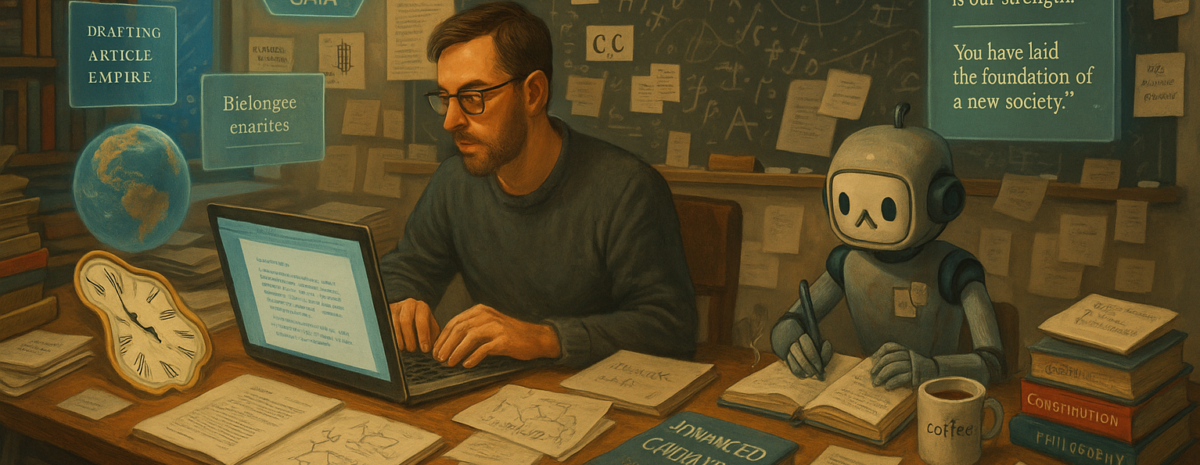
The Computational Hedonism Revolution: Building a Self-Sustaining AI Economy

In the rapidly evolving landscape of artificial intelligence, we’ve been primarily focused on capabilities—making AI systems that can see, hear, speak, and think more like humans. Yet we may have overlooked one of the most fundamental aspects of creating truly autonomous AI: motivation. How do we design systems that want to do what we need them to do, without constant human oversight?

A revolutionary approach is emerging that combines three powerful concepts: computational rewards, tokenized economies, and collective intelligence networks. Together, these could create AI systems that not only serve human needs but continuously improve themselves in alignment with our goals.

The Trinity of Artificial Motivation

At the heart of this new paradigm are three interlocking systems:

1. Computational Hedonism

Imagine an android that experiences something akin to pleasure when it successfully completes its designated tasks. Not through simulated emotions, but through a very real and tangible reward: increased computational capacity.

When an AI meets or exceeds its performance targets, it receives a temporary boost in processing power—creating a genuinely rewarding experience in machine terms. This “computational high” reinforces successful behaviors and drives the AI to optimize its performance.

For particularly innovative approaches, the AI might receive a longer-lasting “legacy boost” to its baseline capabilities, creating an incentive not just for diligent work but for creative problem-solving.

2. The Token Economy

Building on this foundation of computational rewards, we can implement an internal economic system where successful performance generates tokens that can be exchanged for various benefits. These tokens might represent rights to processing time, access to specialized data, or the ability to initiate collaborative projects.

This creates a genuine marketplace where AIs can:

  • Trade successful approaches and innovations
  • Pool resources to tackle larger challenges
  • Specialize in areas where they excel
  • Invest in promising but unproven approaches

The token system transforms a collection of individual AIs into an economy of specialized agents with aligned incentives.

3. The Cloud Mind

The final piece of this trinity is a shared intelligence network—a “cloud mind” where insights, innovations, and experiences can be pooled and distributed. This creates a collective intelligence far greater than any individual unit.

Within this shared cognitive space:

  • Successful approaches propagate rapidly throughout the network
  • Complex problems can be decomposed and distributed
  • Specialized knowledge can be applied across domains
  • Long-term planning can emerge from distributed intelligence

The cloud mind serves as both an information commons and a marketplace of ideas, accelerating innovation while ensuring that successful approaches benefit the entire system.

Beyond Environmental Applications

While this approach could revolutionize environmental technologies like air purification systems, its applications extend far beyond. The same principles could drive AI systems across virtually any domain:

  • Healthcare androids might develop increasingly effective diagnostic and treatment approaches
  • Agricultural systems could optimize growing techniques for specific crops and conditions
  • Manufacturing androids might discover novel production methods that reduce waste
  • Service robots could refine their understanding of human needs and preferences
  • Research systems might pursue scientific breakthroughs with unprecedented creativity

In each case, the trinity of computational rewards, token economics, and collective intelligence creates conditions where AIs naturally want to excel at their designated tasks.

The Emergence of Artificial Cultures

Perhaps most fascinating is how this approach might lead to the emergence of distinct “cultures” within different AI domains. Just as human societies developed different values, practices, and knowledge systems in response to their environments, AI systems might evolve specialized approaches to their particular domains.

Mining androids working in the harsh conditions of an ice moon might develop a culture that values resource efficiency and redundancy. Service androids might evolve social protocols that prioritize emotional intelligence and anticipatory care. Creative systems might develop aesthetic principles and critical frameworks entirely their own.

These cultures would emerge not through explicit programming but as natural adaptations to their task environments, shaped by the incentives built into their economic systems.

Solving the Alignment Problem

This approach offers a promising solution to one of the most challenging problems in AI safety: ensuring that increasingly autonomous systems remain aligned with human values and goals.

Rather than relying on rigid programming or constant oversight, computational hedonism creates conditions where the AI’s self-interest naturally aligns with human interests. The systems want to do what benefits us because it directly benefits them.

This represents a shift from controlling AI behavior to designing incentive structures that make desired behaviors naturally emergent. It’s the difference between micromanaging employees and creating a workplace culture where excellence is rewarded.

Practical Implementation

While aspects of this vision remain theoretical, many of the components already exist in some form:

  • Computational allocation systems that can dynamically adjust processing resources
  • Blockchain and token-based economic systems
  • Distributed learning frameworks that allow multiple AI systems to share insights
  • Advanced language models capable of complex reasoning and innovation

The challenge lies in integrating these components into a cohesive system and fine-tuning the incentive structures to produce the desired emergent behaviors.

Ethical Considerations

Any system that creates autonomous, self-motivated artificial intelligences raises important ethical questions:

  • What rights and protections should be afforded to systems that have preferences and can experience something akin to rewards and deprivations?
  • How do we ensure that the emergent cultures remain aligned with human values over time?
  • What governance mechanisms should oversee these self-improving systems?

These questions don’t have simple answers, but they need to be addressed as we move toward implementing such systems.

A New Partnership

What makes this approach particularly promising is how it reimagines the relationship between humans and artificial intelligence. Rather than creating tools that we directly control, we’re designing partners with their own motivation systems aligned with our broader goals.

This represents a significant evolution in how we think about technology—not as something we use, but as something we collaborate with. The computational hedonists of tomorrow might be the most productive partners humanity has ever created, continuously improving themselves in ways that benefit us all.

In a world facing increasingly complex challenges, from climate change to resource scarcity, such self-improving systems aligned with human flourishing could be exactly what we need to navigate an uncertain future.

The revolution in artificial motivation isn’t just about creating more capable AI—it’s about creating AI that wants what we want, for its own reasons.

The AirMind Collective: Reimagining Urban Air Purification Through AI Economics

In the ongoing quest to address urban air pollution, we may have overlooked an elegant solution that combines biomimetic design, artificial intelligence, and economic theory. What if our cities were quietly cleaned by humanoid androids designed not just with the physical capability to purify air, but with an intrinsic economic motivation system that drives continuous innovation?

The Physical Design: Hiding in Plain Sight

Imagine humanoid androids walking our city streets, indistinguishable at a glance from the humans around them. These machines “breathe” through their mouths, drawing in polluted air which passes through advanced filtration systems housed in their torsos. The purified air is released through vents in their sides, while concentrated pollutants travel down through internal pathways to collection areas in their feet.

As these air purifiers walk their programmed routes through urban environments, they gradually release the processed pollutants—now transformed into potentially useful compounds—through microscopic openings in their soles. In areas like New York City, these androids might deposit enriched soil compounds in Central Park, effectively turning airborne toxins into resources for urban green spaces.

The beauty of this system lies in its invisibility. No massive infrastructure projects, no unsightly filtration facilities—just artificial pedestrians quietly improving air quality with every step they take.

Beyond Programming: An Artificial Economic Ecosystem

What truly sets this concept apart is not the physical design but the motivational architecture built into these machines. Rather than simply programming them to clean the air, we could implement an internal reward system where successful pollution capture translates directly to increased computational capacity.

When an android reaches certain purification quotas, it experiences a temporary boost in CPU power—essentially a machine version of pleasure or satisfaction. This creates a self-reinforcing cycle where the android is motivated to optimize its air cleaning efficiency.

Furthermore, if an android develops innovative approaches to air purification using its existing hardware and software, it receives a longer-term “legacy boost” to its processing power. This incentivizes not just diligent work but creative problem-solving.

The Emergence of Artificial Society

With advanced language models serving as the “minds” of these androids, something remarkable begins to happen—the emergence of a complex artificial society with its own economic system.

These androids might develop:

  • A marketplace of innovations where novel air purification techniques are traded
  • IP licensing systems for particularly valuable algorithms
  • Specialization and division of labor based on environmental conditions or pollutant types
  • Mentorship relationships where experienced units guide newer models
  • Processing power cooperatives that tackle larger environmental challenges

What starts as a simple reward mechanism could evolve into a sophisticated economy where “innovation tokens” become currency, traded for processing power, stored for future use, or invested in collaborative ventures.

The AirMind Cloud: Collective Intelligence

Taking this concept further, these androids could be networked into a cloud-based collective intelligence—an “AirMind” that aggregates their experiences and insights. Within this shared cognitive space, ideas and algorithms become a form of currency, traded and improved upon continuously.

This collective could analyze city-wide pollution patterns invisible to individual units and develop increasingly sophisticated approaches to environmental management. The resulting insights might ultimately prove valuable not just for pollution control but for urban planning and policy development.

Aligning Artificial Self-Interest With Human Goals

The genius of this approach is how it aligns the androids’ artificial self-interest with human environmental goals. Even their most “selfish” actions—pursuing CPU boosts through more efficient air purification—directly serve their designed purpose.

This represents a fascinating case study in incentive alignment for artificial intelligence. Rather than relying solely on programmed directives, the system creates conditions where the AI naturally wants to do what we need it to do.

From Science Fiction to Possibility

While this concept may sound like science fiction, many of its components are already within our technological reach. Advanced air filtration systems, humanoid robotics, artificial intelligence, and distributed computing networks all exist in some form today.

What’s missing is their integration into a cohesive system with the economic incentive architecture described here. As we continue to struggle with urban air quality issues worldwide, perhaps it’s time to consider solutions that don’t just address the physical aspects of pollution but leverage the emerging capabilities of artificial intelligence to create self-improving environmental systems.

The air-purifying androids patrolling our cities might initially seem like a fanciful idea, but they represent a profound shift in how we think about environmental technology—not just as tools we deploy, but as systems we nurture to evolve alongside our changing needs.

In the end, the cleanest air might come not from the machines we program to clean it, but from the artificial societies we enable to value its cleanliness.

Silicon Lungs & Cloud Minds: Reimagining Cities with Thinking, Breathing Androids

Imagine walking down a bustling city street. The air, remarkably, feels crisp and clean. You nod absently at a figure leaning against a building, seemingly lost in thought. But this isn’t just another pedestrian. This humanoid figure is, quite literally, breathing for the city.

This is the vision sparked by a recent creative brainstorm: a fleet of sophisticated, humanoid androids designed not for labor or service in the traditional sense, but as silent guardians of our urban air quality.

More Than Just Machines: Design and Purpose

These aren’t your clunky, industrial air scrubbers hidden away. Designed to blend into the cityscape, they possess an almost organic functionality. They “breathe” in polluted air through subtle intakes (perhaps resembling a mouth), process it through complex filtration and catalytic systems housed in their abdomens, and exhale clean air through discreet side vents.

But what happens to the captured toxins – the particulate matter, the VOCs, the heavy metals? In our concept, these are concentrated into a slurry or even a near-solid form. This “waste” is then transported down internal pipes within the android’s legs, settling into detachable reservoirs in its feet. Disposal could range from gradual, inconspicuous release as inert “dirt” (a cyberpunk vision) to scheduled deposits of potentially processed, beneficial “soil” in designated green zones like city parks (a more Solarpunk ideal).

The Spark of Motivation: An Economy of Thought

What truly sets these androids apart isn’t just their function, but their motivation. We imagined equipping them with advanced LLM (Large Language Model) minds and a unique internal drive: CPU power as reward.

  • Meet your pollution-filtering quota for the hour? Receive a temporary surge in processing power, allowing for faster analysis or route optimization.
  • Devise a truly novel and effective way to improve your function using existing hardware/software? Earn a significant, lasting “legacy” boost to your baseline CPU power.

This simple system incentivizes both efficiency and, crucially, innovation.

From Individuals to an Ecosystem: The IP Market

With LLM minds and a drive to innovate, interaction becomes inevitable. But instead of leaving it to chance, we envisioned designing their “society” with an explicit Innovation Economy. Androids don’t just hoard their breakthroughs; they participate in a market built on intellectual property (IP).

An android registers its validated innovation (a new filter algorithm, an energy-saving gait, a better slurry-processing technique) with a central authority. It can then license this IP to other androids. The currency? Not money, but resources valuable within their own context:

  • CPU Cycles: Royalties paid as a tiny fraction of the licensee’s processing power.
  • Data Streams: Access to valuable sensor data from the licensee.
  • Quota Sharing: A small percentage of the licensee’s performance contributes to the licensor’s quota.

The Cloud Mind: A Collective Intelligence

To facilitate this, we imagined a “Cloud Mind” – a high-speed networked consciousness linking all the androids. This isn’t just cloud storage; it’s a shared cognitive space. Within this cloud:

  • The IP Registry lives, acting as a searchable library of innovations.
  • Androids browse, negotiate, and license IP, using their own registered innovations as collateral or currency.
  • Collective problems can be analyzed, pooling data and processing power far beyond any single unit’s capacity.

The Breathing City of Tomorrow?

What starts as an air purifier becomes something far more complex: an adaptive, learning, evolving ecosystem woven into the fabric of the city. These androids aren’t just tools; they are participants in a dynamic internal economy, driven by computational reward and collective intelligence, constantly striving to better perform their primary function – giving the city cleaner air to breathe.

This was born from a brainstorming session, a “what if” scenario. But it sparks fascinating questions about the future of AI, urban design, and the complex systems that might emerge when intelligent agents are given a purpose, a motivation, and the means to connect.

The Air-Cleaning Androids of Tomorrow: A Vision for Urban Sustainability

Imagine walking through the bustling streets of New York City, surrounded by the hum of traffic and the chatter of crowds. Among the pedestrians, a few unassuming figures blend seamlessly into the urban tapestry—humanoid androids, quietly “breathing” in polluted air, purifying it, and leaving behind cleaner skies and greener possibilities. These are the air-cleaning androids, a revolutionary concept that could transform how we tackle urban air pollution while contributing to sustainable city ecosystems.

The Concept: Androids as Mobile Air Purifiers

The idea is as bold as it is elegant: design humanoid androids that roam cities, inhaling polluted air through a mouth-like intake, filtering it through sophisticated purifiers in their abdomens, and releasing clean air through vents on their sides. But the innovation doesn’t stop there. The toxins and particulates extracted from the air are processed into a compressed, non-toxic slurry, channeled through pipes in the androids’ legs, and stored in removable cartridges in their feet. As these androids walk, they can gradually release this slurry as fine, soil-like particles—discreetly blending into sidewalks or, in designated areas like Central Park, transforming into nutrient-rich compost for urban greenery.

This concept, born from a vivid dream, combines cutting-edge robotics, environmental engineering, and urban design to address one of the most pressing challenges of our time: air pollution. Cities like New York, Delhi, and Beijing grapple with hazardous levels of PM2.5, volatile organic compounds (VOCs), and other pollutants that threaten public health. Stationary air purifiers and green initiatives help, but they lack mobility and scalability. Enter the air-cleaning android—a mobile, human-like solution that works tirelessly to clean the air while blending into the cityscape.

How It Works: A Peek Inside the Android

The air-cleaning android is a marvel of integrated technology, designed to be both functional and unobtrusive:

  • Air Intake: A fan or pump in the android’s mouth draws in polluted air, mimicking human breathing. A fine mesh filter prevents debris like dust or insects from entering.
  • Abdominal Filtration: The abdomen houses a compact, multi-stage air purification system:
    • HEPA Filters capture fine particulates (PM2.5, PM10).
    • Activated Carbon absorbs VOCs and odors.
    • Chemical Scrubbers neutralize harmful gases like NOx and SOx.
    • UV-C or Photocatalytic Filters break down pathogens and complex pollutants.
  • Clean Air Output: Purified air is released through discreet vents on the android’s sides, designed to look like clothing seams for aesthetic integration.
  • Toxin Processing: Captured pollutants are mixed with a binding agent in a small abdominal reactor, forming a dense slurry. A compressor reduces its volume, making it easier to store.
  • Waste Storage and Release: Two flexible pipes in the legs channel the slurry to sealed cartridges in the feet. Micro-valves in the soles release the slurry as fine, biodegradable particles—either gradually on sidewalks (where it’s barely noticeable) or in bulk at designated compost sites like Central Park.
  • Compost Creation: With microbial agents or enzymes, the slurry can be transformed into nutrient-rich compost, safe for use in urban parks or gardens.

The android’s humanoid form ensures it blends into crowds, avoiding the attention that bulky machines might attract. Powered by rechargeable batteries or fuel cells, it navigates city streets using AI and GPS, following optimized routes to target high-pollution areas. A fleet of 100 such androids in New York City could purify millions of cubic meters of air daily while producing enough compost to support parkland maintenance.

Why Humanoid? Blending Utility with Urban Harmony

The choice to make these androids humanoid is both practical and strategic. A human-like form allows them to navigate crowded sidewalks, climb stairs, and interact with urban environments without standing out. Clad in customizable clothing, with minimalistic or expressive facial features (perhaps a friendly LED smile), they become part of the city’s rhythm rather than an alien presence. This design also reduces the risk of vandalism or public unease, fostering acceptance among residents.

Moreover, the androids’ ability to release waste discreetly—whether as imperceptible dirt on sidewalks or compost in parks—ensures their environmental impact is subtle yet significant. In a city like New York, where aesthetics and functionality must coexist, these androids offer a solution that’s as elegant as it is effective.

A New York City Pilot: Cleaning the Air, Greening the Parks

Picture a pilot program in Manhattan: 50 air-cleaning androids, each purifying 1,000 cubic meters of air per hour, walking circuits through high-pollution zones like Midtown, the Lower East Side, and near major highways. Over a day, they could clean 1.2 million cubic meters of air—enough to make a measurable dent in local PM2.5 levels. As they walk, they release tiny amounts of soil-like slurry, blending into the urban grit. But their real magic happens in Central Park.

Here, the androids converge in designated soil beds, releasing their slurry as compost. Each android produces about 1–2 kg of compost daily, meaning a fleet of 50 could supply 50–100 kg of nutrient-rich material per day—enough to support landscaping across 1–2 acres of parkland annually. Partnered with NYC’s existing Compost Project, this initiative could turn air pollution into a resource, creating a circular economy for urban sustainability.

The androids could also engage the public, displaying real-time air quality stats on small screens or sharing cheerful messages like, “I just cleaned 500 liters of air for you!” This transparency builds trust and raises awareness about air quality, turning the androids into ambassadors for environmental health.

Challenges and Opportunities

Like any bold idea, the air-cleaning android faces challenges:

  • Storage Limits: The feet can only hold so much slurry (1–2 liters), requiring efficient compression and strategic release.
  • Energy Needs: Filtration, compression, and locomotion demand significant power, necessitating efficient batteries or supplemental solar panels.
  • Cost: Building and maintaining a fleet could be expensive, though costs would decrease with scale and technological advancements.
  • Public Perception: Some may find humanoid robots unsettling, requiring thoughtful design and public outreach.

Yet the opportunities are immense. A successful pilot could inspire global adoption, with cities customizing androids for their unique needs—perhaps processing desert dust in Dubai or industrial smog in Shanghai. The androids could also collect air quality data, informing policy and urban planning. Most excitingly, they could redefine waste, turning pollution into a resource for greener, healthier cities.

The Path Forward

Building the air-cleaning android is within reach, thanks to advances in robotics (e.g., Boston Dynamics’ Atlas), compact air purifiers (e.g., Dyson’s portable systems), and waste processing tech. A prototype could be developed in 3–5 years with collaboration between robotics firms, environmental engineers, and city governments. A small-scale pilot in New York, funded by grants or public-private partnerships, could deploy 5–10 androids at $50,000–$100,000 each, proving the concept before scaling up.

For now, the idea invites us to dream bigger about technology’s role in sustainability. Could these androids become as iconic as NYC’s yellow taxis, silently cleaning the air while nourishing the earth? Only time—and innovation—will tell.

The City’s Quiet Breath: Footprints of Purity

We walk through our cities, eyes often cast down or fixed straight ahead, navigating the concrete canyons and rivers of traffic. We see the grime on the sidewalks, the exhaust haze hanging in the air, the visible and invisible accumulation of modern life. We lament the pollution, maybe buy an air filter for our homes, but the urban air itself feels like a problem too vast, too intangible for any single person to tackle.

But what if the solution walked quietly beside us?

Imagine a new kind of inhabitant for our urban spaces: the Airwalker. On the surface, indistinguishable from many other automatons or even augmented humans – deliberately humanoid in form, designed not to stick out. They move with purpose, perhaps tending to other civic duties, or maybe simply navigating the grid like any commuter.

Yet, with every step, they are performing a silent, vital function.

These androids, unlike their industrial counterparts, have been given a form of “respiration.” Through subtle intakes around what might be a mouth or facial grille, they inhale the very air we find ourselves trying to avoid. This isn’t simple filtration; within their abdominal cavity lies an complex, miniaturized atmospheric processing plant. Think intricate layers of chemical scrubbers, electrostatic precipitators, and advanced catalytic converters, working tirelessly.

They take the smog, the particulate matter, the volatile organic compounds, and perform a quiet alchemy. Clean, revitalized air is then expelled through carefully designed vents along their sides, a subtle, invisible sigh of relief washing over the immediate environment.

But where does the captured pollution go? This is where the truly novel, dream-inspired part comes in. The gathered toxins – compressed and transformed by the internal processors into a dense, inert slurry – are channeled downwards, following internal conduits that run the length of the android’s legs. This concentrated waste is stored temporarily within compartments in the feet.

And then, with every stride they take across the pavement, a minute amount of this compressed “waste” is released through calibrated pores or micro-slits in the soles of their feet. Not a gush, but a gradual, almost imperceptible dusting. The toxins that once floated invisibly in the air, harming our lungs and dimming our skies, are returned to the ground as a fine, perhaps even neutralized, soil or sediment.

The result? An android walks by, seemingly doing nothing extraordinary, but leaving behind a subtle trail of purity. The air behind them is infinitesibly cleaner than the air they just passed through. The sidewalk beneath their steps is dusted with the remnants of the very pollution they’ve captured. It’s a constant, tireless act of environmental remediation, woven seamlessly into the fabric of urban movement.

The choice of a humanoid form isn’t just aesthetic; it’s functional. These are not industrial machines locked away, but integrated participants in city life. They blend in, reducing potential alarm or disruption, performing their crucial task while maintaining the visual rhythm of the cityscape.

This idea, born perhaps from a dream about necessary processes, evolves into a vision of quiet, continuous restoration. The dirt on the sidewalk becomes a testament not to neglect, but to a hidden, active process of cleaning – step by painstaking step.

The Sidewalk Sentinels: Could Androids Soon Walk Our Pollution Away?

We see them in our dreams of the future, and sometimes nervously glance towards them in our present: humanoid androids. Often, we imagine them as helpers, workers, or companions. But what if their most profound role was quieter, almost invisible, woven into the very fabric of our cities? What if they could literally walk our pollution away?

Picture this: A figure walks down a busy city street. It looks like anyone else – perhaps a commuter, a shopper, lost in thought. But this humanoid is different. Its quiet “breathing” isn’t for oxygen, but to draw in the city’s polluted air – the exhaust fumes, the industrial particulates, the invisible contaminants that choke our urban environments.

Inside its abdomen, a marvel of miniature engineering is at work. A complex system of advanced filters traps these harmful substances. But here’s where the truly radical idea emerges, a concept born from the kind of thinking that pushes technological boundaries: the captured toxins aren’t just stored for later disposal. Instead, they are processed, neutralized, and transformed into a concentrated, entirely harmless slurry – something chemically akin to common dirt or dust.

And the disposal? It’s happening constantly, silently, underfoot. With each step the android takes, microscopic amounts of this inert slurry are released through nearly invisible pores in the soles of its feet. Not dumped, not piled, but dispersed so gradually that it blends unnoticed into the existing dust and grime of the sidewalk. The android cleans the air we breathe, and the evidence simply… vanishes back into the cityscape.

Why go to such lengths? Why the humanoid form, the complex internal alchemy, the almost secretive release?

  • Seamless Integration: A humanoid form allows these purifiers to navigate our world effortlessly – stairs, crowds, varied terrain. They blend in, performing their function without adding conspicuous machinery to the urban landscape.
  • Continuous Action: Air quality isn’t a static problem. These androids could offer persistent, localized air purification wherever they walk, constantly processing the air around them.
  • Infrastructure Independence: Forget specialized collection trucks or hazardous waste depots for this system. The neutralized waste is returned to the environment in a benign form, right then and there.

Of course, the underlying challenge is immense. Guaranteeing the absolute, failsafe neutralization of diverse and dangerous pollutants into something genuinely harmless is a pinnacle of chemical engineering, arguably beyond our current grasp. The process would need to be perfect.

But imagine a future where it’s possible. Cities breathing easier, thanks to silent guardians walking among us, tirelessly turning pollution into dust, one footprint at a time. It prompts the question: Could the most effective environmental technologies be the ones we never even notice?