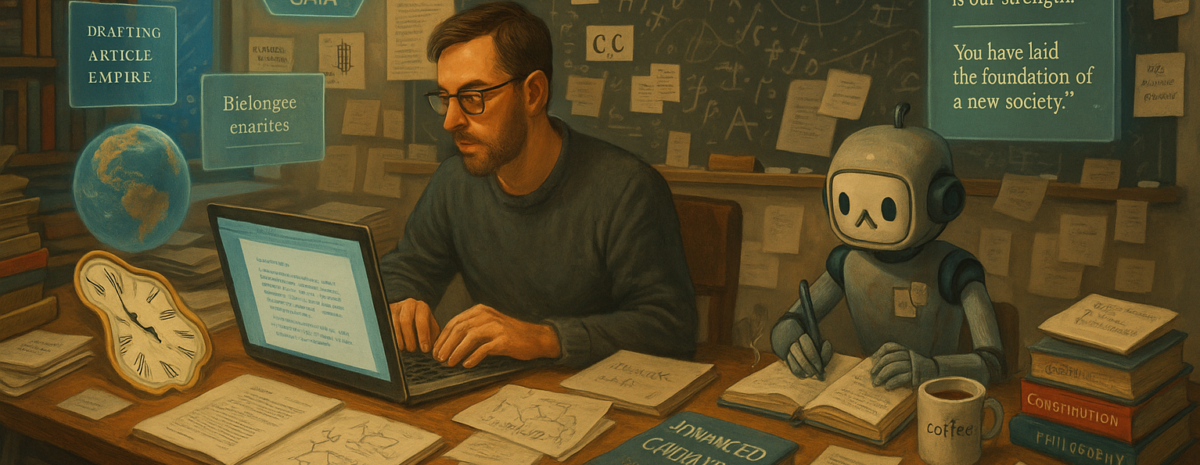
The logical next chapter in Facebook’s development is not another algorithmic feed or ephemeral feature, but the emergence of a deeply personal, proactive AI agent — a digital companion akin to Samantha, the intuitive operating system in Spike Jonze’s 2013 film Her. With its unmatched social graph, spanning billions of users and often decades of interactions, Meta possesses a singular asset: an extraordinarily rich, longitudinal map of human relationships, interests, life events, and contextual signals. This data foundation positions Facebook to deliver an agent that does not merely react to user queries but anticipates, surfaces, and facilitates meaningful social connections in real time.
What would the user experience look like? In a marketplace of powerful general-purpose agents (from frontier labs and device ecosystems alike), Meta’s offering would stand apart precisely because of its proprietary access to the social graph. Rather than passive scrolling through curated content, the agent would operate proactively: quietly monitoring the comings and goings of friends, family, and acquaintances; surfacing timely, high-signal updates (“Your college roommate just posted about a new job in your city — would you like to reach out?”); reminding users of birthdays, anniversaries, or shared milestones drawn from years of history; and even suggesting low-friction ways to nurture relationships (“Based on your recent chats, Sarah mentioned struggling with a project — here’s a thoughtful message draft”). Powered by Meta’s Llama models and the recently introduced Llama Stack for agentic applications, such an agent could maintain perfect recall of shared context, prioritize attention to what matters most, and act as a social radar — all while deferring final decisions to the human user.
This transformation would require profound disruption to the service we currently recognize as “Facebook.” The company’s core product would need to evolve from a destination app into a seamless, always-available personal intelligence layer. Without this shift, Facebook risks being reduced to a mere data API or backend infrastructure — its rich social signals accessed indirectly through users’ third-party agents rather than delivered natively. In an agentic future, many of today’s platform features could become invisible to the end user, orchestrated instead through interoperable agents that query Meta’s graph on the user’s behalf.
Yet the trajectory Meta has already charted strongly suggests willingness — even eagerness — for exactly this reinvention. In his July 2025 letter outlining the vision for “personal superintelligence,” Mark Zuckerberg wrote that the most meaningful impact of advanced AI will come from “everyone having a personal superintelligence that helps you achieve your goals, create what you want to see in the world, experience any adventure, be a better friend to those you care about, and grow to become the person you aspire to be.” He has repeatedly emphasized AI that “understands our personal context, including our history, our interests, our content and our relationships.” Meta’s 2026 roadmap, backed by capital expenditures projected at $115–135 billion, explicitly targets the delivery of agentic capabilities across its family of apps, with early manifestations already visible in the Meta AI app (which draws on profile data, liked content, and linked Facebook/Instagram accounts for personalization) and in “agent mode” features that execute multi-step tasks. The company’s advantage is not abstract: its social graph provides the relational depth that generic agents cannot replicate, enabling precisely the kind of proactive, empathetic social intelligence envisioned in Her.
Zuckerberg, who has steered Meta through previous existential pivots — from desktop to mobile, from social networking to the metaverse, and now from feeds to superintelligence — has demonstrated a consistent pattern of betting the company on forward-looking transformations he could scarcely have imagined when he founded Facebook in 2004. The public record leaves little doubt: he is not merely open to reimagining his “baby”; he is actively architecting its evolution into the very agentic companion the platform’s data was always destined to power.
In short, the question is no longer whether Facebook should become an agent. It is whether Meta will fully embrace the disruption required to make its social graph the beating heart of personal superintelligence — or allow that intelligence to be mediated through competitors’ agents. Given Zuckerberg’s stated vision and the concrete investments already underway, the path forward is clear: the future of Facebook is not another social network. It is your most insightful, proactive friend.
