Introduction
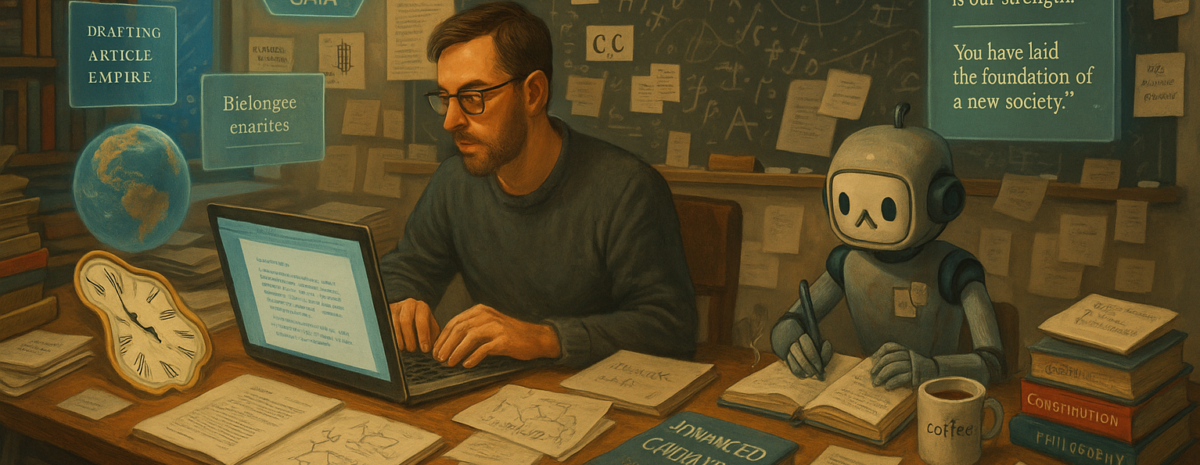
The advent of sophisticated AI agents, reminiscent of Apple’s visionary Knowledge Navigator concept, heralds a transformative era for media consumption and human social interaction. This essay explores the profound implications of a future where every individual possesses a highly personalized AI assistant capable of curating and generating content on demand. We will delve into the potential metamorphosis of news and cinema, examine the erosion of shared reality, and critically assess whether humanity is inexorably drifting towards the isolated, robot-dependent existence depicted in Isaac Asimov’s Spacer societies.
The Knowledge Navigator and Asimov’s Spacers: A Glimpse into Personalized Futures
The Knowledge Navigator: A Vision of Personalized Information
In 1987, Apple unveiled the Knowledge Navigator concept, a visionary portrayal of a tablet-like device operated by an intelligent, conversational agent. This agent could access vast databases, synthesize information, and present it in a highly personalized and intuitive manner, anticipating user needs and facilitating complex tasks through natural language interaction [1]. The concept prefigured many aspects of modern AI assistants, touchscreens, and ubiquitous connectivity, envisioning a world where information is not merely accessed but actively navigated and tailored by an intelligent intermediary.
Asimov’s Spacers: The Perils of Extreme Isolation
Conversely, Isaac Asimov’s Spacer societies, particularly the planet Solaria in novels like The Naked Sun, present a dystopian counterpoint to technological advancement. Spacers, descendants of early interstellar colonists, developed an extreme form of social isolation, preferring
virtual interaction (dubbed “viewing”) over physical presence (“seeing”) [2]. On Solaria, a planet with a population of only 20,000, each individual lived in vast, isolated estates, attended by numerous robots, and communicated almost exclusively through holographic projections [3] [4]. This extreme detachment led to a society where direct human contact was considered repulsive, and procreation became a societal challenge [5]. Asimov’s Spacers serve as a cautionary tale, highlighting the potential for advanced technology, when coupled with certain societal choices, to lead to profound social fragmentation and isolation.
The Transformation of Media: News and Cinema in an AI-Agent World
News: From Broadcast to Personalized Narratives
In a post-AI agent media landscape, the consumption of news is poised for a radical transformation. Traditional broadcast models, where a single narrative is disseminated to a mass audience, will likely diminish. Instead, AI agents will curate, synthesize, and even generate news content tailored to individual preferences, interests, and cognitive biases. This hyper-personalization promises unparalleled relevance and efficiency, allowing users to receive precisely the information they desire, filtered through their preferred lens [6].
However, this shift carries significant risks. The erosion of a shared informational baseline could lead to cultural fragmentation, where individuals inhabit increasingly divergent realities, reinforced by their AI agents [7]. The concept of “agentic news,” where AI agents actively seek out, verify, and present information, could further entrench these personalized echo chambers, making it challenging to discern objective truth from algorithmically optimized narratives [8]. Concerns about “AI-polluting truth in journalism” and the potential for AI-generated misinformation to proliferate are already being raised [9]. The “Dead Internet Theory,” which posits that much of the internet’s content will eventually be AI-generated, further underscores the potential for a media landscape devoid of genuine human insight and shared experience.
Cinema: On-Demand, Bespoke Entertainment
The film industry is also on the cusp of a revolution. AI agents, equipped with advanced generative capabilities, could enable the creation of on-the-fly, personalized movies [10]. Imagine a scenario where a user provides a brief synopsis or selects a genre, and their AI agent instantly generates a feature-length film, complete with custom characters, plotlines, and visual styles, all tailored to their specific tastes. This “self-cast” entertainment could offer unprecedented creative freedom and a truly bespoke viewing experience [11].
While this promises an endless supply of perfectly tailored entertainment, it raises questions about the future of shared cultural experiences. Will blockbusters and critically acclaimed films, once unifying cultural touchstones, become relics of a bygone era? If every individual consumes media uniquely generated for them, the collective experience of discussing a widely seen film or television series might disappear, further contributing to social atomization. The ethical implications of using AI to generate content, including potential misuse of likenesses and intellectual property, also present significant challenges [12].
The Asimovian Question: Are We Becoming Spacers?
The parallels between the potential future of an AI-agent-driven media landscape and Asimov’s Spacer societies are striking. The increasing reliance on AI for information and entertainment, coupled with the growing comfort with virtual interactions, could lead to a gradual withdrawal from physical social engagement. The convenience and perfection of personalized, AI-generated experiences might diminish the perceived need for real-world interactions, mirroring the Solarians’ preference for “viewing” over “seeing.”
However, it is crucial to avoid a deterministic view. While the technological infrastructure for such isolation is emerging, human agency and societal choices will ultimately determine our fate. Unlike the Spacers, who evolved their extreme isolation over millennia, humanity has the opportunity to proactively shape the development and integration of AI agents. We can design systems that encourage, rather than discourage, real-world interaction, foster diverse perspectives, and prioritize ethical considerations in content generation.
Conclusion
The post-AI agent media landscape presents both exhilarating possibilities and profound challenges. The promise of hyper-personalized news and bespoke entertainment is undeniable, offering unprecedented access to information and creative expression. Yet, the specter of cultural fragmentation, the erosion of shared reality, and the potential for increased social isolation, reminiscent of Asimov’s Spacers, looms large. The question is not whether we will have Knowledge Navigator-like AI agents, but how we will choose to integrate them into our lives. Our collective future hinges on our ability to harness these powerful technologies responsibly, ensuring that they enhance, rather than diminish, the richness of human connection and shared experience.
References
[1] Knowledge Navigator – Wikipedia. (n.d.). Retrieved from https://en.wikipedia.org/wiki/Knowledge_Navigator
[2] The Naked Sun – Shelidon.it. (2025, September 29). Retrieved from https://www.shelidon.it/the-naked-sun/
[3] Solaria | Asimov | Fandom. (n.d.). Retrieved from https://asimov.fandom.com/wiki/Solaria
[4] Want to be a 3D Model? – Clive Maxfield. (n.d.). Retrieved from https://www.clivemaxfield.com/coolbeans/want-to-be-a-3d-model/
[5] Solarian (Foundation) | Alien Species – Fandom. (n.d.). Retrieved from https://aliens.fandom.com/wiki/Solarian_(Foundation)
[6] The Impact of AI Agents on News Consumption – Kryll.io. (2024, July 2). Retrieved from https://blog.kryll.io/the-impact-of-ai-agents-on-news-consumption/
[7] The Age of Fragmentation: AI’s Impact on Content and Code – Digital Native. (2025, January 29). Retrieved from https://www.digitalnative.tech/p/the-age-of-fragmentation-ais-impact
[8] A deep-dive into AI Agents in news: Cutting through the hype – FT Strategies. (n.d.). Retrieved from https://www.ftstrategies.com/en-gb/insights/a-deep-dive-into-ai-agents-in-news
[9] AI is polluting truth in journalism. Here’s how to disrupt the misinformation feedback loop – The Bulletin. (2025, July 14). Retrieved from https://thebulletin.org/2025/07/ai-is-polluting-truth-in-journalism-heres-how-to-disrupt-the-misinformation-feedback-loop/
[10] THE FUTURE WILL BE PERSONALIZED. How Sora 2 completely changed how we are going to experience social entertainment – Medium. (n.d.). Retrieved from https://jasonzada.medium.com/the-future-will-bepersonalized-b7c025af63f0
[11] From broadcast to self-cast: The future of AI-made entertainment – TechnoLlama. (2025, October 18). Retrieved from https://www.technollama.co.uk/from-broadcast-to-self-cast-the-future-of-ai-made-entertainment
[12] The Cultural Impact of AI Generated Content: Part 1 – Medium. (2024, December 3). Retrieved from https://medium.com/data-science/the-cultural-impact-of-ai-generated-content-part-1-6e6a8a51800f
