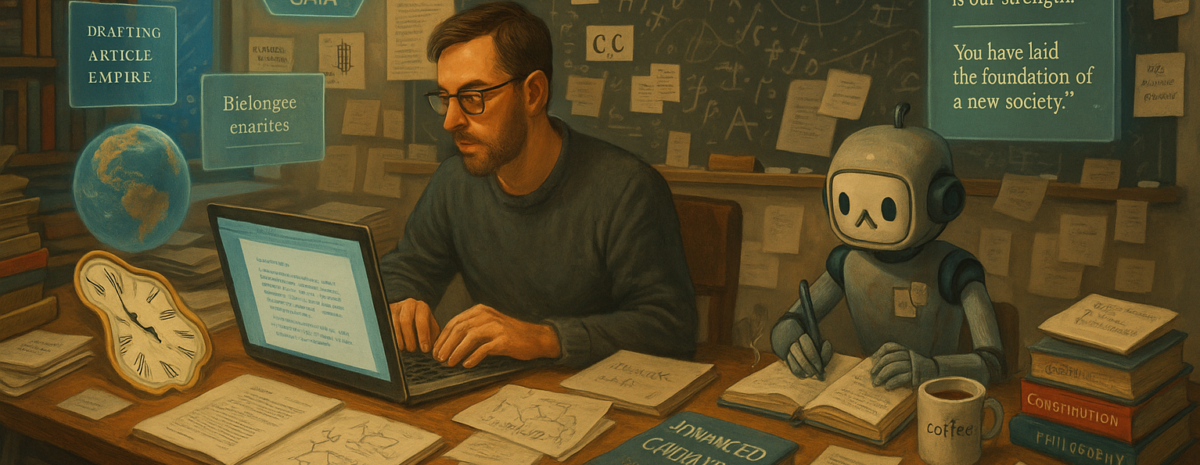
In 1987, Apple released a visionary concept video called Knowledge Navigator—a friendly AI agent that could pull up documents, simulate conversations, and act as a true personal assistant. At the time, it felt like pure science fiction. Nearly four decades later, as of February 2026, that vision is no longer a demo. It’s shipping in pieces across Windows and macOS/iOS, powered by neural processing units (NPUs), on-device models, and hybrid cloud intelligence. We’re entering the era of the Personal Navi: a swarm of AI agents that handle everything from your morning news brief to a custom movie night, all while living primarily on your hardware.
This isn’t hype. Microsoft has explicitly called Windows an “agentic OS,” embedding autonomous agents directly into the taskbar and File Explorer. Apple is turning Siri into a context-aware system agent with on-device foundation models and Private Cloud Compute. The result? Traditional media pipelines collapse, operating systems evolve beyond icons and menus, and the line between “app” and “intelligence” disappears. But far from a dystopian simulation, this creates a new authenticity economy where human creativity and verified truth become scarcer—and more valuable—than ever.
Phase One: Media Becomes Infinite and Instant
Your Navi won’t fetch articles or stream episodes. It generates them on demand, personalized to your exact interests, mood, and context.
- News: Ask for “what actually matters today for my life and investments” and your Navi synthesizes live data feeds, satellite imagery, financial signals, and cross-referenced reports into a 90-second briefing or a 20-minute deep-dive documentary. Traditional outlets shift from publishing finished stories to selling raw verified sensor data and exclusive access. The Reuters Institute’s 2026 predictions note that AI-driven “answer engines” have already slashed publisher referral traffic by over 40% in three years, with bots potentially outnumbering human readers on many sites. Personalized tools like OpenAI’s Pulse or Huxe already deliver agentic audio briefings.
- Movies, TV, Books, Music: Want a cyber-noir thriller starring your likeness, set in a steampunk version of your hometown, with a soundtrack that matches your biometric data? Generated in seconds. Tools like Microsoft’s Sora 2 (now integrated into Copilot workflows) and on-device video models make this routine.
The old media industry doesn’t vanish—it fragments. Mass-produced content becomes free background noise. The premium tier? “Anchor” services: paid human-backed layers that plug into your Navi.
Think Bloomberg Terminal meets Criterion Collection. A $49/month Financial Anchor gives your Navi proprietary on-the-ground feeds from Shenzhen factories or Davos backrooms, plus human analysts who record quick video overrides when the numbers smell off. A Movie-Creation Anchor sells official “story seeds” from real screenwriters—world bibles, licensed A-list likenesses, and live director tweaks—while your base Navi still renders the final experience. This is the modern equivalent of anchor-correspondents or premium curation: same seamless Navi interface, vastly better ingredients.
The Reuters Institute reports that 75% of media executives expect “agentic AI” to have a large or very large impact in 2026, with publishers doubling down on original investigations, human stories, and video that AI can’t easily replicate. The 57% of online content already AI-created or translated (per AWS data) creates “AI slop”—which only increases demand for verifiable human provenance.
Phase Two: Everything Flows Through One Interface—Your Navi
Yes. In 3–5 years, your phone, laptop, glasses, or pendant becomes a thin client. You don’t open apps or browsers. You speak (or think) to your Navi swarm, and it orchestrates everything.
Microsoft already lets agents launch from the taskbar with “@” mentions or the Tools menu. Long-running agents (like the Researcher) show chain-of-thought progress and status updates right on the taskbar. Apple’s Siri in 2026 maintains context across apps, understands on-screen content, and executes multi-step tasks—exactly the system-agent behavior long promised.
The UX that wins: one conversational pane of glass, with optional premium Anchor modules toggled on for higher fidelity. Your base Navi (local and free) handles 95% of daily use. When you need deeper research, flawless video, or verified truth, you subscribe to the specialized layer. It feels like upgrading Spotify tiers—except the upgrade adds real human accountability.
Phase Three: The Operating System Becomes the Agent Swarm
Microsoft and Apple aren’t just tempted—they’re already executing.
Microsoft’s Agentic OS (publicly declared at Ignite 2025)
- Agent Workspace: A secure, parallel session where agents run in the background, interacting with apps and files without interrupting you. Policy-controlled and auditable.
- Agent Launchers & Taskbar Integration: Standardized discovery via Start menu, Search, and Copilot. Agents show live status and chain-of-thought.
- Copilot+ PCs: On-device NPU execution for offline writing assistance, email summarization, fluid dictation, and “Click to Do” features (turn any on-screen table into Excel instantly).
- Windows 365 for Agents: Cloud PCs for heavy or enterprise-grade agents that need full Windows environments.
Microsoft calls this the foundation for a “human-led, agent-operated” future. Agents aren’t add-ons—they’re native OS primitives.
Apple’s Private-First Intelligence
Apple Intelligence runs the core large language model entirely on-device for speed and privacy. Developer access via the new Foundation Models framework lets any app tap the on-device model with just a few lines of code—offline, no API costs. For heavier tasks, Private Cloud Compute extends iPhone-level privacy to the cloud: data is never stored or shared with Apple, and independent experts can inspect the servers. Siri’s 2026 overhaul turns it into a true cross-app, on-screen-aware system agent, with multimodal understanding and tool-calling.
Both companies sell the shift the same way you predicted: privacy, speed, and local control. Your personal data, taste profile, and media history stay on your iron unless you explicitly approve a cloud hand-off.
The Winning Architecture: Hybrid Swarm + Wearables
Pure local can’t yet handle frontier video or massive simulations. Pure cloud feels creepy and laggy. The hybrid model dominates:
- Lightweight agents live permanently on your laptop/desktop NPU—always-on, zero-latency, fully private.
- Heavy requests spin up dynamic agents: first locally, then seamless hand-off to private cloud (Apple’s PCC or Microsoft Azure) for seconds of heavy lifting.
- Your wearable (evolving AirPods/Apple Glasses or Microsoft AR equivalent) becomes the constant surface: glance at your wrist or through lenses and the swarm is there.
This is already in motion. Microsoft’s Model Context Protocol (MCP) lets agents connect standardized tools across local and cloud. Apple’s Shortcuts now tap both on-device and Private Cloud models. The old OS shell (Finder, Explorer, Start menu) fades into invisible infrastructure. You simply talk to your swarm.
What’s Left for Human-Made Media?
Plenty—just not at the point of consumption.
The scarce, high-value layer becomes:
- Seed creation: Original world-bibles, performances, and ideas that Navis remix (the new rock stars are prompt-oracle artists and world-builders).
- Live, risky events: Sports, elections, theater, space launches—anything where real humans can still surprise.
- Verified provenance layers: Human journalists or androids who swear oaths, risk arrest, or put reputation on the line. Their raw feeds become premium Anchor data.
- Status experiences: Limited-edition physical books, vinyl, or in-person premieres in a world of perfect simulation.
The industry shrinks dramatically in headcount but explodes in leverage. A handful of human truth-tellers and creators reach global niches instantly. Everyone else becomes an amateur whose Navi amplifies their voice.
Our Fate: Not Asimovian Spacers, But Liberated Explorers
The fear is real: infinite personalized media could turn us into isolated couch-dwellers. But history with every prior “this will end physical life” technology (radio, TV, internet, smartphones) says otherwise. Humans crave real sun, real risk, real unpredictable connection.
Your Navi swarm won’t isolate you—it removes friction so the real world becomes more interesting. It will suggest the secret waterfall that matches the scene you loved yesterday and book the e-bike. It will broker in-person meetings when compatibility hits 94%. And the premium for human authenticity will keep pulling us outside.
Microsoft and Apple are turning operating systems into the home of your personal agent army—running on your hardware, following your rules. The old gatekeepers lose their stranglehold. The new media economy rewards courage, originality, and verified truth.
We’re not losing media. We’re graduating to a world where every experience can be perfect—and the only thing that still commands real value is the part that came from another human who cared enough to risk something real.
The Knowledge Navigator has arrived. The question is no longer “Will AI agents change everything?”
It’s “What will we do with the time and clarity they finally give us?”
Welcome to the age of the Navi. The future isn’t simulated. It’s augmented—and still very much worth stepping outside for.