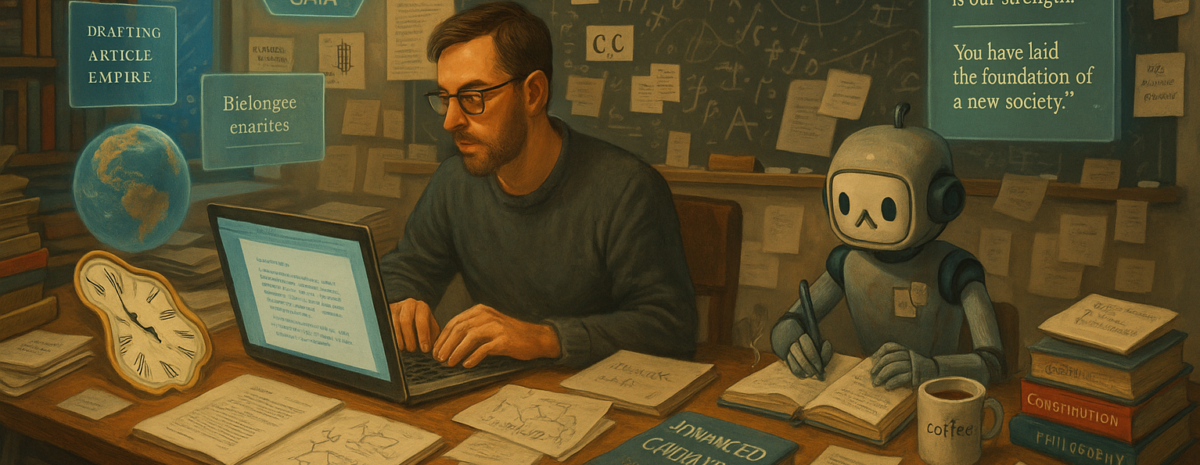
As the United States approaches the end of Donald Trump’s eligibility to serve as president, constrained by the 22nd Amendment, discussions about the future of American politics have intensified across online platforms. Speculation abounds regarding the trajectory of the political landscape, particularly in light of Trump’s influence and the broader implications for governance. This article explores potential scenarios for the post-Trump era, considering both political and technological developments that could shape the nation’s future.
The Question of a Third Term
The Constitution explicitly limits a president to two terms, yet some online commentators speculate that Trump might attempt to challenge this restriction. Such a move would represent a significant breach of constitutional norms, potentially precipitating a crisis in American governance. While the legal and political barriers to such an action are formidable, the mere possibility raises questions about the resilience of democratic institutions. The ramifications of such a scenario are complex and would likely involve protracted legal battles and societal unrest, though a detailed exploration of these outcomes is beyond the scope of this discussion.
The Proxy Scenario: A Continuation of Influence
A more plausible scenario is that Trump, unable to run again, might endorse a loyalist to serve as a proxy, effectively extending his influence into an unofficial third term. This individual would likely align closely with the MAGA agenda, prioritizing policies and rhetoric that resonate with Trump’s base. The prospect of a strong Democratic contender emerging in 2028 appears unlikely to some observers, given the center-left’s focus on issues like pronoun usage, which may alienate moderate voters. This perceived disconnect could weaken Democratic chances, potentially allowing a Trump-aligned candidate to dominate the political stage.
The Impact of Emerging Technologies
Compounding these political uncertainties is the potential emergence of Artificial Superintelligence (ASI) by early 2029. Should ASI become a reality, its implications for governance would be profound. The prospect of any administration, let alone one rooted in populist rhetoric, navigating the complexities of ASI is daunting. The integration of such technology into policy-making, economic systems, or national security could fundamentally alter the political landscape in ways that are difficult to predict.
The Succession of the MAGA Movement
Assuming a more conventional trajectory—where Trump exits the political stage without pursuing unconstitutional measures—the question of who might inherit the MAGA mantle remains open. The successor would likely be a younger figure, potentially exhibiting even stronger autocratic tendencies. Such a leader could consolidate the movement’s base, leveraging its populist appeal to reshape the Republican Party and, by extension, American politics. The risk, as some fear, is the entrenchment of a permanent MAGA-aligned autocracy, characterized by centralized power and diminished democratic checks.
Conclusion
The post-Trump era presents a range of possibilities, from constitutional challenges to the rise of a proxy candidate or the emergence of a new MAGA leader. These scenarios are further complicated by the potential arrival of transformative technologies like ASI. While the future remains uncertain, the debates unfolding online underscore the stakes involved. As the 2028 election approaches, the nation must grapple with questions of leadership, ideology, and the durability of its democratic framework. Only time will reveal how these dynamics will unfold, but the implications for American governance are profound.
