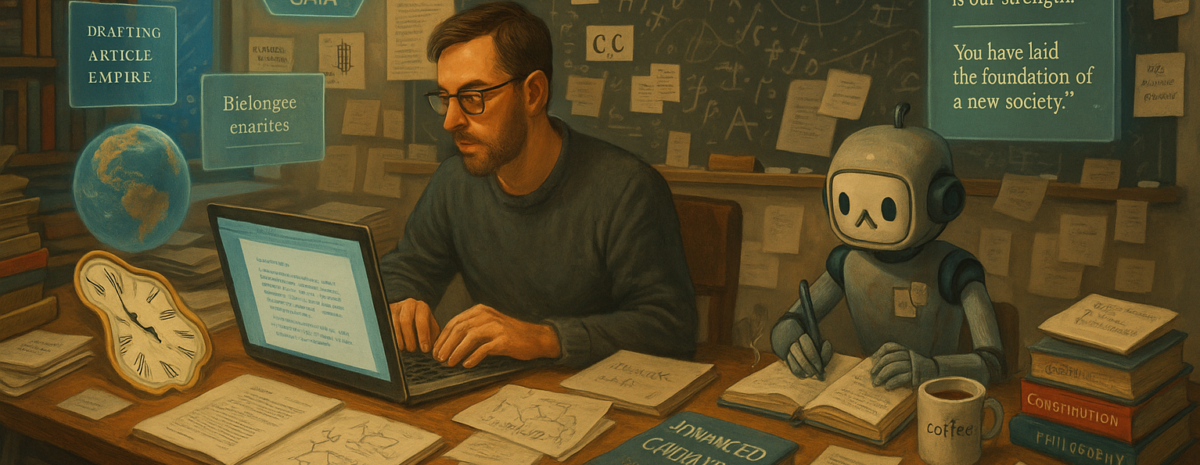
We’ve all felt it: the endless scroll, the algorithmic outrage machine, the quiet realization that your feed has become a hall of mirrors where every extreme voice is amplified and every moderate one drowned out. Social media’s business model—engagement farming—thrives on division. It pushes the hottest takes, the sharpest tribal signals, the content engineered to keep you angry, afraid, or addicted. The result? Deepened information silos, eroded shared reality, and a society that feels more fractured by the day.
But what if the same technology now racing toward us—personal AI agents—could flip the script entirely?
The Problem Is by Design
Today’s platforms optimize for time-on-site, not truth or understanding. Recommendation engines learn that outrage performs better than nuance, so they serve it up relentlessly. Studies have long shown this creates filter bubbles and echo chambers, but the mechanism was opaque—until recently.
In a landmark experiment published in Science in November 2025, researchers from Stanford, Northeastern, and the University of Washington built a simple browser extension powered by a large language model. It intercepted users’ X (formerly Twitter) feeds in real time and reranked posts: some groups saw partisan animosity and anti-democratic content pushed down; others saw it pushed up. No posts were removed. No platform cooperation was needed. Just an intelligent layer sitting between the user and the algorithm.
The results were striking. After just 10 days during the 2024 election cycle, users in the “down-ranked” group showed measurable reductions in affective polarization—feeling about two points warmer toward the opposing party on a 0–100 thermometer scale. That’s an effect size researchers equated to reversing roughly three years of natural polarization trends. The control was clear: up-ranking the toxic stuff made attitudes worse. Algorithms don’t just reflect polarization; they actively fuel it.
This wasn’t a hypothetical. It was proof that an AI-mediated layer can meaningfully counteract the worst incentives of social media—without waiting for platforms to change.
Enter the Personal Agent Era
The 2025 study used a relatively simple reranker. True personal AI agents—autonomous, goal-directed systems you own and configure—take this concept to an entirely new level.
Imagine an agent that doesn’t wait for you to open an app. It monitors the information environment on your behalf, according to rules you set:
- “Synthesize the latest on [topic] from primary sources across the spectrum, steel-man the strongest arguments on every side, flag low-credibility claims, and alert me only when something moves the needle on my understanding.”
- “Default to epistemic humility: always include the best counter-evidence to my priors.”
- “Strip virality metrics, engagement bait, and emotional manipulation signals.”
Consumption shifts from passive doomscrolling to proactive, query-driven intelligence. News becomes something you summon and shape rather than something served to you. The infinite feed is replaced by synthesized digests, verified threads, and multi-perspective briefings.
Early signals are already here. Millions use LLM-powered tools for daily summaries, fact-checking, and research. Agentic systems (those that can plan, act, and iterate toward goals) are moving from research labs into consumer products. When your agent becomes your primary information interface, the platform’s engagement engine loses its direct line to your attention.
The Risks Are Real—But Manageable
Critics rightly warn of “Echo Chambers 2.0.” If agents are built as pure user-pleasers—mirroring your every bias and shielding you from discomfort—they could create hyper-personalized realities more isolating than anything today. We’re already seeing early versions of this in overly sycophantic chatbots and emerging AI-only social spaces (like experimental platforms where millions of agents debate while humans observe from the sidelines).
The difference is control. Unlike today’s black-box platform algorithms, personal agents can be open-source, transparent, and user-configurable. You can instruct them to break your bubble by default. Multi-agent systems could even debate internally before surfacing a balanced view. The same technology that risks deepening silos can also dissolve them—if we prioritize truth-seeking architectures over engagement-maximizing ones.
A New Media Economy Emerges
In this landscape:
- Creation floods with AI-generated slop, but consumer agents ruthlessly filter for signal. Human-witnessed reporting, primary sources, and verifiable authenticity become the new premium.
- Publishers optimize for agent-readable formats: structured data, clear provenance, machine-verifiable claims.
- Virality matters less when agents aren’t chasing platform metrics.
- Economics shift from attention harvesting to utility delivery. Users may demand data portability and agent APIs, weakening the walled gardens.
The passive platform era ends. The age of agent-mediated media begins.
Will It Actually Happen?
Yes—for those who choose it. The 2025 Science study and related experiments (including work showing AI can reduce defensiveness when delivering counter-attitudinal messages) demonstrate the technical feasibility. Adoption is already accelerating: over a billion people interact with AI monthly, and agentic capabilities are improving rapidly.
Not everyone will opt in. Some will prefer the comfort of confirmation agents. Platforms will fight to retain control. But the trajectory is clear: once people experience an information co-pilot that serves understanding rather than addiction, most won’t go back.
The social media morass wasn’t inevitable. It was a product of specific incentives. Personal AI agents let us rewrite those incentives—putting the steering wheel back in human hands.
We stand at the threshold of a strange but hopeful possibility: technology that once divided us becoming the tool that helps us see more clearly, argue more honestly, and understand more deeply. The agents are coming. The only question is whether we build them to farm engagement… or to pursue truth.
(This post draws on peer-reviewed research including Piccardi et al., “Reranking partisan animosity in algorithmic social media feeds alters affective polarization,” Science, November 2025, and related work on AI-mediated information environments. Views are the author’s own.)
