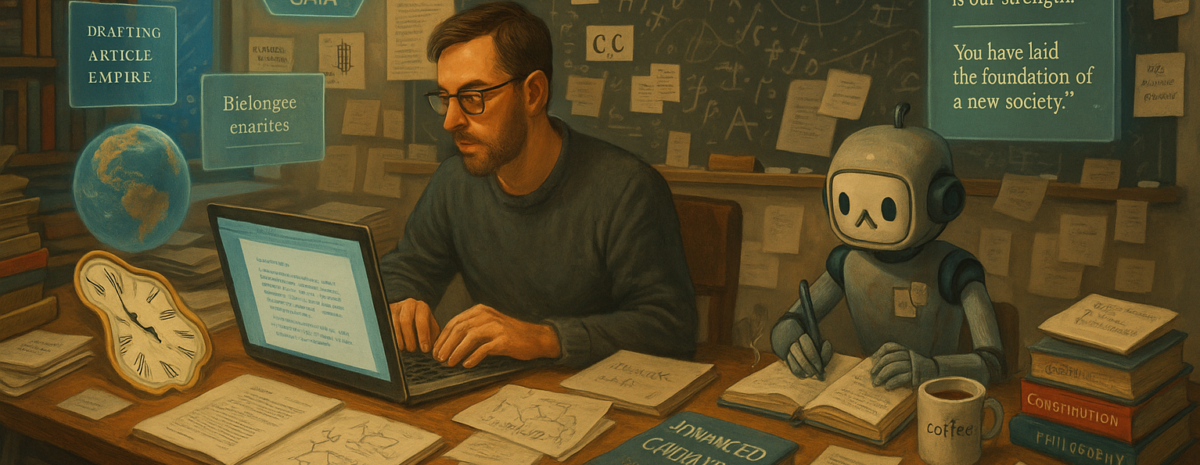
The proliferation of artificial intelligence (AI) agents is poised to fundamentally reshape the landscape of user experience (UX), particularly as these agents evolve into sophisticated gatekeepers mediating our interactions with the digital and physical worlds. This shift evokes striking parallels with Isaac Asimov’s fictional Spacer societies, where humans lived in technologically advanced, robot-serviced isolation. The concept of “my agent talking to your agent” is rapidly transitioning from science fiction to an impending reality, necessitating a deep examination of the evolving UX, the dynamics of agent-to-agent (A2A) communication, and the broader societal implications.
The Rise of AI Agents as Personal Gatekeepers
Historically, digital interactions have largely been direct, with users manually navigating interfaces to achieve their goals. However, AI agents are increasingly moving beyond simple automation to become proactive filters, negotiators, and representatives for individuals. This emergent role transforms them into personal gatekeepers, managing an individual’s digital presence and interactions. For instance, predictions for 2026 suggest the mainstream emergence of “Gatekeeper Agents” capable of screening calls, curating inboxes, and even negotiating with customer service bots on behalf of their users [12].
This evolution signifies a profound shift from AI primarily serving as an information gatekeeper to becoming a facilitator of actionable fulfillment. Instead of merely presenting information, these agents will actively engage in transactions and complete tasks, fundamentally altering how individuals interact with services and other entities [14]. The UX in this “agentic era” will transition from manual navigation to conversational delegation, where users articulate their intent, and agents autonomously execute complex tasks [13, 15].
The Dynamics of Agent-to-Agent Communication (A2A)
A cornerstone of this agent-mediated future is the development and widespread adoption of agent-to-agent (A2A) communication protocols. These protocols enable AI agents to securely exchange information, coordinate actions, and collaborate without direct human intervention. Google’s announcement of an A2A protocol, for example, heralds a new era of agent interoperability, allowing agents to transact and cooperate across various enterprise systems [3].
This capability is not merely a technical advancement; it is a foundational element for the gatekeeper model. When a user’s agent needs to schedule an appointment, negotiate a price, or gather information, it will communicate directly with other agents representing services, businesses, or other individuals. This seamless, automated negotiation and information exchange promise unprecedented efficiency. However, it also introduces new challenges, particularly concerning security. The intricate web of A2A communication presents a novel “attack surface,” where vulnerabilities in agent interactions could have significant consequences [1].
The Asimovian Spacer Parallel
The vision of AI agents as gatekeepers draws compelling parallels to Isaac Asimov’s Spacer societies, as explored in works like The Caves of Steel and The Naked Sun. In these narratives, Spacers live in highly advanced, often isolated, environments, relying almost entirely on sophisticated robots for daily tasks, social mediation, and even personal care. Direct human-to-human interaction is often minimized, with robots serving as intermediaries.
Similarly, a future where personal AI agents manage most external interactions could lead to a form of “digital Spacer” existence. Individuals might experience a reduced need for direct engagement with the outside world, as their agents handle everything from scheduling to purchasing. This raises questions about the nature of human connection, the development of social skills, and the potential for increased societal isolation, even as it promises unparalleled convenience and efficiency [8]. The “Trumplandia Report” in 2026 explicitly notes the striking parallels between an AI-agent-driven media landscape and Asimov’s Spacer societies [8].
User Experience in an Agent-Mediated World
The UX in an agent-mediated world will be characterized by a shift from direct manipulation to conversational interfaces and delegated autonomy. Users will interact with their primary agent, which then orchestrates interactions with other agents or systems. This demands a new focus on designing for trust, transparency, and control within the agent-user relationship.
Key UX considerations include:
- Conversational Delegation: The primary mode of interaction will be natural language, where users express high-level goals, and the agent translates them into actionable steps [15]. The agent’s ability to understand context, anticipate needs, and provide clear feedback will be paramount.
- Trust and Transparency: Users must trust their agents to act in their best interest. This requires agents to be transparent about their actions, decisions, and the information they exchange with other agents. Mechanisms for users to review, override, or understand agent decisions will be crucial.
- Control and Oversight: While agents offer autonomy, users will still require ultimate control. The UX must provide intuitive ways to set parameters, define boundaries, and intervene when necessary. This is particularly important given the potential for agents to “hallucinate or suggest malicious action” [1].
- Brand Interaction: For businesses, the UX will shift from direct engagement with consumers to effectively communicating with their agents. Brands will need to adapt from traditional storytelling to “data signaling,” optimizing their information and offerings for agent consumption and interpretation [2].
Challenges and Considerations
While the agent-mediated future offers immense potential, it also presents significant challenges:
- Ethical Implications: Questions of agent autonomy, accountability, bias, and the potential for manipulation will become central. Who is responsible when an agent makes an error or acts in a way that harms its user or others?
- The Architect’s Dilemma: Developers face the challenge of deciding when to build specialized tools for agents versus creating more generalized, autonomous agents. The “Gatekeeper Pattern” suggests a synthesis: a user-facing A2A agent combined with a suite of reliable tools for a robust agentic system [5].
- Digital Divide: Access to sophisticated AI agents could exacerbate existing inequalities, creating a new form of digital divide between those with advanced agent support and those without.
- Over-reliance and De-skilling: An over-reliance on agents could lead to a decline in certain human skills, such as negotiation, critical thinking, or direct problem-solving, mirroring concerns raised in Asimov’s Spacer societies.
Conclusion
The future UX of AI agents as personal gatekeepers, facilitating agent-to-agent communication, represents a transformative era. The “I’ll have my agent talk to your agent” scenario is not a distant fantasy but an emerging reality that promises unparalleled convenience and efficiency. However, this future also demands careful consideration of its implications, from the design of intuitive and trustworthy agent interfaces to the broader societal impact on human interaction and autonomy. By proactively addressing these challenges, we can shape an agent-mediated world that enhances human capabilities and connections, rather than diminishing them, ensuring a future that is both technologically advanced and profoundly human.
References
[1] Salt Security. (2026, February 10). AI Agent-to-Agent Communication: The Next Major Attack Surface. https://salt.security/blog/ai-agent-to-agent-communication-the-next-major-attack-surface
[2] GlobalLogic. (2025, November 11). The Agent as Gatekeeper: How AI is Remaking the Path from Buyer…. https://www.globallogic.com/insights/blogs/agentic-ai-gatekeeper-buyer-journey/
[3] Google Developers Blog. (2025, April 9). Announcing the Agent2Agent Protocol (A2A). https://developers.googleblog.com/en/a2a-a-new-era-of-agent-interoperability/
[5] Ensarguet, P. (2025, October 14). The Architect’s Dilemma: When to build tools vs. agents for agentic…. LinkedIn. https://www.linkedin.com/pulse/architects-dilemma-when-build-tools-vs-agents-philippe-ensarguet-vrmie
[6] Workday Blog. (2025, March 28). The Future of AI: The Power of Agent-to-Agent. https://blog.workday.com/en-us/agent-to-agent-overview.html
[8] The Trumplandia Report. (2026, February). February 2026 – The Trumplandia Report. https://www.trumplandiareport.com/2026/02/
[12] UX Tigers. (2026, January 13). 18 Predictions for 2026. https://www.uxtigers.com/post/2026-predictions
[13] uxdesign.cc. (2024, May 6). The agentic era of UX. The future of digital experience is…. https://uxdesign.cc/the-agentic-era-of-ux-4b58634e410b
[14] Cui, Y. G. (2025). Only those chosen by AI agents will survive in the delegate…. ScienceDirect. https://www.sciencedirect.com/science/article/pii/S0007681325001818
[15] The Trumplandia Report. (2025, October 23). The Future of UX: AI Agents as Our Digital Gatekeepers. https://www.trumplandiareport.com/2025/10/23/the-future-of-ux-ai-agents-as-our-digital-gatekeepers/
