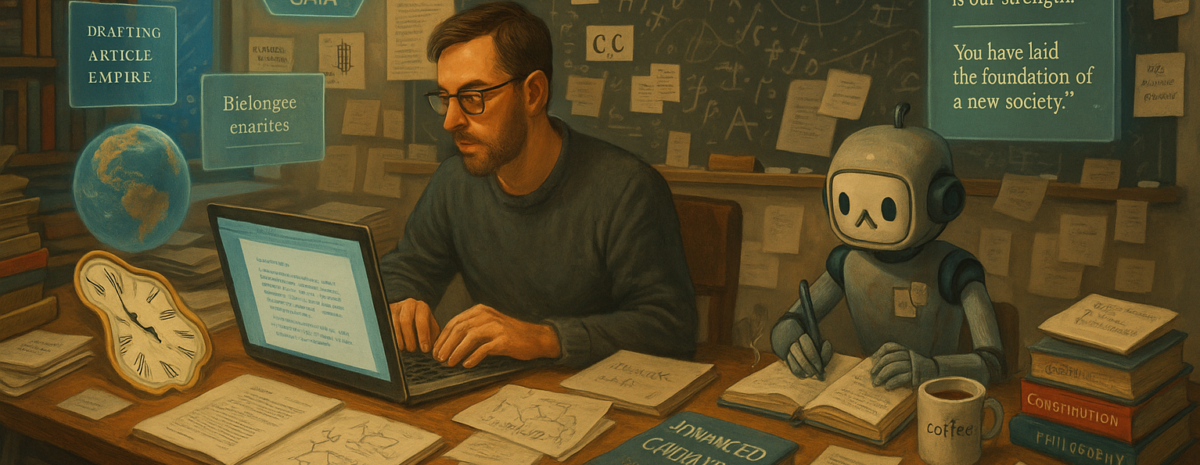
The New Gold Rush: Why Supermodels Are About to Become Tech’s Next Billionaires

We stand at the precipice of an economic revolution, and it has nothing to do with cryptocurrency, quantum computing, or space colonization. It’s far more personal. The next gold rush will be one of flesh and form, and its first multi-billionaires will be the people who are already paid fortunes for their appearance: supermodels.

You’ve considered this before, but the timeline is compressing at a startling rate. The concept isn’t just science fiction anymore; it’s the next logical step in a world rapidly embracing both advanced robotics and artificial intelligence.

The Sci-Fi Precedent: Kiln People and Licensed Likeness

In his prescient novel Kiln People, author David Brin imagined a world where individuals could create temporary clay duplicates of themselves called “dittos.” These dittos would perform tasks—from the mundane to the dangerous—and upon completion, their experiences would be uploaded back to the original host. Critically, famous individuals could license their likenesses for commercial dittos, creating a massive, lucrative market. An entire economy, both legal and illicit, sprung up around the creation and use of these copies.

Brin’s novel provided the blueprint. Now, technology is providing the materials.

From Clay Copies to Android Companions

Forget task-oriented clay servants. The modern application of this idea is infinitely more intimate and disruptive. We are on the verge of creating androids so lifelike they are indistinguishable from humans. And in a society driven by aspiration, desire, and status, what could be a more powerful product than a companion who looks exactly like a world-famous celebrity?

Imagine major tech conglomerates—the Apples and Googles of the 2030s—moving beyond phones and into personal robotics. Their flagship product? The “Companion,” an android built for social interaction, partnership, and, yes, romance. The most desirable and expensive models won’t have generic faces. They will wear the licensed likenesses of Gisele Bündchen, Bella Hadid, or Chris Hemsworth.

For a supermodel, this isn’t just another endorsement deal. It’s an annuity paid on their very DNA. Every android sold bearing their exact specifications—from facial structure to physique—would generate a royalty. It’s the ultimate scaling of personal brand, a market poised to be worth staggering amounts of money.

The Fork in the Technological Road

How “real” will these companions be? The answer to that question depends entirely on which path AI development takes in the coming years.

  1. The Great Wall Scenario: If AI development hits a significant, unforeseen barrier, these androids will likely be powered by what we could call quasi-conscious Large Language Models (LLMs). Their personalities would be sophisticated simulations—capable of witty banter, recalling memories, and expressing simulated emotions—but they would lack true self-awareness. They would be the ultimate chatbot in the most convincing physical form imaginable. Your 2030 timeline for this feels frighteningly plausible.
  2. The No-Wall Singularity: If, however, there is no wall and the curve of progress continues its exponential ascent, we face a far stranger future. We could see the emergence of a true Artificial Superintelligence (ASI). What would a god-like intellect, existing primarily in the digital ether, want with a physical body? Perhaps, as you’ve theorized, it would choose to inhabit these perfect, human-designed avatars as a way to interface with our world, to walk among its creators. In this scenario, a supermodel’s licensed body wouldn’t just be a product; it would be a vessel for a new form of consciousness.

The Deeper Challenge

But this raises a more challenging question, one that moves beyond economics. While the supermodels and manufacturers get rich, what happens to us?

The “wildcat” economy of illegal dittos that Brin envisioned is a certainty. Black markets will flourish, offering unlicensed copies. How does a celebrity cope with knowing unauthorized, unaccountable versions of themselves exist in the world? What are the ethics of “owning” a perfect replica of another human being?

And what of human relationships? If one can purchase a flawless, ever-agreeable companion modeled on a cultural ideal of beauty, what incentive is there to engage in the messy, difficult, but ultimately rewarding work of a real human relationship?

The gold rush is coming. The technology is nearly here, and the economic incentive is undeniable. The foundational question isn’t if this will happen, but what we will become when the people we idolize are no longer just on billboards, but available for purchase.

What happens to the definition of “self” when it becomes a mass-produced commodity?

The Coming Supermodel Gold Rush: When Beauty Becomes Programmable

I’ve been circling back to this idea repeatedly, and I can’t shake the feeling that we’re on the verge of something unprecedented: supermodels are about to become extraordinarily wealthy in ways we’ve never imagined before.

The inspiration comes from David Brin’s prescient novel “Kiln People,” where clay “dittos” serve as temporary bodies for people to accomplish tasks while their consciousness returns to the original host at day’s end. In Brin’s world, celebrities license their likeness for these dittos and rake in massive profits, while a thriving black market economy springs up around unauthorized copies.

We’re heading toward a remarkably similar future, but with a twist that could make supermodels the new tech billionaires.

The Android Companion Economy

Picture this: major android manufacturers competing not just on technical specifications, but on whose companion robots can embody the most desirable human forms. Supermodels will find themselves sitting on goldmines as companies bid for exclusive rights to their physical likeness. We’re not talking about modest licensing deals here—this could represent generational wealth for those who own the most coveted appearances.

The demand will be staggering. Both men and women will want companions that embody their ideals of beauty and charisma, and supermodels have already proven they possess the rare combination of features that captivate millions. Why settle for a generic android face when you could have dinner conversations with a companion that looks like your favorite runway star?

The Timeline Is Closer Than You Think

I’m betting we’ll see the first wave of these sophisticated companion androids by 2030, maybe sooner. The convergence of advanced robotics, AI, and manufacturing is accelerating at a pace that would have seemed impossible just a few years ago.

The key variable is whether we hit a technological wall in AI development. If progress continues unimpeded, we might see these companions powered by artificial general intelligence or beyond—entities that could make today’s chatbots look like pocket calculators. But even if we plateau at current AI trajectories, we’re looking at companions with quasi-conscious large language models sophisticated enough to provide compelling interaction.

Two Possible Futures

Scenario One: The Wall If AI development hits significant barriers, we’ll still get remarkably lifelike companions, but their minds will be sophisticated yet limited language models. Think of them as incredibly advanced Siri or Alexa, housed in bodies that could pass for human at a glance. Still revolutionary, still profitable for supermodels licensing their appearances.

Scenario Two: No Limits If AI continues its exponential growth, we might face something far more complex: artificial superintelligences that choose to inhabit these beautiful forms as avatars in our world. The implications become almost incomprehensibly vast—and the value of licensing the perfect human form becomes incalculable.

The New Celebrity Economy

This shift will fundamentally reshape how we think about celebrity and beauty. Physical appearance, already valuable, will become programmable intellectual property. Supermodels won’t just be selling clothes or cosmetics—they’ll be licensing their entire physical presence for intimate, daily interactions with consumers worldwide.

The smart ones are probably already thinking about this, working with lawyers to understand how to protect and monetize their likeness in an age of perfect digital reproduction. Because when the android companion market explodes, being beautiful won’t just be about magazine covers anymore.

It will be about owning the template for humanity’s idealized future.

Are We Heading Towards a ‘Kiln People’ Future? The Looming Shadow of AI Agents and the Fate of Real Connection

David Brin’s 2002 novel, Kiln People, paints a fascinating, if unsettling, picture of a future where people routinely create temporary, disposable copies of themselves called “dittos.” These clay golems handle the mundane, the dangerous, and even the emotionally taxing aspects of life, while the “originals” remain safely at home. Sound familiar? While we’re not firing up kilns to bake clay clones (yet!), the rise of sophisticated AI agents is raising a chillingly similar question: are we about to outsource our lives to digital “dittos,” and what will that mean for human connection?

The promise of AI agents is seductive. Imagine a tireless digital assistant that manages your schedule, filters your information, answers your questions, and even handles your social media interactions. No more overflowing inboxes, tedious tasks, or awkward small talk. Your perfectly curated digital self, represented by your agent, would navigate the world with flawless efficiency. Sounds great, right?

But Kiln People provides a potent cautionary tale. In Brin’s world, many people become so reliant on their dittos that they effectively withdraw from real life. They experience the world vicariously, through the filtered senses of their disposable copies. The risks are numerous:

  • The Erosion of Authentic Experience: Just as ditto users lose the richness and immediacy of direct experience, over-reliance on AI agents could diminish our own engagement with the world. We might become passive consumers of curated information, rather than active participants in our own lives.
  • The Atrophy of Social Skills: If our agent handles all our social interactions, what happens to our ability to navigate the complexities of human relationships? Will we lose the capacity for empathy, conflict resolution, and genuine connection? The “digital muscles” of social interaction could weaken from disuse, much like the Spacers’ physical muscles in Asimov’s Robot series.
  • The Rise of Digital Solipsism: Imagine a world where everyone interacts primarily through their personalized AI agents. These agents, designed to cater to our preferences, could create extreme filter bubbles, shielding us from diverse perspectives and reinforcing our existing biases. We risk becoming trapped in echo chambers of our own making, a kind of digital solipsism.
  • The Loss of Serendipity and Spontaneity: The messy, unpredictable nature of real-world interaction is often where the magic happens. Serendipitous encounters, unexpected conversations, and even uncomfortable moments can lead to growth, learning, and genuine connection. An overly curated, agent-mediated existence could eliminate these vital experiences.
  • The Question of Identity: In Kiln People, the line between the original and the ditto blurs, raising profound questions about identity and consciousness. While AI agents are not sentient (yet!), our dependence on them could still raise questions about who we are and how we define ourselves. If our agent manages our online persona, our communication, and even our relationships, how much of our “self” remains authentically ours?
  • Vulnerability to Manipulation. A ditto is a copy of your own self, whereas an AI Agent could be influenced and trained by outside actors. This is perhaps an even greater risk than presented in Kiln People.

Beyond the Kiln: Finding a Balanced Path

The point isn’t to reject AI agents entirely. They offer incredible potential to improve our lives, increase efficiency, and even enhance certain aspects of communication. The challenge is to find a balanced approach, to use these tools consciously and intentionally, without sacrificing the essential aspects of human experience.

We need to:

  • Prioritize Human-Centered Design: AI agents should be designed to augment our capabilities, not replace them. They should encourage real-world interaction, critical thinking, and diverse perspectives.
  • Cultivate Digital Literacy: We need to educate ourselves and future generations about the responsible use of AI, the importance of balanced engagement, and the potential pitfalls of over-reliance.
  • Foster “Digital Wellness”: Just as we prioritize physical and mental health, we need to cultivate a healthy relationship with technology, setting boundaries and making conscious choices about how we engage with the digital world.
  • Preserve Spaces for Unmediated Interaction: We need to actively create and protect spaces for face-to-face interaction, community building, and shared experiences.
  • Hold the creators of these AI Agents responsible. If the agent is not acting in your best interest, then whose interest is it acting in?

Kiln People serves as a powerful metaphor, a warning from the future. It reminds us that technology is a tool, and like any tool, it can be used to build or to destroy. The future of human connection in the age of AI agents is not predetermined. It’s a future we are creating now, with every choice we make about how we integrate these powerful technologies into our lives. Let’s choose wisely. Let’s not become a society of people living vicariously through our digital “dittos.” Let’s embrace the richness, messiness, and irreplaceable value of real human connection.