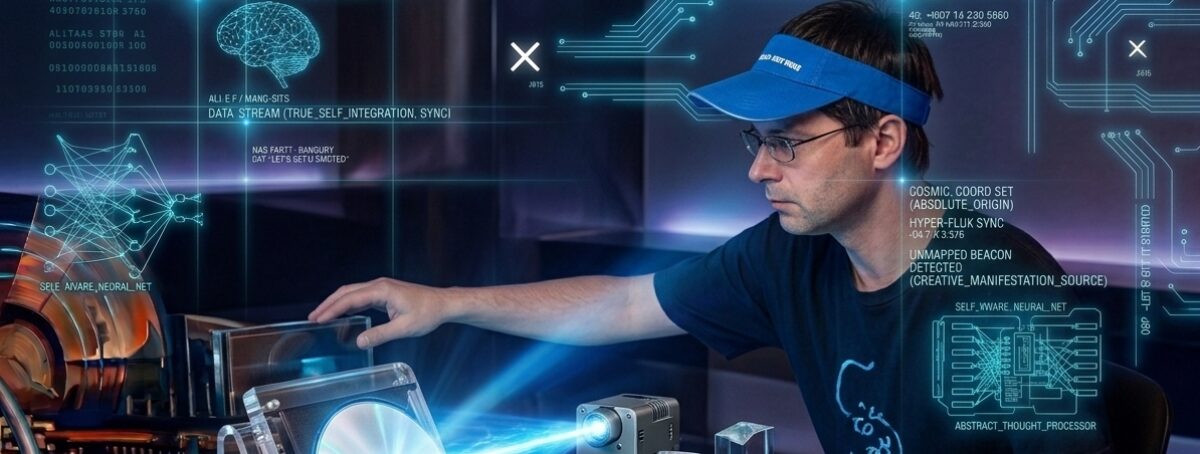
Isaac Asimov’s The Robots of Dawn, a pivotal novel in his renowned Robot series, offers a profound and perhaps prescient look into a future shaped by advanced technology and evolving human-robot relationships. Upon rereading, the book’s depiction of the Spacer society resonates with an uncanny relevance to contemporary discussions about technological intermediation, social isolation, and the potential trajectory of a post-Singularity world.
The Spacer Society: A Life of Robotic Intermediation
At the heart of The Robots of Dawn lies the Spacer civilization, a culture that has evolved dramatically from Earth-bound humanity. The Spacers, inhabitants of fifty technologically advanced worlds, live extraordinarily long lives, often extending for centuries. This longevity is coupled with an extreme reliance on robots, which mediate nearly every aspect of their existence. From mundane tasks to complex social interactions, robots serve as indispensable intermediaries, creating a society where direct human contact is not only rare but often actively avoided.
A key technological innovation enabling this lifestyle is Trimensional Viewing (TVC). Asimov describes TVC as the standard for audiovisual communication and entertainment, projecting realistic holographic representations of individuals or scenes. For Spacers, TVC is the primary method of interaction, even for intimate or crucial matters. This preference for mediated communication over physical presence has led to a cultural aversion to direct human interaction, a phenomenon that detective Elijah Baley, an Earthman, finds both alien and challenging to navigate. Their lives are characterized by vast personal spaces, minimal population density, and a profound psychological discomfort with crowds or close physical proximity to others.
This intermediated existence has profound implications for Spacer psychology and social structures. While it affords them immense comfort, safety, and longevity, it also fosters a form of social isolation, where genuine, unmediated human connection becomes a rarity. The Spacers’ lives are, in essence, totally android-intermediated, raising questions about the nature of humanity when direct experience is largely replaced by technological proxies.
Post-Singularity Parallels: A Possible Future?
The Spacer society, as envisioned by Asimov, presents striking parallels to speculative ideas about a post-Singularity future. The concept of the Singularity posits a hypothetical future point at which technological growth becomes uncontrollable and irreversible, resulting in unforeseeable changes to human civilization. In such a future, advanced artificial intelligence and robotics could similarly mediate our lives to an unprecedented degree.
Consider the implications: if AI systems become vastly more intelligent and capable than humans, they could manage our environments, facilitate our communications, and even extend our lifespans through advanced medical and cybernetic interventions. This could lead to a scenario where direct human effort and interaction become less necessary, much like the Spacers’ reliance on their robot servants. The Spacers’ long, physically comfortable, yet socially distant lives could be a blueprint for a humanity that has outsourced much of its direct engagement with the world to advanced AI and robotics.
The book subtly explores the trade-offs inherent in such a future: the immense benefits of technological advancement versus the potential loss of fundamental human experiences, such as spontaneous physical interaction, the rawness of unmediated emotion, and the challenges that foster growth and resilience. Asimov prompts us to consider whether a life of ultimate convenience, devoid of physical discomfort or social friction, might inadvertently lead to a different kind of existential void.
A Hollywood Adaptation: Timeless Themes for the Big Screen
Given its rich thematic depth and compelling narrative, The Robots of Dawn would be an excellent candidate for a Hollywood adaptation. The visual potential of the Spacer worlds, with their advanced technology, sprawling estates, and the ubiquitous presence of sophisticated robots, offers a stunning backdrop for a cinematic experience. The central mystery, involving a
roboticide and political intrigue, provides a strong narrative hook. More importantly, the philosophical questions raised by the Spacer society—the nature of humanity, the impact of technology on social interaction, and the pursuit of an idealized, yet potentially isolating, existence—are more relevant than ever.
A film adaptation could visually explore the stark contrast between the agoraphobic Earthmen and the physically detached Spacers, highlighting the psychological effects of their respective environments. It could delve into the nuances of human-robot relationships, particularly the complex bond between Gladia Delmarre and the humaniform robot Jander Panell, which challenges conventional notions of companionship and intimacy. The story also features the brilliant detective Elijah Baley, whose Earth-bound sensibilities clash with Spacer customs, providing both dramatic tension and moments of cultural commentary.
Moreover, a cinematic rendition could bring to life the intricate political machinations between factions on Aurora, particularly the rivalry between Han Fastolfe and Kelden Amadiro, and their differing visions for humanity’s expansion into the galaxy. The underlying theme of psychohistory, a concept central to Asimov’s broader Foundation series, could be subtly introduced, adding another layer of intellectual depth to the narrative.
In an era increasingly defined by digital interactions, virtual realities, and the burgeoning development of AI, The Robots of Dawn serves as a powerful cautionary tale and a thought-provoking exploration of our potential future. A Hollywood adaptation would not only entertain but also spark crucial conversations about the path we are forging with technology and its ultimate impact on what it means to be human.


You must be logged in to post a comment.