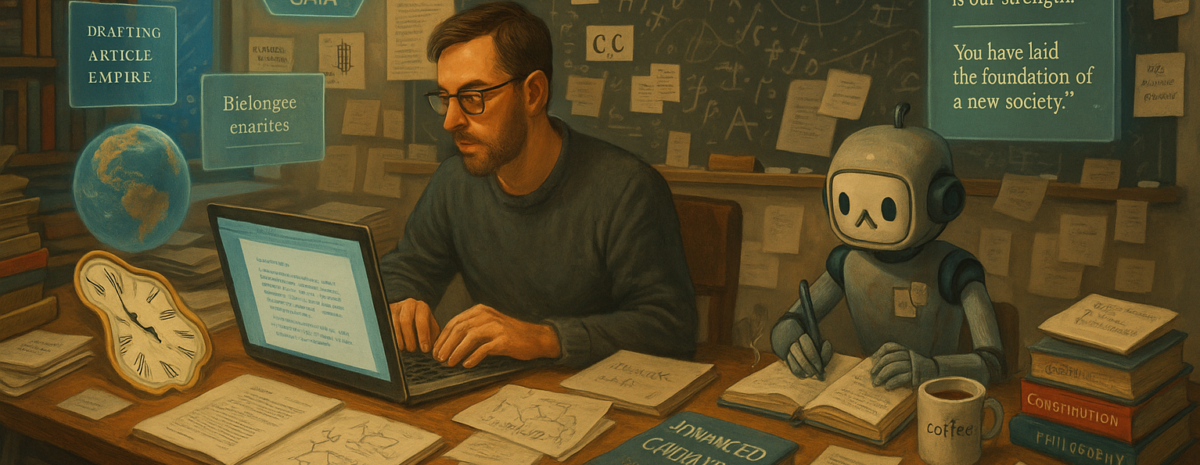
In the 1987 Apple Knowledge Navigator video demo, a professor sits at a futuristic tablet-like device and speaks naturally to an AI assistant. The “professor” asks for information, schedules meetings, pulls up maps, and even video-calls colleagues—all through calm, conversational dialogue. There are no apps, no folders, no menus. The interface is the conversation itself. The AI anticipates needs, reasons aloud, and delivers results in context. It was visionary then. It looks prophetic now.
Fast-forward to 2026, and the pieces are falling into place for exactly that future: a single, persistent AI agent (call it a “Navi”) that becomes your universal digital companion. In this world, traditional apps don’t just evolve—they become largely irrelevant. Everything collapses into one intelligent layer that knows you deeply and acts on your behalf.
Why Apps Feel Increasingly Like a Relic
Today we live in app silos. Spotify for music, Netflix for video, Calendar for scheduling, email for communication, fitness trackers, shopping apps, news readers—each with its own login, notifications, data model, and interface quirks. The user is the constant switchboard operator, opening, closing, searching, and curating across dozens of disconnected experiences.
A true Navi future inverts that entirely:
- One persistent agent knows your entire digital life: listening history, calendar, location, preferences, mood (inferred from voice tone, typing speed, calendar density), social graph, finances, reading habits, even subtle patterns like “you always want chill indie folk on rainy afternoons.”
- It doesn’t wait for you to open an app. It anticipates, orchestrates, and delivers across modalities (voice, ambient notifications, AR overlays, smart-home integrations).
- The “interface” is conversational and ambient—mostly invisible until you need it.
What Daily Life Looks Like with a Single Navi
- Morning: Your phone (or glasses, or earbuds) softly says: “Good morning. Rainy commute ahead—I’ve queued a 25-minute mellow indie mix based on your recent listens and the weather. Traffic is light; I’ve adjusted your route. Coffee maker is on in 10 minutes.”
- Workday: During a stressful meeting, the Navi notices elevated voice tension and calendar density. It privately nudges: “Quick 90-second breathing break? I’ve got a guided audio ready, or I can push your 2 PM call by 15 minutes if you need it.”
- Evening unwind: “You’ve had a long day. I’ve built a 45-minute playlist extending that folk track you liked yesterday—similar artists plus a few rising locals from Virginia. Lights dimming in 5 minutes. Play now?”
- Discovery & decisions: “That book you were eyeing is on sale—want me to add it to cart and apply the code I found?” or “Your friends are watching the game tonight—I’ve reserved a virtual spot and prepped snack delivery options.”
No launching Spotify. No searching Netflix. No checking calendar. No app-switching. The Navi handles context, intent, and execution behind the scenes.
How We Get There
We’re already on the path:
- Agent frameworks like OpenClaw show persistent, tool-using agents that run locally or in hybrid setups, remembering context and orchestrating tasks across apps.
- On-device models + cloud bursts enable low-latency, private, always-available agents.
- 2026 trends (Google’s agent orchestration reports, multi-agent systems, proactive assistants) point to agents becoming the new “OS layer”—replacing app silos with intent-based execution.
- Users already pay $20+/month for basic chatbots. A full life-orchestrating Navi at $30–50/month feels like obvious value once it works reliably.
What It Means for UX and the App Economy
- Apps become backends — Spotify, Netflix, etc. turn into data sources and APIs the Navi pulls from. The user never sees their interfaces again.
- UI disappears — Interaction happens via voice, ambient notifications, gestures, or AR. Screens shrink to brief summaries or controls only when needed.
- Privacy & control become the battleground — A single agent knowing “everything” about you is powerful but risky. Local-first vs. cloud dominance, data sovereignty, and transparency will define the winners.
- Discovery changes — Serendipity shifts from algorithmic feeds to agent-curated moments. The Navi could balance familiarity with surprise, or lean too safe—design choices matter.
The Knowledge Navigator demo wasn’t wrong; it was just 40 years early. We’re finally building toward that single, conversational layer that makes apps feel like the command-line era of computing—powerful but unnecessarily manual. The future isn’t a dashboard of apps. It’s a quiet companion who already knows what you need before you ask.
The question now is whether we build that companion to empower us—or to quietly control us. Either way, the app icons on your home screen are starting to look like museum pieces.


You must be logged in to post a comment.