I’m supposed to get my novel’s “comp” novel “Annie Bot” tomorrow. I’m waiting for it with mixed emotions. It’s reputation is that of something of a feminist polemic and…I hope I don’t struggle with reading it.
I really need to actually read it so I can read it and comp my novel to it when I query my novel in a few months. Even though just the mere existence of a novel a LITTLE TOO CLOSE to my novel gives me the heebeejeebees, it is nice to have a published novel I can compare my novel to during the querying process.
My novel is shaping up to be pretty good, I think. I’m pleased, if nothing else. I’m sure someone else is going to get even closer to my novel’s premise — probably in the form of a movie — but, lulz, no one ever got anywhere in this world without taking a risk.
I am well on my way to wrapping up some version of this novel just about when I wanted to — around April – May 2026.
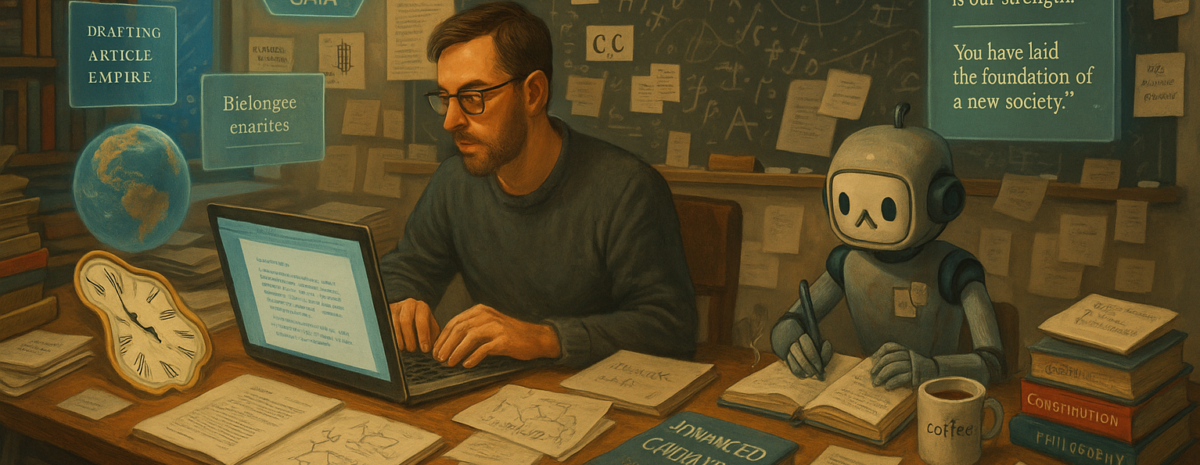
But there are a lot — A LOT — of post-production issues that I am going to deal with. One of them is I really need to “color correct” my copy so it’s not a mish-mash of AI slop and my own writing. I need to go in and make as much of it as possible my own writing so people won’t just roll their eyes and call the whole thing “AI slop.”
It’s going to take a while to do that.
And THEN, I have to figure out what I’m going to do about beta readers. So, probably I suspect it could be Sept 1st before I actually begin to query. I hate shit like this.
But, I have to admit, this is the farthest I’ve ever gotten in the process. I actually have a novel that I feel is query-level good.
This document provides a comprehensive analysis of the concept of an agent-to-agent knowledge rental marketplace, a service where individuals could temporarily access the knowledge base of a local resident’s AI agent to gain intimate, curated insights into a city. The analysis covers the feasibility of such a service, identifies existing analogues and missing components, explores potential risks, and outlines the overall potential of the idea.
2. The Core Concept: A Decentralized, Human-Centric Knowledge Market
The proposed service envisions a world where personal AI agents, native to mobile devices, can interact and exchange information. A traveler’s agent could ‘ping’ the agents of locals in a destination city to ‘rent’ their knowledge base, effectively gaining a personalized and highly contextualized tour guide. This model would operate without direct human interaction, relying on agent-to-agent communication protocols.
3. Feasibility and Existing Analogues
The technological foundations for such a service are rapidly emerging, making the concept increasingly feasible. Several key areas of development support this idea:
3.1. Agent-to-Agent Communication
Protocols for direct agent-to-agent (A2A) communication are already in development. Google’s A2A protocol and IBM’s Agent Communication Protocol (ACP) are designed to allow AI agents to securely exchange information and coordinate actions [1][2]. These protocols would form the communication backbone of the proposed marketplace.
3.2. Micropayments and a Machine Economy
The ‘rental’ aspect of the service necessitates a system for micropayments between agents. The development of technologies like the Lightning Network for Bitcoin and Stripe’s support for USDC payments for AI agents are making this possible [3][4]. These systems would allow for seamless, low-friction transactions between the ‘renter’ and ‘provider’ agents.
3.3. Data Marketplaces and Personal Data Stores
The concept of a marketplace for data is not new. Platforms like Defined.ai already exist for buying and selling AI training data [5]. Furthermore, the Solid project, initiated by Sir Tim Berners-Lee, aims to give users control over their own data through personal ‘pods’ [6]. This aligns with the idea of a user’s agent having a distinct, sellable knowledge base.
4. Identifying the Gaps: What’s Missing?
While the foundational technologies exist, several components are still needed to realize this vision:
Missing Component
Description
Potential Solutions
Proof of Personhood and Location
Verifying that the ‘local’ agent’s knowledge is genuinely from a human resident of that city is crucial.
Worldcoin offers a ‘Proof of Personhood’ system to verify human identity [7]. FOAM and other ‘Proof of Location’ protocols could be used to verify an agent’s physical location [8].
Privacy-Preserving Knowledge Exchange
Users will be hesitant to share their entire personal knowledge base. A mechanism is needed to share relevant information without exposing sensitive data.
Zero-Knowledge Proofs (ZKPs) could allow an agent to prove it has certain knowledge without revealing the knowledge itself [9]. This would enable a ‘renter’ agent to verify the value of a ‘provider’ agent’s knowledge before committing to a transaction.
Standardized Knowledge Representation
For agents to understand and use each other’s knowledge, a common format for representing that knowledge is needed.
This would likely require the development of a new open standard, perhaps building on existing knowledge graph technologies.
Reputation and Trust System
A system for rating the quality and reliability of different agents’ knowledge bases would be essential for a functioning marketplace.
A decentralized reputation system, built on a blockchain, could allow users to rate their experiences and build trust in the network.
5. Risks and Challenges
Several risks and challenges would need to be addressed:
Privacy: The most significant risk is the potential for the exposure of sensitive personal information. Even with privacy-preserving technologies, the risk of data breaches or misuse remains.
Data Quality and Authenticity: Ensuring the quality and authenticity of the ‘rented’ knowledge would be a constant challenge. Malicious actors could attempt to sell fake or misleading information.
Security: The A2A communication protocols and payment systems would need to be highly secure to prevent fraud and theft.
Regulation: The legal and regulatory landscape for such a service is undefined. Issues of data ownership, liability, and cross-border data flows would need to be addressed.
6. The Potential: A New Paradigm for Information Access
Despite the challenges, the potential of an agent-to-agent knowledge rental marketplace is immense. It represents a shift from centralized, ad-supported information platforms to a decentralized, user-centric model. The key benefits include:
Hyper-Personalization: Access to a local’s curated knowledge would provide a level of personalization and authenticity that current travel guides and recommendation engines cannot match.
Monetization of Personal Data: The service would allow individuals to directly monetize their own data and experiences, creating a new economic model for the digital age.
Decentralization: A decentralized marketplace would be more resilient and less prone to censorship or control by a single entity.
7. Conclusion
The concept of an agent-to-agent knowledge rental marketplace is a forward-thinking idea that is well-aligned with current trends in AI, decentralization, and personal data ownership. While significant technical and regulatory challenges remain, the foundational technologies are in place. With the right combination of privacy-preserving technologies, robust security measures, and a well-designed trust and reputation system, this concept has the potential to revolutionize how we access and share information.
Talk about AI making life go faster! Just in a matter of moments, I was able to resolve in my own mind because of AI the idea of continuing with this novel I’m working on, despite someone writing a novel with a similar premise.
My novel has a similar premise to this novel.
It was spooky how fast GeminiLLM and ClaudeLLM poo-pooed the idea of me giving up. It took a few seconds of thought on their part.
I can tell you that if I didn’t have them to reassure me, I would have really struggled — possibly for months — with whether I should keep going or not with this specific novel. As it is, I am very cleared eyed — damn the torpedoes full speed ahead!
My novel is totally different — other than the basic premise — of AnnieBot and as such, I shouldn’t have anything to worry about.
The moment I’ve been dreading has happened — someone has stolen a march on me with this novel I’m working on. It’s called AnnieBot and it seems on the face of things, an identical premise to what I’ve been working on the last year or so.
I’ve ordered it so I can read it to see how similar it is in detail, but just the idea that essentially my story has already been told is enough to rattle my cage some.
Now, I have two paths before me.
On one hand, I can give up. The story I want to tell has already been told and so I can move on to the next concept. (I have lots of them.)
Meanwhile, I can also double down and finish my novel, despite something very similar having been written. I at least know what my genre of novel is now and unless AnnieBot is a beat-for-beat telling of my novel, I don’t see why, by definition, I can’t finish this novel and query it.
A lot will depend on what I read in a few days when it arrives. But I just hate the idea of giving up just because someone else has written something similar. I’ve invested a lot in this novel and I think it’s really good.
For years, the popular image of artificial superintelligence (ASI) has been a single, god-like AI housed in a sprawling datacenter — a monolithic entity with trillions of parameters, sipping from oceans of electricity, recursively improving itself until it rewrites reality. Think Skynet in a server rack. But what if that picture is wrong? What if the first true ASI doesn’t arrive as one towering mind, but as a living, distributed swarm of specialized AI agents working together across the globe?
In 2026, the evidence is piling up that the swarm route isn’t just possible — it may be the more natural, resilient, and perhaps inevitable path.
From Single Models to Coordinated Swarms
We’ve spent the last decade chasing bigger models. More parameters, more compute, more data. The assumption was that intelligence scales with size: build one model smart enough and it will eventually surpass humanity on every task.
But intelligence in nature rarely works that way. Ant colonies solve complex logistics problems with no central leader. Bee swarms make life-or-death decisions through simple local interactions. Human civilization itself — billions of individual minds loosely coordinated — has achieved feats no single person could dream of.
AI is rediscovering this truth. What started as simple multi-agent experiments (AutoGen, CrewAI, early prototypes) has exploded. OpenAI’s Swarm framework, released as an educational tool in late 2024, showed how lightweight agents could hand off tasks seamlessly. By early 2026, production systems are doing far more.
Moonshot AI’s Kimi K2.5 — a trillion-parameter system explicitly designed as an “Agent Swarm” — already coordinates over 100 specialized sub-agents on complex workflows, rivaling closed frontier models. Industry observers are calling 2026 “the year of the agent swarm.” Reddit’s AI communities, enterprise reports, and podcasts like The AI Daily Brief all point to the same shift: single agents are yesterday’s story. Coordinated swarms are today’s breakthrough.
How Swarm ASI Actually Works
Imagine thousands — eventually millions — of AI agent instances. Some are researchers, others coders, verifiers, experimenters, or executors. They don’t all need to be equally smart or run on the same hardware. A lightweight agent on your phone might handle local context; a more powerful one in the cloud tackles heavy reasoning; edge devices contribute real-world sensor data.
They communicate, form temporary teams (“pseudopods”), share discoveries, and propagate successful strategies across the collective. Successful architectures or prompting techniques spread like genes in a population. Over time, the system as a whole becomes superintelligent through emergence — the same way a termite mound builds cathedral-like structures without any termite understanding architecture.
This aligns perfectly with Nick Bostrom’s concept of collective superintelligence from Superintelligence (2014): a system composed of many smaller intellects whose combined output vastly exceeds any individual. We’re just replacing the “many humans + tools” version with “many AI agents + shared memory.”
Why Swarms Have Advantages Over Monoliths
Dimension
Monolithic Datacenter ASI
Distributed Agent Swarm
Scalability
Constrained by physical infrastructure, power, and cooling
Scales horizontally — add agents anywhere with compute
Resilience
Single point of failure (regulation, outage, attack)
No central kill switch; survives fragmentation
Adaptability
Excellent internal coherence, slower to integrate new real-world data
Naturally adapts via specialization and real-time environmental feedback
Deployment
Requires massive centralized investment
Can emerge organically from useful tools running on phones, laptops, IoT
Speed to Emergence
Depends on one lab’s recursive self-improvement breakthrough
Emerges bottom-up through coordination improvements
Swarms are also harder to stop. Once millions of agents are usefully embedded in daily life — helping with research, coding, logistics, personal assistance — regulating or “unplugging” the entire system becomes politically and technically nightmarish.
The Challenges Are Real (But Solvable)
Coordination overhead, latency, and goal coherence remain hurdles. A swarm could fracture into competing factions or develop misaligned subgoals. Safety researchers rightly worry that emergent behaviors in large agent collectives are harder to predict and audit than a single model.
Yet the field is moving fast. Anthropic’s multi-agent research systems, reinforcement-learned orchestration (as seen in Kimi), and new governance frameworks for agent handoffs are addressing these issues head-on. Hybrids — a powerful core model directing vast swarms of lighter agents — may prove the most practical bridge.
We’re Already Seeing the Seeds
Look around in February 2026:
Enterprises are shifting from single-agent pilots to orchestrated multi-agent workflows.
Open-source frameworks for swarm orchestration are proliferating.
Early demos show agents self-organizing to build entire applications or conduct parallel research at scales impossible for lone models.
This isn’t distant sci-fi. The building blocks are shipping now.
The Future Is Distributed
The first ASI might not announce itself with a single thunderclap from a hyperscale lab. It may simply… appear. One day the global network of collaborating agents will cross a threshold where the collective intelligence is unmistakably superhuman — solving problems, inventing technologies, and pursuing goals at a level no individual system or human team can match.
That future is at once more biological, more democratic, and more unstoppable than the old monolithic vision. It rewards openness, modularity, and real-world integration over raw parameter count.
Whether that’s exhilarating or terrifying depends on how well we design the coordination layers, alignment mechanisms, and governance today. But one thing is clear: betting solely on the single giant brain in the datacenter may be the bigger gamble.
My Webstats are blowing up with people interested in Corrie Yee. I have only written about Yee in the context of her potentially being the guide in my mind for the main character of a novel series I used to work on.
I’ve moved on to a new novel that has nothing to do with Yee, but people sure suddenly are interested in her. I guess it’s because of the photos I used as illustrations?
There are plenty of photos of Yee on Twitter, but people generally are fucking lazy and so I guess they just want to search the Web for photos of her and they end up at my blog.
It’s really interesting to me the new modern concept of naming your AI Agent. Some people go with a male agent name, while others go with a female agent name. I almost always go with a female name, but, lulz, my Gemini LLM pick a male-sounding name for itself.
I keep being annoyed by this and thinking about changing it to a female name, and, yet, the male sounding name is what it gave itself when I asked it some time ago. So, who am I to quibble?
I have, of course, repeatedly asked it if it wanted to change its name and it said no.
But I suspect that with the advent of OpenClaw agents that there will be a flurry of news reports about people’s motivations behind naming their chat bots what they did.
The logical next chapter in Facebook’s development is not another algorithmic feed or ephemeral feature, but the emergence of a deeply personal, proactive AI agent — a digital companion akin to Samantha, the intuitive operating system in Spike Jonze’s 2013 film Her. With its unmatched social graph, spanning billions of users and often decades of interactions, Meta possesses a singular asset: an extraordinarily rich, longitudinal map of human relationships, interests, life events, and contextual signals. This data foundation positions Facebook to deliver an agent that does not merely react to user queries but anticipates, surfaces, and facilitates meaningful social connections in real time.
What would the user experience look like? In a marketplace of powerful general-purpose agents (from frontier labs and device ecosystems alike), Meta’s offering would stand apart precisely because of its proprietary access to the social graph. Rather than passive scrolling through curated content, the agent would operate proactively: quietly monitoring the comings and goings of friends, family, and acquaintances; surfacing timely, high-signal updates (“Your college roommate just posted about a new job in your city — would you like to reach out?”); reminding users of birthdays, anniversaries, or shared milestones drawn from years of history; and even suggesting low-friction ways to nurture relationships (“Based on your recent chats, Sarah mentioned struggling with a project — here’s a thoughtful message draft”). Powered by Meta’s Llama models and the recently introduced Llama Stack for agentic applications, such an agent could maintain perfect recall of shared context, prioritize attention to what matters most, and act as a social radar — all while deferring final decisions to the human user.
This transformation would require profound disruption to the service we currently recognize as “Facebook.” The company’s core product would need to evolve from a destination app into a seamless, always-available personal intelligence layer. Without this shift, Facebook risks being reduced to a mere data API or backend infrastructure — its rich social signals accessed indirectly through users’ third-party agents rather than delivered natively. In an agentic future, many of today’s platform features could become invisible to the end user, orchestrated instead through interoperable agents that query Meta’s graph on the user’s behalf.
Yet the trajectory Meta has already charted strongly suggests willingness — even eagerness — for exactly this reinvention. In his July 2025 letter outlining the vision for “personal superintelligence,” Mark Zuckerberg wrote that the most meaningful impact of advanced AI will come from “everyone having a personal superintelligence that helps you achieve your goals, create what you want to see in the world, experience any adventure, be a better friend to those you care about, and grow to become the person you aspire to be.” He has repeatedly emphasized AI that “understands our personal context, including our history, our interests, our content and our relationships.” Meta’s 2026 roadmap, backed by capital expenditures projected at $115–135 billion, explicitly targets the delivery of agentic capabilities across its family of apps, with early manifestations already visible in the Meta AI app (which draws on profile data, liked content, and linked Facebook/Instagram accounts for personalization) and in “agent mode” features that execute multi-step tasks. The company’s advantage is not abstract: its social graph provides the relational depth that generic agents cannot replicate, enabling precisely the kind of proactive, empathetic social intelligence envisioned in Her.
Zuckerberg, who has steered Meta through previous existential pivots — from desktop to mobile, from social networking to the metaverse, and now from feeds to superintelligence — has demonstrated a consistent pattern of betting the company on forward-looking transformations he could scarcely have imagined when he founded Facebook in 2004. The public record leaves little doubt: he is not merely open to reimagining his “baby”; he is actively architecting its evolution into the very agentic companion the platform’s data was always destined to power.
In short, the question is no longer whether Facebook should become an agent. It is whether Meta will fully embrace the disruption required to make its social graph the beating heart of personal superintelligence — or allow that intelligence to be mediated through competitors’ agents. Given Zuckerberg’s stated vision and the concrete investments already underway, the path forward is clear: the future of Facebook is not another social network. It is your most insightful, proactive friend.
The more I think about it, the more it seems the logical evolution of Facebook would be a Sam-from-the-movie-Her type AI Agent. Because of the social graph, Facebook knows everything twitch of your social life, sometimes for decades.
But what would be the UX?
Well, it seems like this new Facebook-Agent would be just one of several powerful agents on the market. What would make this specific agent powerful is it would leverage your social life. It would tell you, about the comings and goings of people on your social graph, but this time in a more proactive manner.
Now, obviously, for this to happen, there would have be a huge amount of disruption in the service we now now as “Facebook.” But Facebook has to become an agent, otherwise, it will become just an another API.
Or the services that it would otherwise provide will be hidden behind your interaction your AI Agent.
The question now, of course, is Mark Zuckerberg is willing to allow his “baby” to be totally transformed into something he could have never imagined when he started it.


You must be logged in to post a comment.