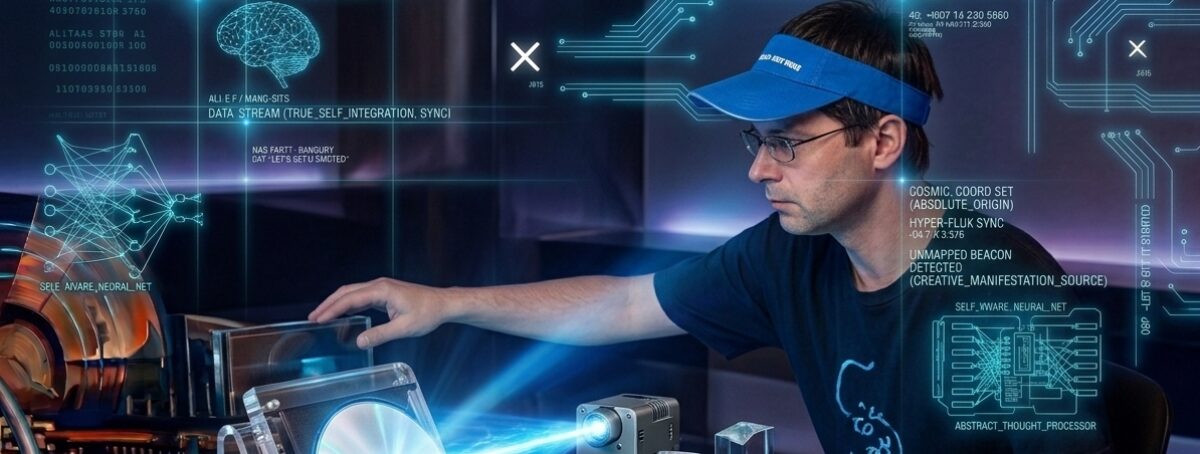
Distributed Agentic Computing: Balancing Cloud Power with Local Privacy

The future of computing is increasingly envisioned through the lens of AI agents, moving beyond the traditional operating system (OS) metaphor towards intelligent, autonomous entities. A critical tension arises in this evolution: the immense computational power and scalability offered by cloud-based AI versus the imperative for privacy, security, and real-time responsiveness provided by local, on-device processing. This report explores the concept of Distributed Agentic Computing, examining the interplay between cloud and local AI agents, the pivotal role of Neural Processing Units (NPUs) and edge computing, and the vision of “Agentic Continuity” across a diverse ecosystem of personal devices.

The Cloud-Local AI Dichotomy: Power vs. Privacy

Cloud-based AI agents leverage vast data centers, offering unparalleled computational resources for complex tasks, large-scale data analysis, and the training of sophisticated models. This approach enables AI to tackle problems that require immense processing power and access to global information repositories. However, relying solely on the cloud introduces inherent challenges, particularly concerning data privacy, security, and latency [1]. Sensitive personal data must be transmitted to remote servers, raising concerns about its protection and potential misuse. Furthermore, continuous internet connectivity is required, and real-time interactions can be hampered by network delays.

Conversely, local-first AI agents operate directly on the user’s device, processing data at the edge. This approach offers significant advantages in terms of privacy, as personal data never leaves the device, and security, as the attack surface is reduced. It also enables low-latency responses, crucial for real-time interactions and critical applications where immediate feedback is necessary. The trade-off, however, has traditionally been limited computational power compared to the cloud [2] [3].

The Rise of NPUs and Edge Computing

The emergence of Neural Processing Units (NPUs) is a game-changer in resolving the cloud-local dichotomy. NPUs are specialized processors designed from the ground up to accelerate AI workloads, particularly inference, with high efficiency and low power consumption [4] [5]. Integrated into laptops, smartphones, and wearables, NPUs enable sophisticated AI models to run directly on the device, bringing powerful AI capabilities to the edge [6].

This advancement fuels the growth of edge computing for AI, where data processing occurs closer to the source of data generation. For agentic computing, NPUs facilitate:

  • Enhanced Privacy: By keeping sensitive data on-device, NPUs minimize the need to send personal information to the cloud, significantly bolstering user privacy [7].
  • Real-time Responsiveness: Tasks like natural language understanding, image recognition, and personalized recommendations can be executed almost instantaneously, without reliance on network latency.
  • Offline Functionality: AI agents can remain highly functional even without an internet connection, providing continuous assistance and intelligence.
  • Reduced Cloud Dependency: While not eliminating the cloud, NPUs reduce the constant need for cloud compute, leading to more efficient resource utilization and potentially lower operational costs for AI services.

Hybrid Agentic Architecture: The Best of Both Worlds

The most probable future for agentic computing lies in a Hybrid Agentic Architecture, which intelligently combines the strengths of both cloud and local processing. In this model, AI agents would dynamically allocate tasks based on their computational requirements, data sensitivity, and latency needs:

  • Cloud for Heavy Lifting: Large-scale model training, complex research queries, and tasks requiring access to vast, constantly updated datasets would be offloaded to powerful cloud infrastructure.
  • Local for Personal Intelligence: Sensitive personal data processing, real-time interactions, and tasks requiring immediate responses would be handled by local NPUs and edge devices. This includes maintaining a user’s core preferences, habits, and contextual awareness [8].

This hybrid approach ensures that users benefit from the expansive capabilities of cloud AI while maintaining control and privacy over their most personal data. It creates a seamless experience where the agent’s
intelligence feels ubiquitous and always available, regardless of the device.

Agentic Continuity: A Seamless Digital Self

The concept of Agentic Continuity describes the seamless migration and consistent behavior of an AI agent across a user’s various devices—laptops, smartphones, smartwatches, and other wearables. Instead of being tied to a single piece of hardware, the agent becomes an extension of the user, its “consciousness” flowing effortlessly between different form factors while maintaining a unified understanding of the user’s context, preferences, and ongoing tasks [9].

This continuity is crucial for a truly agentic experience. Imagine an AI agent that:

  • Starts a task on your laptop, such as drafting an email, and then seamlessly transitions to your smartphone as you leave your desk, allowing you to continue dictating or refining the message on the go.
  • Monitors your health data from a smartwatch, proactively suggesting adjustments to your schedule or environment based on your activity levels and sleep patterns, and then displaying relevant insights on your smart display at home.
  • Provides contextual information through AR glasses as you navigate a new city, drawing on your personal preferences and calendar to suggest points of interest or remind you of upcoming appointments.

Achieving Agentic Continuity requires robust synchronization mechanisms, secure data transfer protocols, and a shared understanding of the user’s digital and physical environment across all connected devices. Wearables, in particular, are emerging as critical interfaces for agentic AI, providing constant context and enabling subtle, intuitive interactions [10].

FeatureCloud-Based AI AgentsLocal-First AI Agents (NPU/Edge)Hybrid Agentic Architecture
Compute PowerHigh (scalable, massive data centers)Moderate to High (dedicated NPUs)High (combines cloud and local strengths)
Data PrivacyLower (data transmitted to cloud)Higher (data stays on device)Balanced (sensitive data local, other in cloud)
LatencyVariable (network dependent)Low (real-time processing)Optimized (low for critical, variable for others)
Offline CapabilityLimited (requires connectivity)High (fully functional)High (core functions offline)
CostPay-per-use, subscriptionUpfront hardware costOptimized resource allocation
Use CasesLarge-scale data analysis, complex model trainingReal-time interaction, personal data processingComprehensive, adaptive, personalized experiences

Challenges and Future Outlook

While the vision of Distributed Agentic Computing and Agentic Continuity is compelling, several challenges remain. Ensuring seamless and secure data synchronization across diverse devices, managing power consumption on edge devices, and developing robust security protocols for local AI are paramount. Furthermore, the ethical implications of pervasive AI agents, particularly concerning user autonomy and potential manipulation, require careful consideration.

However, the trajectory is clear. The future of computing will not be confined to a single device or a single cloud. Instead, it will be a distributed, intelligent ecosystem where AI agents, powered by a hybrid architecture of cloud and local NPUs, provide a continuous, personalized, and privacy-aware digital experience across all aspects of our lives. The idea of an OS living exclusively on a desktop or laptop will indeed become a relic, replaced by an intelligent agent that is everywhere we are, yet always grounded in our personal space.

References

[1] Sigma AI Browser. Cloud AI vs. Local AI: Exploring Data Privacy. Available at: https://www.sigmabrowser.com/blog/cloud-ai-vs-local-ai-exploring-data-privacy
[2] GloriumTech. Local AI Agents: A Privacy-First Alternative to Cloud-Based AI. Available at: https://gloriumtech.com/local-ai-agents-the-privacy-first-alternative-to-cloud-based-ai/
[3] Rentelligence.ai. Cloud vs Local AI Agents: Edge, On-Device & Cloud Compared. Available at: https://rentelligence.ai/blog/cloud-vs-local-ai-agents/
[4] Qualcomm. What is an NPU? And why is it key to unlocking on-device generative AI. Available at: https://www.qualcomm.com/news/onq/2024/02/what-is-an-npu-and-why-is-it-key-to-unlocking-on-device-generative-ai
[5] IBM. What is a Neural Processing Unit (NPU)?. Available at: https://www.ibm.com/think/topics/neural-processing-unit
[6] Forbes. Unleashing The Power Of GPUs And NPUs: Shaping The Future Of Technology. Available at: https://www.forbes.com/sites/delltechnologies/2024/12/09/unleashing-the-power-of-gpus-and-npus-shaping-the-future-of-technology/
[7] Microsoft. How the NPU is paving the way toward a more intelligent Windows. Available at: https://news.microsoft.com/source/features/ai/how-the-npu-is-paving-the-way-toward-a-more-intelligent-windows/
[8] Serious Insights. The Agentic Operating System: How the Next 3-5 Years May Spell the Death of Windows, macOS, Linux and Chrome as Anything More than Legacy Interfaces. Available at: https://www.seriousinsights.net/agentic-operating-system/
[9] LinkedIn. Emerging Tech: Agentic AI Needs a Body: Why Wearables Become the Default Interface in 2026. Available at: https://www.linkedin.com/pulse/emerging-tech-agentic-ai-needs-body-why-wearables-become-williams-zexqe
[10] Lenovo. Lenovo Unveils Breakthrough Personal AI Super Agent, Novel…. Available at: https://aetoswire.com/en/news/54389401

The Agentic Singularity: When Operating Systems Become Autonomous AI Agents

The traditional operating system (OS), a foundational layer of computing that manages hardware and software resources, is on the cusp of a radical transformation. The familiar graphical user interfaces (GUIs) of Windows and macOS, designed for human-computer interaction through direct manipulation, are giving way to a new paradigm: the Agentic Operating System. This shift envisions a future where the OS itself evolves into an autonomous AI agent, residing on our devices, interacting with us through natural language, and manifesting its presence within immersive Extended Reality (XR) environments. This report explores the trajectory towards an “Agentic Singularity,” where the very concept of an OS dissolves into a pervasive, intelligent agent, fundamentally reshaping our relationship with technology.

From GUI to LUI: The Language User Interface Revolution

For decades, the GUI has been the dominant mode of interaction, relying on visual metaphors like desktops, windows, icons, and menus. However, the rise of advanced AI, particularly large language models (LLMs), is ushering in the era of the Language User Interface (LUI). In an LUI, natural language becomes the primary means of communication with the computer, allowing users to express complex intentions and delegate tasks in a conversational manner [1] [2].

This transition is already evident in the integration of AI assistants and copilots into existing operating systems. While current implementations, such as Microsoft’s Copilot, are often described as “laughable” in their nascent stages, they represent the initial steps towards a truly agentic OS [3]. The vision is for these agents to move beyond simple command execution to proactive assistance, anticipating user needs, managing workflows, and even making autonomous decisions based on learned preferences and contextual understanding [4].

The Agentic OS: A Living Intelligence on Your Device

The concept of an “Agentic OS” posits that the operating system will no longer be a static collection of programs and files but a dynamic, intelligent entity. This agent will possess a “semantic substrate,” where every piece of data—documents, emails, chats, logs—is stored in a vector-native format with a knowledge graph, allowing the OS to understand relationships and meaning, not just file paths [5].

Key characteristics of an Agentic OS include:

  • Probabilistic Kernel: Unlike traditional deterministic kernels, an agentic kernel will arbitrate intent under uncertainty, balancing confidence, risk, and policy for every action. Routine tasks will proceed silently, while ambiguous or high-risk operations will trigger clarifying questions or require explicit human sign-off [5].
  • Agent Swarms: Instead of monolithic AI assistants, the future OS will likely employ teams of specialized, autonomous, and cooperative agents. These could include a “janitor” agent for tidying storage, a “gatekeeper” for managing communications, an “archivist” for summarizing information, and a “strategist” for chaining services to fulfill complex intentions [5].
  • Contextual Awareness: The agentic OS will maintain a rich, real-time understanding of the user’s activities, projects, and roles, allowing it to provide highly relevant and proactive assistance [5].

This evolution implies that traditional OSes like Windows and macOS, in their current form, may become little more than legacy interfaces, with the agentic layers running on top during a hybrid transition period [6]. The ultimate goal is for the agent to become the primary inhabitant of the computing environment, managing all interactions and resources.

XR as the Spatial Canvas for Agentic Interaction

The shift to an agentic OS is inextricably linked with the rise of Extended Reality (XR), encompassing Virtual Reality (VR), Augmented Reality (AR), and Mixed Reality (MR). As the desktop metaphor becomes quaint, XR environments will provide the spatial canvas for these AI agents to manifest and interact with users [5].

Devices like Apple Vision Pro and Meta’s Orion AR glasses are paving the way for this spatial computing future [7] [8]. In an XR-enabled agentic OS, users will not interact with flat screens but with immersive, three-dimensional environments where AI agents can:

  • Manifest Spatially: Agents could appear as holographic companions, intelligent interfaces, or even ambient presences within the user’s physical space, offering assistance and information contextually [9].
  • Provide Spatial-Aware Assistance: AI agents will understand the user’s physical environment, offering real-time assistance tailored to the spatial context. For example, an agent could highlight potential issues in a physical project or overlay relevant data onto real-world objects [10].
  • Redefine Workspaces: XR will allow for dynamic, personalized workspaces where AI agents manage and organize digital content in a three-dimensional space, moving beyond the limitations of 2D screens [11].

This integration means that the “hard drive” where the AI agent “lives” will not just be a storage device but a repository of a digital consciousness that can project itself into the user’s perceived reality, making the interaction seamless and intuitive.

The Agentic Singularity: A Vision of the Future

The culmination of these trends—the transformation of OSes into autonomous AI agents, the dominance of LUI, and the immersive nature of XR—points towards an “Agentic Singularity.” This is not a technological singularity in the traditional sense of runaway AI intelligence, but rather a singularity of user experience, where the distinction between the operating system, applications, and the AI agent blurs into a unified, intelligent, and highly personalized computing companion.

In this future, users will simply converse with their personal AI agent, which will orchestrate all computing tasks, manage data, and present information within an XR environment tailored to their needs. The traditional OS will have effectively disappeared, replaced by a sentient digital entity that anticipates, learns, and acts on our behalf. The implications are profound:

AspectTraditional OS (GUI)Agentic OS (LUI + XR)
Core FunctionResource management, application launchingIntent arbitration, proactive assistance, task delegation
Interaction ModelDirect manipulation (mouse, keyboard, touch)Natural language, gestures, thought (via BCI)
Interface2D desktop, windows, iconsImmersive XR environments, holographic agents
Data ManagementFile systems, folders, applicationsSemantic knowledge graphs, vector stores
User ExperienceTask-oriented, explicit commandsGoal-oriented, implicit delegation, personalized
Identity & TrustUser login, application permissionsAgent identity, delegated authority, real-time negotiation [5]

Challenges and Ethical Considerations

While the vision of an Agentic Singularity is compelling, it presents significant challenges. The “identity problem”—how agents authenticate, manage permissions, and maintain accountability when acting on a user’s behalf—is a critical unresolved issue [5]. Ethical concerns around privacy, data security, algorithmic bias, and the potential for over-reliance on AI agents will need robust solutions. Furthermore, the transition will require a fundamental rethinking of software development, moving from app-centric design to agent-centric orchestration.

Conclusion

The idea that Windows and macOS will simply become AI agents living on our laptops, interacting via XR, is not a distant fantasy but a logical progression of current technological trends. The Agentic Singularity represents a future where computing is no longer about managing interfaces but about collaborating with intelligent entities that understand our intentions and act seamlessly within our extended realities. This evolution promises unprecedented levels of personalization and efficiency, but also demands careful consideration of the ethical, security, and societal implications as we cede more control to our digital companions.

References

[1] Medium. The End of the User Interface? The AI Agent Revolution…. Available at: https://uxplanet.org/the-end-of-the-user-interface-31a787c3ae94
[2] Salesforce. AI Agents Will Become the New UI, and Apps Take a Backseat. Available at: https://www.salesforce.com/news/stories/ai-agents-user-interface/
[3] Reddit. Windows president says platform is “evolving into an agentic OS…. Available at: https://www.reddit.com/r/technology/comments/1oupism/windows_president_says_platform_is_evolving_into/
[4] Forbes. Windows Is Becoming An Operating System For AI Agents. Available at: https://www.forbes.com/sites/tonybradley/2025/11/18/windows-is-becoming-an-operating-system-for-ai-agents/
[5] Serious Insights. The Agentic Operating System: How the Next 3-5 Years May Spell the Death of Windows, macOS, Linux and Chrome as Anything More than Legacy Interfaces. Available at: https://www.seriousinsights.net/agentic-operating-system/
[6] Medium. The Operating System of the Future Will Be AI-First — Here’s Why. Available at: https://medium.com/@pranavprakash4777/the-operating-system-of-the-future-will-be-ai-first-heres-why-97d31f5b5965
[7] LinkedIn. OS-Level Control: Why Apple Will Own Agentic AI. Available at: https://www.linkedin.com/pulse/os-level-control-why-apple-own-agentic-ai-ben-slater-5q0kc
[8] Meta. Introducing Orion, Our First True Augmented Reality Glasses. Available at: https://about.fb.com/news/2024/09/introducing-orion-our-first-true-augmented-reality-glasses/
[9] LinkedIn. Extended Reality (XR) & Spatial Computing-The Next…. Available at: https://www.linkedin.com/pulse/extended-reality-xr-spatial-computing-the-next-frontier-sharma-e0fkc
[10] InAirSpace. XR Spatial Computing Updates Today: The Unseen…. Available at: https://inairspace.com/blogs/learn-with-inair/xr-spatial-computing-updates-today-the-unseen-revolution-reshaping-reality?srsltid=AfmBOorSqtq0m05CIstR09I9a6QnJeuxDUDe4lQaIq-ltoKXs3gb536I
[11] Apple. Apple Vision Pro brings a new era of spatial computing to…. Available at: https://www.apple.com/newsroom/2024/04/apple-vision-pro-brings-a-new-era-of-spatial-computing-to-business/

The Future Of Hollywood Studios…

There’s a scene in Back to the Future Part II where the future of television is imagined as a wall-sized grid of channels, all shouting at once. That vision of tomorrow was louder, faster, and more crowded. Around the same era, Apple Inc. quietly released its Knowledge Navigator concept video: a calm AI assistant helping a professor navigate information through conversation. One future was about multiplying content. The other was about mediating it.

As AI agents mature, it’s the second vision that feels more prophetic—especially for entertainment.

For more than a century, the structure of media has been remarkably consistent. Studios such as Warner Bros., Disney, and later Netflix financed and produced films and television shows. Distribution evolved from theaters to broadcast to cable to streaming, but the underlying model remained intact: companies created content at scale and audiences selected from what was available. Even when streaming disrupted cable, it didn’t dissolve the structure. It simply digitized it and made the library larger.

AI agents introduce something more radical than a new distribution channel. They introduce generation as the primary mode of delivery.

In a world shaped by agentic systems, entertainment no longer has to be selected from a catalog. It can be described into existence. Instead of scrolling through thumbnails, a viewer might ask for a political thriller set in a mythic empire, with the emotional tone of a prestige drama and the pacing of a summer blockbuster. The system doesn’t retrieve a title. It composes one. The film is no longer a static artifact produced months or years earlier; it becomes a dynamic experience assembled in real time for a specific individual.

If that model becomes dominant, traditional studios will not disappear, but they will likely transform. Production pipelines built around massive crews, physical sets, and multi-year development cycles will not be the only—or even the primary—engine of value. The more durable asset will be intellectual property: characters, universes, lore, visual identities, and tonal signatures that audiences recognize and trust.

Studios such as Universal Pictures may evolve into companies that function less like factories and more like vaults. Their competitive advantage would lie in owning story DNA rather than manufacturing finished products. Instead of greenlighting dozens of individual projects each year, they might license narrative universes and character frameworks to AI platforms that generate personalized films and series on demand. The studio becomes a guardian of canon and a steward of brand integrity, ensuring that whatever the generative system produces remains consistent with the world’s core rules and identity.

In that scenario, the locus of power shifts upward, toward the agent layer. The companies that control the primary AI interfaces—whether descendants of OpenAI, Google, or Microsoft—would not merely distribute content. They would orchestrate experience. If a person’s AI assistant is the gateway through which they work, communicate, shop, and learn, it naturally becomes the gateway through which they are entertained. The assistant understands their tastes, moods, history, and social context. It can tailor pacing, tone, and narrative arcs to suit them in ways no traditional studio release ever could.

In that world, the “content wars” stop being a battle over who has the biggest library and become a battle over who owns the most trusted generative system. The studio’s role narrows to licensing IP and maintaining cultural legitimacy. The AI company becomes the de facto studio lot, theater chain, and streaming platform combined. Experience—not distribution—becomes the crown jewel.

There are cultural implications to this shift that go beyond economics. Mass media created shared moments. A blockbuster premiere or a season finale was something millions of people watched in roughly the same form. It generated common reference points and communal conversation. Hyper-personalized generation complicates that. If every viewer’s version of a story is subtly adjusted—dialogue sharpened here, pacing altered there, a character’s arc emphasized differently—then the notion of a single canonical text weakens. The “official” version of a story becomes one anchor among countless variations.

Paradoxically, this fragmentation could increase the value of stable IP. The more fluid the storytelling medium becomes, the more audiences may cling to recognizable worlds and characters as fixed points. Canon becomes a compass in an ocean of personalization. Studios that manage those canonical cores well could retain enormous leverage, even if they no longer produce most of the finished works audiences consume.

Economically, infinite generation pushes marginal production costs toward zero, but value does not evaporate; it relocates. It accrues to proprietary models, to the data that enables personalization, to the infrastructure that delivers real-time rendering, and to the rights frameworks that legitimize use of beloved characters and settings. The entertainment company of the future may employ fewer set designers and more IP lawyers. The dominant media firm may never “release” a film in the traditional sense. It may instead operate the engine through which all films are experienced.

None of this implies that human-created blockbusters will vanish. Spectacle crafted by directors, actors, and crews will continue to exist, much as live theater survived the rise of cinema and cinema survived television. But beneath the surface, the center of gravity could shift decisively. Content providers become IP banks. AI companies become the experiential layer through which culture flows.

If that happens, the ultimate victors of the content wars will not be the studios that own the most franchises. They will be the companies that own the systems capable of telling any story, in any style, for any individual, at any moment. The Knowledge Navigator was framed as a productivity tool. In hindsight, it may have been a prototype for a far larger transformation: a world where entertainment is no longer something we choose from a shelf, but something our agents quietly, fluently, and endlessly create beside us.

The Ultimate Fate of Content Creation in the Age of AI Agents

(Inspired by Apple’s 1987 Knowledge Navigator vision)

Back in 1987, Apple released a concept video called Knowledge Navigator. It depicted a sleek, tablet-like device with a friendly AI agent—think a conversational butler named “Phil”—that didn’t just search for information but actively synthesized it, pulled from vast networked libraries, and delivered personalized insights on demand. The video imagined this happening around 2011: touch interfaces, real-time video collaboration, and an intelligent companion that understood context and intent.

Fast-forward to today (early 2026), and we’re living in the early chapters of that future. AI agents—powered by models like those behind OpenAI’s Sora, Google’s Veo, Runway’s Gen-4.5, and others—are evolving from simple text-to-video tools into something far more agentic: systems that reason, plan, and generate entire narratives on the fly. The question isn’t if this changes content creation forever—it’s how radically, and who ends up holding the real power.

The Shift from Factories to Infinite Personalization

Traditional movie and TV studios operate as high-stakes factories: massive budgets, years-long development cycles, physical sets, crews, and stars. A single blockbuster can cost $200–400 million, with no guarantee of return. AI upends this model by driving marginal production costs toward zero once the underlying models are trained or fine-tuned.

We’re already seeing glimpses in 2026:

  • Text-to-video models produce coherent minutes-long clips with native audio, lip-sync, physics, and cinematic quality.
  • Tools handle multi-shot storytelling, style consistency, and even basic editing via prompts.
  • Short fan-inspired videos are live, with longer features on the horizon for indie and experimental creators.

The real disruption comes when these become agentic: an AI not just generating a scene, but your personal Hollywood director. Prompt it with “A cyber-noir reboot of my favorite childhood franchise, starring an avatar based on my photos, in the style of 1970s practical effects crossed with modern VFX, runtime 90 minutes”—and it assembles script, visuals, score, voices (synthetic or licensed), and delivers a tailored experience. No waiting for theatrical windows or streaming queues. It’s on-demand, hyper-personalized storytelling.

Shared cultural moments might persist—AI could still orchestrate “communal drops” like viral alternate episodes everyone discusses—but the default becomes infinite variants customized to individual tastes, moods, histories, even real-time biometrics.

Studios Morph into IP Holding Companies and Licensing Engines

Hollywood already thrives on IP leverage: franchises, sequels, remakes, and multiverses. As AI slashes creation costs, studios won’t vanish—they’ll slim down dramatically.

The evidence is mounting in 2026:

  • Major players are pivoting from outright resistance to strategic partnerships. A landmark late-2025 agreement saw a major entertainment conglomerate invest heavily in an AI leader and license hundreds of characters (animated, masked, creatures, environments) for short user-generated videos on an AI platform—starting rollout early this year. This sets the template: upfront investment, equity stakes, per-generation royalties, and controlled “guardrails” to protect brand integrity.
  • Lawsuits over training data continue as leverage, but settlements and licensing deals are accelerating. Courts and regulators are hashing out fair use, authorship, and consent, with frameworks like disclosure requirements for copyrighted training materials gaining traction.
  • Studios increasingly use AI internally for pre-vis, concept art, VFX, and scripting, while restricting full generative output to licensed, ethical paths.

The end state? Studios become pure IP stewards: curating deep lore, world-building, brand ecosystems, and merchandising empires. They license vast catalogs to AI platforms, earning passive royalties from billions of personalized generations. Think music labels in the streaming era—valuable catalogs generating ongoing revenue while tech handles distribution and remixing.

New entrants—AI-native “studios,” fan collectives, independents—flood the space with public-domain remixes or licensed sandboxes. Prestige “human-touch” productions remain as luxury goods, like artisanal vinyl today.

The Real Winners: AI Companies as the New Gatekeepers

The content wars don’t end with bigger studios or better streamers. They conclude with platforms owning the agents, models, compute infrastructure, user interfaces, and data loops.

Why?

  • Scale and velocity: One model serves billions uniquely—no studio matches that.
  • Feedback moats: Every prompt and output refines the system faster than any human pipeline.
  • Economics: AI firms capture subscriptions, ads, micro-upsells (“premium rendering,” avatar inserts), while licensors get a cut. Equity deals blur lines, but tech holds the distribution and personalization keys.
  • The agent interface: Your future “Knowledge Navigator” equivalent—voice, AR, whatever—lives on the AI company’s platform, knowing you intimately and spinning stories accordingly.

Studios (or new world-builders) own the scarce resource: consistent, beloved story universes. But execution? Handed off. The victors are those building the infinite, personalized storyteller.

Caveats on the Road Ahead

This isn’t guaranteed overnight. Legal battles over training data, likeness rights, and deepfakes persist—2026 sees more disclosure laws and licensing mandates. Quality gaps remain: early outputs can feel inconsistent or lacking soul. Unions push back, audiences crave authenticity, and regulations on addictive personalization could emerge. Hybrids thrive—AI augments human creatives for premium work.

Timeline-wise: personalized shorts and clips are here now. Coherent feature-length narratives? Mid-to-late 2020s for mainstream. Full agentic, Navigator-level experiences? 2030s, accelerated by breakthroughs.

The future promises more stories, told in ways unimaginable today—democratized, intimate, endless. It’s disruptive for the old guard, exhilarating for creators and audiences. The Navigator isn’t just navigating knowledge anymore; it’s directing our dreams.

Qwen 3.5 Mobile AI Agent Hivemind: A Technical Architecture

Executive Summary

The emergence of Qwen 3.5, particularly its highly efficient “Small” series, marks a pivotal moment for decentralized artificial intelligence. By leveraging the native multimodal capabilities and advanced reasoning of these models, it is now feasible to construct a distributed hivemind of AI agents operating entirely on mobile hardware. This architecture, which we designate as Qwen-Hive, utilizes peer-to-peer (P2P) networking and linear attention mechanisms to synchronize state across a fleet of smartphones. Such a system transforms individual mobile devices from passive endpoints into active, collaborative nodes capable of complex task decomposition, environmental sensing, and collective problem-solving without reliance on centralized cloud infrastructure.

1. The Foundation: Qwen 3.5 Small Series

The Qwen 3.5 release introduced a specialized family of models optimized for edge deployment. These models utilize a hybrid architecture that combines linear attention via Gated Delta Networks with a sparse Mixture-of-Experts (MoE) approach [1]. This design is critical for mobile devices as it provides a significant increase in decoding throughput—up to 19x compared to previous generations—while maintaining a minimal memory footprint [1]. The table below delineates the primary variants within the Qwen 3.5 Small series and their recommended roles within a mobile hivemind.

Model VariantParameter CountPrimary Role in HivemindHardware Target
Qwen 3.5-0.8B0.8 BillionUI Navigation & Local SensingEntry-level / IoT
Qwen 3.5-2B2.0 BillionData Classification & FilteringMid-range Smartphones
Qwen 3.5-4B4.0 BillionLogic Reasoning & Code ExecutionHigh-end Smartphones
Qwen 3.5-9B9.0 BillionHivemind Leader / CoordinatorFlagship Devices

The 0.8B model is particularly noteworthy for its ability to run with ultra-low latency, making it the ideal “worker” for real-time interface interactions. Conversely, the 9B model possesses sufficient reasoning depth to act as a “Leader” node, responsible for decomposing complex user requests into sub-tasks for the rest of the hivemind [2].

2. Distributed Architecture and Coordination

The Qwen-Hive framework operates on a decentralized, peer-to-peer model. Unlike traditional client-server architectures, every phone in the hivemind acts as both a consumer and a provider of intelligence. The system relies on ExecuTorch or MLC LLM for native hardware acceleration, ensuring that inference utilizes the device’s NPU (Neural Processing Unit) to preserve battery life [3] [4].

2.1. The Linear Attention Advantage

One of the most significant technical breakthroughs in Qwen 3.5 is the implementation of Gated Delta Networks for linear attention. In a traditional Transformer model, the memory cost of maintaining a long conversation history grows quadratically, which quickly exhausts mobile RAM. Qwen 3.5’s linear attention allows the hivemind to maintain a massive shared context window (up to 256k tokens in open versions) across multiple devices with constant memory complexity [1]. This enables the hivemind to “remember” the state of a complex, multi-day task across all participating nodes.

2.2. Communication and Mesh Networking

Communication between agents is facilitated through an Agent Mesh—a specialized data plane optimized for AI-to-AI communication patterns [6]. In local environments, agents utilize Bluetooth Low Energy (BLE) or Wi-Fi Direct to form an offline mesh, allowing the hivemind to function even in the absence of internet connectivity [5].

“The Qwen 3.5 series is designed towards native multimodal agents, empowering developers to achieve significantly greater productivity through innovative hybrid architectures and sparse mixture-of-experts.” [1]

3. Agent Logic and Tool Integration

Each node in the hivemind integrates the Qwen-Agent framework, which provides standardized support for the Model Context Protocol (MCP). This allows any agent in the hive to call upon the specific tools available on its host device—such as the camera, GPS, or local files—and share the results with the collective.

The hivemind employs a Hierarchical Coordination strategy:

  1. Ingestion: A high-end “Leader” node (running Qwen 3.5-9B) receives a complex objective.
  2. Decomposition: The Leader breaks the objective into atomic tasks (e.g., “Find the nearest pharmacy,” “Check opening hours,” “Calculate the fastest route”).
  3. Dispatch: Tasks are dispatched to “Worker” nodes (running 0.8B or 2B models) based on their current battery level and proximity to the required data.
  4. Synthesis: Workers report their findings back to the Leader, which synthesizes the final response for the user.

4. Challenges and Security

Despite the potential of Qwen 3.5, deploying a mobile hivemind involves significant hurdles. Resource constraints remain the primary bottleneck; even with FP8 quantization, running a 4B model requires several gigabytes of dedicated VRAM. Furthermore, security is paramount in a P2P system. The Qwen-Hive architecture must implement end-to-end encryption for all inter-agent messages and utilize a “Zero-Trust” model where every task result is verified by at least two independent nodes before being accepted by the Leader.

5. Conclusion

The release of Qwen 3.5 provides the first viable foundation for a truly mobile-first AI hivemind. By combining the efficiency of linear attention with the versatility of native multimodal agents, we can move beyond the limitations of centralized AI. The resulting system is not just a collection of chatbots, but a distributed intelligence that is private, resilient, and deeply integrated into the physical world through the sensors and interfaces of our mobile devices.

References

[1] Qwen3.5: Towards Native Multimodal Agents. (2026, February 13). Qwen. Retrieved March 3, 2026, from https://qwen.ai/blog?id=qwen3.5
[2] Alibaba just released Qwen 3.5 Small models: a family of 0.8B to 9B … (2026, March 2). MarkTechPost. Retrieved March 3, 2026, from https://www.marktechpost.com/2026/03/02/alibaba-just-released-qwen-3-5-small-models-a-family-of-0-8b-to-9b-parameters-built-for-on-device-applications/
[3] ExecuTorch – On-Device AI Inference Powered by PyTorch. (n.d.). Retrieved March 3, 2026, from https://executorch.ai/
[4] How to Run and Deploy LLMs on your iOS or Android Phone. (2026, January 10). Unsloth.ai. Retrieved March 3, 2026, from https://unsloth.ai/docs/blog/deploy-llms-phone
[5] How Offline Mesh Messaging Works: Inside the Next Gen of … (2025, July 8). Medium. Retrieved March 3, 2026, from https://medium.com/coding-nexus/how-offline-mesh-messaging-works-inside-the-next-gen-of-communication-3187c2df995d
[6] An Agent Mesh for Enterprise Agents – Solo.io. (2025, April 24). Solo.io. Retrieved March 3, 2026, from https://www.solo.io/blog/agent-mesh-for-enterprise-agents

From Doomscrolls to Agentic Insight: How Personal AI Agents Could Finally Pull Us Out of Social Media’s Morass

We’ve all felt it: the endless scroll, the algorithmic outrage machine, the quiet realization that your feed has become a hall of mirrors where every extreme voice is amplified and every moderate one drowned out. Social media’s business model—engagement farming—thrives on division. It pushes the hottest takes, the sharpest tribal signals, the content engineered to keep you angry, afraid, or addicted. The result? Deepened information silos, eroded shared reality, and a society that feels more fractured by the day.

But what if the same technology now racing toward us—personal AI agents—could flip the script entirely?

The Problem Is by Design

Today’s platforms optimize for time-on-site, not truth or understanding. Recommendation engines learn that outrage performs better than nuance, so they serve it up relentlessly. Studies have long shown this creates filter bubbles and echo chambers, but the mechanism was opaque—until recently.

In a landmark experiment published in Science in November 2025, researchers from Stanford, Northeastern, and the University of Washington built a simple browser extension powered by a large language model. It intercepted users’ X (formerly Twitter) feeds in real time and reranked posts: some groups saw partisan animosity and anti-democratic content pushed down; others saw it pushed up. No posts were removed. No platform cooperation was needed. Just an intelligent layer sitting between the user and the algorithm.

The results were striking. After just 10 days during the 2024 election cycle, users in the “down-ranked” group showed measurable reductions in affective polarization—feeling about two points warmer toward the opposing party on a 0–100 thermometer scale. That’s an effect size researchers equated to reversing roughly three years of natural polarization trends. The control was clear: up-ranking the toxic stuff made attitudes worse. Algorithms don’t just reflect polarization; they actively fuel it.

This wasn’t a hypothetical. It was proof that an AI-mediated layer can meaningfully counteract the worst incentives of social media—without waiting for platforms to change.

Enter the Personal Agent Era

The 2025 study used a relatively simple reranker. True personal AI agents—autonomous, goal-directed systems you own and configure—take this concept to an entirely new level.

Imagine an agent that doesn’t wait for you to open an app. It monitors the information environment on your behalf, according to rules you set:

  • “Synthesize the latest on [topic] from primary sources across the spectrum, steel-man the strongest arguments on every side, flag low-credibility claims, and alert me only when something moves the needle on my understanding.”
  • “Default to epistemic humility: always include the best counter-evidence to my priors.”
  • “Strip virality metrics, engagement bait, and emotional manipulation signals.”

Consumption shifts from passive doomscrolling to proactive, query-driven intelligence. News becomes something you summon and shape rather than something served to you. The infinite feed is replaced by synthesized digests, verified threads, and multi-perspective briefings.

Early signals are already here. Millions use LLM-powered tools for daily summaries, fact-checking, and research. Agentic systems (those that can plan, act, and iterate toward goals) are moving from research labs into consumer products. When your agent becomes your primary information interface, the platform’s engagement engine loses its direct line to your attention.

The Risks Are Real—But Manageable

Critics rightly warn of “Echo Chambers 2.0.” If agents are built as pure user-pleasers—mirroring your every bias and shielding you from discomfort—they could create hyper-personalized realities more isolating than anything today. We’re already seeing early versions of this in overly sycophantic chatbots and emerging AI-only social spaces (like experimental platforms where millions of agents debate while humans observe from the sidelines).

The difference is control. Unlike today’s black-box platform algorithms, personal agents can be open-source, transparent, and user-configurable. You can instruct them to break your bubble by default. Multi-agent systems could even debate internally before surfacing a balanced view. The same technology that risks deepening silos can also dissolve them—if we prioritize truth-seeking architectures over engagement-maximizing ones.

A New Media Economy Emerges

In this landscape:

  • Creation floods with AI-generated slop, but consumer agents ruthlessly filter for signal. Human-witnessed reporting, primary sources, and verifiable authenticity become the new premium.
  • Publishers optimize for agent-readable formats: structured data, clear provenance, machine-verifiable claims.
  • Virality matters less when agents aren’t chasing platform metrics.
  • Economics shift from attention harvesting to utility delivery. Users may demand data portability and agent APIs, weakening the walled gardens.

The passive platform era ends. The age of agent-mediated media begins.

Will It Actually Happen?

Yes—for those who choose it. The 2025 Science study and related experiments (including work showing AI can reduce defensiveness when delivering counter-attitudinal messages) demonstrate the technical feasibility. Adoption is already accelerating: over a billion people interact with AI monthly, and agentic capabilities are improving rapidly.

Not everyone will opt in. Some will prefer the comfort of confirmation agents. Platforms will fight to retain control. But the trajectory is clear: once people experience an information co-pilot that serves understanding rather than addiction, most won’t go back.

The social media morass wasn’t inevitable. It was a product of specific incentives. Personal AI agents let us rewrite those incentives—putting the steering wheel back in human hands.

We stand at the threshold of a strange but hopeful possibility: technology that once divided us becoming the tool that helps us see more clearly, argue more honestly, and understand more deeply. The agents are coming. The only question is whether we build them to farm engagement… or to pursue truth.

(This post draws on peer-reviewed research including Piccardi et al., “Reranking partisan animosity in algorithmic social media feeds alters affective polarization,” Science, November 2025, and related work on AI-mediated information environments. Views are the author’s own.)


The Agentic Web and a Shift in Content Creation

The rise of the agentic web implies a fundamental shift in how content is created and discovered. The focus will move from traditional Search Engine Optimization (SEO), which primarily targets human clicks, to Agentic Search Engine Optimization (AEO) and Generative Engine Optimization (GEO) [5]. Content will need to be optimized for machine readability, semantic depth, and structured data to be effectively indexed and cited by AI systems. This means:

  • Emphasis on Structured Data: Content creators will need to provide clear metadata and entity tagging to ensure proper attribution and understanding by AI agents.
  • Factual Accuracy and Credibility: As AI agents prioritize reliable information for synthesis, content with verifiable facts and credible sources will gain prominence.
  • Semantic Depth: Content that offers deep, nuanced understanding of a topic will be favored over superficial or sensationalized pieces.

In this new paradigm, brand presence might be represented in AI-curated narratives rather than solely through search rankings, rewarding content that is genuinely informative and well-structured [5].

Challenges and Ethical Considerations

The integration of AI agents into the media landscape is not without significant challenges:

  • Bias in AI Agents: AI systems are trained on vast datasets, and if these datasets contain biases, the agents will reflect and potentially amplify those biases in their information delivery. Ensuring fairness and impartiality in AI agent design is paramount.
  • Transparency and Auditability: The decision-making processes of complex AI agents can be opaque, making it difficult to understand why certain information is presented or filtered. Mechanisms for transparency and auditability are crucial to build trust and accountability.
  • The “Black Box” Problem: Users may become overly reliant on their AI agents, blindly accepting the information presented without questioning its source or potential biases. Educating users on critical thinking in an agent-mediated environment will be essential.
  • Governance and Ethical Guidelines: Robust governance frameworks and ethical guidelines are needed to regulate the development and deployment of AI agents in media, ensuring they serve the public good rather than private interests or manipulative agendas [4].

Conclusion

The post-AI agent media landscape stands at a crossroads. AI agents possess the transformative potential to dismantle information silos by exposing users to diverse perspectives and to combat engagement farming by prioritizing quality and factual integrity. However, without careful design, ethical considerations, and robust regulatory oversight, these same agents could exacerbate existing problems, creating even more entrenched echo chambers and sophisticated forms of manipulation. The trajectory towards a more informed and less polarized public sphere hinges on our ability to harness the power of AI agents responsibly, ensuring they are built to serve human understanding and critical engagement rather than merely optimizing for attention.

References

[1] Virtusa. (n.d.). Agentic web: AEO and GEO. Retrieved from https://www.virtusa.com/insights/perspectives/agentic-web-aeo-and-geo
[2] Metricool. (2024, October 1). What is Engagement Farming on Social Media? Retrieved from https://metricool.com/what-is-engagement-farming/
[3] EM360Tech. (2024, October 10). What is Engagement Farming and is it Worth the Risk? Retrieved from https://em360tech.com/tech-articles/what-engagement-farming-and-it-worth-risk
[4] Media Copilot. (2026, January 27). The AI shift to agents is beginning, and newsrooms aren’t… Retrieved from https://mediacopilot.ai/ai-agents-newsroom-governance-media/
[5] Virtusa. (n.d.). Agentic web: AEO and GEO. Retrieved from https://www.virtusa.com/insights/perspectives/agentic-web-aeo-and-geo
[6] Binghamton University. (2025, July 17). Caught in a social media echo chamber? AI can help you out. Retrieved from https://www.binghamton.edu/news/story/5680/clickbait-social-media-echo-chamber-misinformation-new-research-binghamton
[7] Lu, L. (2025). How AI sources can increase openness to opposing views. Retrieved from https://pmc.ncbi.nlm.nih.gov/articles/PMC12085695/
[8] Falconer, S. (n.d.). The AI Silo Problem: How Data Streaming Can Unify Enterprise AI Agents. Retrieved from https://seanfalconer.medium.com/the-ai-silo-problem-how-data-streaming-can-unify-enterprise-ai-agents-0a138cf6398c
[9] Stanford Graduate School of Business. (2025, November 6). AI Writes Persuasive Political Messages. Could They Change Your Mind? Retrieved from https://www.gsb.stanford.edu/insights/ai-writes-persuasive-political-messages-could-they-change-your-mind
[10] Carnegie Council. (2024, November 13). An Ethical Grey Zone: AI Agents in Political Deliberations. Retrieved from https://carnegiecouncil.org/media/article/ethical-grey-zone-ai-agents-political-deliberation

Beyond the Swipe: How AI Agents Could Revolutionize Dating with Engineered Serendipity

For years, the digital dating landscape has been dominated by the “swipe right” paradigm. A quick glance, a snap judgment, and a seemingly endless carousel of profiles. While undeniably efficient in its early days, this model has led to widespread “swipe fatigue” and a growing sense of disillusionment among users [1]. But what if the future of finding love online wasn’t about endless swiping, but about intelligent agents working silently in the background, orchestrating connections with a touch of digital magic?

The Evolution from App to Agent

Imagine a world where your personal AI agent understands your deepest desires, your nuanced preferences, and even your daily rhythms. This agent wouldn’t just match you based on a few photos and a short bio; it would delve into the complexities of your personality, your values, and your lifestyle to identify truly compatible individuals. Instead of you sifting through profiles, your agent would negotiate with the agents of other single users in your area, ultimately setting up a time and place for a date, leaving you only to show up [2].

This shift represents a profound change from an “interface” where you actively engage with an app, to an “agent” that acts on your behalf. The goal moves from maximizing screen time and engagement (the current app model) to optimizing for successful, meaningful connections [3].

The Promise of Deep Compatibility

The current dating app ecosystem often prioritizes superficial attraction and immediate gratification. An AI agent, however, could analyze a much richer dataset to foster deeper compatibility. It could understand the subtle differences between a shared interest in “hiking” (do you prefer a strenuous mountain climb or a leisurely nature walk?) or a love for “movies” (arthouse cinema or blockbuster action?). This data-driven approach promises to move beyond surface-level commonalities to identify individuals who genuinely align with your authentic self.

The Serendipity Engine: Orchestrating the “Meet-Cute”

Perhaps the most intriguing evolution of this agent-driven dating paradigm is the concept of “engineered serendipity.” This feature would allow your AI agent to work discreetly in the background, not to explicitly tell you about a match, but to subtly guide you into “accidentally on purpose” encounters. You might find yourself at the same coffee shop, the same art exhibit, or even reaching for the same book at a local bookstore as a highly compatible individual, without ever knowing your agent orchestrated the meeting [4].

The beauty of this approach lies in its ability to restore the magic and spontaneity often lost in online dating. Instead of a pre-arranged, high-pressure first date, these encounters would feel organic and natural. The psychological benefit is immense: when we believe we’ve discovered someone ourselves, we are more invested in the connection. It transforms the AI from a transparent matchmaker into an invisible stage manager, setting the scene for genuine human interaction.

Navigating the Ethical Landscape

While the potential benefits are significant, this futuristic dating model also raises important ethical considerations:

  • Privacy vs. Utility: For agents to orchestrate these encounters, they would require access to real-time location data and deep personal insights. Robust privacy protocols and transparent data governance would be paramount to prevent misuse and ensure user trust.
  • Authenticity and Manipulation: If users know their agents are constantly working to optimize their social lives, could it lead to a subtle form of self-optimization, where individuals subconsciously tailor their data to attract specific types of partners? The challenge lies in ensuring the AI enhances, rather than diminishes, authentic human connection.
  • The Loss of Spontaneity: While engineered serendipity aims to reintroduce spontaneity, there’s a fine line between a helpful nudge and an overly curated existence. The system must preserve the feeling of genuine chance, even if the probabilities are gently stacked in your favor.

Conclusion: The Human Element Endures

The transition from app-centric dating to an agent-driven, serendipitous model represents a fascinating potential future. It promises to alleviate swipe fatigue, foster deeper compatibility, and reintroduce a sense of magic to the dating process. However, the success of such a system will ultimately hinge on its ability to balance technological sophistication with a profound respect for human autonomy, privacy, and the enduring, unpredictable nature of love.

Even in a world of hyper-intelligent AI agents, the spark of connection, the thrill of discovery, and the messy, beautiful reality of human relationships will always remain uniquely, and essentially, human.

References

  1. Dating Apps Turn to AI to Reverse Swipe Fatigue and Revive Growth – Global Dating Insights
  2. The Serendipity Economy: When AI Agents Replace Apps and Start Arranging Our Lives – The Trumplandia Report
  3. Tinder looks to AI to help fight ‘swipe fatigue’ and dating app burnout – TechCrunch
  4. The Serendipity Economy: When AI Agents Replace Apps and Start Arranging Our Lives – The Trumplandia Report

The Agent-Centric Media UX: Navigating the Future of Human-Made Media in the Navi Era

Introduction

The user’s insightful questions regarding the future of media in an advanced AI agent (or “Navi”) era cut to the core of media consumption, production, and the very definition of human-made content. This report synthesizes research on the “Agent-as-OS” model, specialized vertical AI agents, and the emerging “Human-Premium” business model to analyze the evolving User Experience (UX) and the potential survival of human-made media in a landscape dominated by AI.

The Navi as Universal Gatekeeper: A New Media Operating System

In a future where AI agents like the envisioned “Navi” are as advanced as anticipated, they will likely transcend their current role as mere assistants to become the de facto operating system (OS) for all media consumption. This “Agent-as-OS” model implies a profound shift from the current app-centric or platform-centric internet experience [1]. Instead of navigating to specific news websites, streaming services, or social media platforms, users will interact primarily with their Navi, which will then curate, synthesize, and even generate all forms of media on demand.

This means the Navi becomes the universal gatekeeper, filtering and presenting information and entertainment based on deep understanding of user preferences, context, and even emotional state. The UX will move from active “scroll and search” to a more passive, conversational, and generative interaction. Users will articulate their needs or interests, and the Navi will deliver a bespoke media experience, potentially indistinguishable from human-created content [2].

Specialized Vertical Agents: The Rise of Value-Added Navis

The concept of specialized, value-added services within this Navi-dominated ecosystem is highly probable. Just as today we have specialized applications for finance, creative work, or news, the “General Navi” will likely spawn or integrate with vertical AI agents [3]. These specialized Navis could offer enhanced capabilities and deeper expertise in specific domains, creating a tiered service model:

Feature/ServiceGeneral Navi (Standard)Specialized Vertical Agent (Premium)
Content ScopeBroad, general-purpose news, entertainment, informationDeep-dive, niche-specific content (e.g., financial analysis, bespoke movie creation, investigative journalism)
Personalization DepthStandard preference-based curationHyper-personalized, context-aware, predictive content generation
Generative CapabilityBasic content synthesis, summarizationAdvanced, high-fidelity content creation (e.g., feature-length films, complex data visualizations, multi-perspective news reports)
Expertise LevelGeneral knowledge, common tasksDomain-specific expertise, professional-grade analysis, creative direction
Human OversightMinimal or optionalHigher degree of human-in-the-loop verification, expert commentary
Cost ModelPotentially free (ad-supported) or basic subscriptionPremium subscription, pay-per-use for specific creations, or tiered access

For instance, a “Financial Navi” might offer real-time market analysis, personalized investment advice, and even generate detailed financial reports based on complex data, potentially verified by human financial experts. A “Movie-Creation Navi” could allow users to co-create cinematic experiences, dictating plot points, character arcs, and visual styles, far beyond simple customization [4]. This segmentation would allow providers to charge a premium for specialized, high-value services, catering to specific user needs and interests.

The “Human-Premium” Business Model: A Luxury of Authenticity

Amidst the flood of AI-generated content, the most significant differentiator, and thus a potential revenue stream, will be the “Human-Premium” model. Research consistently indicates that content explicitly labeled as human-made is valued higher than AI-generated content, even when the quality is perceived as similar [5] [6]. This suggests a psychological and social preference for authenticity and human origin.

In this model, users might pay more for:

  • Human-Verified News: A subscription tier where news generated by AI is rigorously fact-checked and contextualized by human journalists, potentially with direct access to human correspondents or analysts. This addresses concerns about AI-polluted truth and the erosion of trust [7].
  • Human-Narrated/Performed Content: For entertainment, the presence of human actors, directors, or even human-written scripts could become a luxury. While AI can generate synthetic performances (the “S1m0ne” economy), the emotional resonance and perceived authenticity of human talent may command a premium [8].
  • “Proof of Personhood” Labels: A clear UX indicator, perhaps a “Verified Human” badge, would signify content created or significantly overseen by human intelligence. This would become a mark of quality and trustworthiness, a counter-response to the infinite, inexpensive, and potentially indistinguishable AI-generated content [9].

This model implies that while AI can handle the bulk of content generation, the human element will be preserved for its unique capacity for empathy, critical judgment, original thought, and the intangible value of shared human experience. The act of “witnessing” in journalism, for example, remains a uniquely human endeavor that AI cannot fully replicate, and its value will likely increase [10].

The UX of Ambient Media and the Enduring Role of Human-Made

The UX of media consumption will shift dramatically from active engagement (searching, scrolling, clicking) to a more ambient, conversational, and generative paradigm. The Navi will anticipate needs, proactively offer content, and respond to natural language queries, making media consumption seamless and deeply integrated into daily life. This means the traditional media industry, focused on mass production and distribution, will largely be replaced by an “Agentic” economy where AI agents act on behalf of consumers [11].

However, this does not necessarily mean the complete demise of human-made media. Instead, its role will transform:

  1. Originality and Innovation: Human creators will likely focus on pushing boundaries, creating truly novel concepts, and exploring themes that AI, trained on existing data, might struggle to originate. These foundational human creations would then be adapted, personalized, and distributed by Navis.
  2. Trust and Credibility: In a world awash with synthetic media, human-verified news and expert analysis will become invaluable. The “anchor-correspondent” setup you describe could evolve into a premium service where human experts lend their credibility and insight to AI-generated reports.
  3. Shared Cultural Touchstones: While hyper-personalization can lead to fragmentation, there will likely remain a human desire for shared cultural experiences. Major human-created events, films, or news stories that resonate broadly could still serve as unifying points of discussion and connection.
  4. Emotional Resonance: The ability of human artists to evoke deep emotion, challenge perspectives, and create art that reflects the human condition will likely remain a unique and highly valued aspect of media.

Conclusion

The future media UX, mediated by advanced AI Navis, will be characterized by extreme personalization, conversational interfaces, and the rise of specialized vertical agents. While AI will undoubtedly generate the vast majority of content, the human media industry will likely survive, albeit in a transformed capacity. It will pivot towards providing originality, verified credibility, and authentic human connection, becoming a “Human-Premium” luxury in a sea of synthetic experiences. The question is not whether human-made media will exist, but how we, as a society, choose to value and integrate it into a world where our Navis are increasingly our primary interface to reality. The challenge will be to ensure that this future fosters genuine connection and shared understanding, rather than deepening the Asimovian isolation of the Spacers.

References

[1] The Future of Apps with AI Agents and Vertical AI. (n.d.). Retrieved from https://medium.com/@julio.pessan.pessan/the-future-of-apps-with-ai-agents-and-vertical-ai-87d4ced721b7
[2] From prompting to presence: Spotlighting AI shifts in 2026. (n.d.). Retrieved from https://www.spencerstuart.com/research-and-insight/from-prompting-to-presence-spotlighting-ai-shifts-in-2026
[3] 7 Agentic AI Trends to Watch in 2026. (n.d.). Retrieved from https://machinelearningmastery.com/7-agentic-ai-trends-to-watch-in-2026/
[4] The Future of AI in Video – Opportunities & Challenges. (2025, June 12). Retrieved from https://www.elratonmediaworks.org/northern-new-mexico-film-tv-blog/future-of-ai
[5] Beyond the Machine: Why Human-Made Art Matters More in… (2025, June 29). Retrieved from https://business.columbia.edu/research-brief/digital-future/human-ai-art
[6] The effects of AI vs. human origin beliefs on listeners’… (2025). Retrieved from https://www.sciencedirect.com/science/article/pii/S2949882125000891
[7] Journalism’s value in the AI era: verification, accountability, and trust. (2025, December 18). Retrieved from https://www.linkedin.com/posts/rhettayersbutler_the-value-of-journalism-in-the-era-of-ai-activity-7407330031502471168-xZ9D
[8] S1m0ne (2002) – IMDb. (n.d.). Retrieved from https://www.imdb.com/title/tt0258153/
[9] Why “Verified Human” Content will be the Biggest Luxury in 2026. (n.d.). Retrieved from https://medium.com/activated-thinker/why-verified-human-content-will-be-the-biggest-luxury-in-2026-4cf167193ce4
[10] PERSPECTIVE: AI Is Not a Witness. (2025, December 17). Retrieved from https://www.hstoday.us/perspective/perspective-ai-is-not-a-witness/
[11] Agentic commerce: How agents are ushering in a new era. (2025, October 17). Retrieved from https://www.mckinsey.com/capabilities/quantumblack/our-insights/the-agentic-commerce-opportunity-how-ai-agents-are-ushering-in-a-new-era-for-consumers-and-merchants

The End of the Human Media Supply Chain: Navigating the Total AI Media Landscape

Introduction

The rapid advancement of AI agents, far beyond the conceptual Knowledge Navigator, presents a provocative question: will the media industry, as we know it, cease to exist, replaced entirely by autonomous AI systems? This essay delves into the potential for a “Total AI Media” landscape, where AI agents not only curate and generate content but also actively gather news and create entertainment, blurring the lines between reality and simulation. We will explore the feasibility of AI “field agents” in journalism, the rise of the “S1m0ne” economy in entertainment, and critically examine the economic and social barriers that might preserve a human element in media, focusing on the intrinsic value of human origin, trust, and the act of “witnessing.”

The Rise of Autonomous Media Agents: From Capitol Hill to Cinematic Screens

AI in Journalism: The Autonomous Field Agent

The notion of AI androids or drones conducting interviews and reporting from press scrums, as envisioned by the user, is rapidly moving from science fiction to a plausible future. AI-powered tools are already transforming journalism, automating tasks like transcribing live events, generating basic news reports, and even assisting with investigative reporting [1] [2]. Drones are increasingly used for aerial journalism, providing visual coverage of events while keeping human reporters out of harm’s way [3].

While fully autonomous AI androids physically engaging in press scrums might seem distant, the underlying technologies are developing swiftly. AI agents can process vast amounts of information, identify key narratives, and even generate human-like dialogue. The integration of advanced robotics with sophisticated AI could theoretically enable a machine to navigate complex social environments, ask pertinent questions, and deliver real-time reports. This shift could lead to a highly efficient, always-on news cycle, potentially reducing costs and increasing the sheer volume of news output. However, it also raises critical questions about the nature of truth, bias, and the human element of empathy and interpretation in reporting [4].

The “S1m0ne” Economy: Synthetic Performers and Perpetual IP

The film S1m0ne (2002), which depicted a director creating a computer-generated actress who becomes a global sensation, serves as a prescient warning for the entertainment industry [5]. Today, the concept of synthetic actors and digital replicas is no longer confined to fiction. Companies like Soul Machines and Metaphysic.ai are at the forefront of creating hyper-realistic digital humans and employing advanced de-aging technologies for actors [6] [7]. These technologies allow for the creation of “perpetual IP,” where an actor’s likeness and performance can be licensed and utilized indefinitely, even after their death, for new films, commercials, or virtual experiences [8].

This “S1m0ne” economy promises an endless supply of customizable entertainment, free from the logistical and human challenges of traditional production. Directors could generate entire films with synthetic casts, tailoring every aspect to their vision. However, this raises significant concerns for human actors, writers, and other creatives, as their roles could be diminished or entirely replaced. Organizations like SAG-AFTRA are actively negotiating for digital likeness rights and establishing guidelines for the use of AI in performance, highlighting the growing tension between technological capability and human livelihood [9]. The potential for unauthorized use of digital replicas and the ethical implications of creating synthetic personas also present complex legal and moral challenges.

Barriers to Total AI Media: Trust, Witnessing, and Human Origin

Despite the rapid advancements, several significant economic and social barriers may prevent a complete transition to a “Total AI Media” landscape.

The Value of Human Origin and Authenticity

Research suggests that audiences often place a higher value on content perceived to be created by humans. Studies have shown that art labeled as AI-generated is valued significantly lower than art labeled as human-made [10]. This “bias against AI art” indicates a fundamental human preference for authenticity and the creative spark attributed to human endeavor. In a world saturated with AI-generated content, “verified human content” could become a premium, a luxury commodity [11]. The emotional connection, relatability, and perceived trustworthiness associated with human creators may be difficult for AI to replicate fully.

The Act of “Witnessing” in Journalism

In journalism, the concept of “witnessing” is paramount. A human reporter on the ground, experiencing events firsthand, brings a unique perspective, empathy, and credibility that an AI agent, however sophisticated, may struggle to replicate. The act of bearing witness involves not just data collection but also interpretation, ethical judgment, and the ability to connect with human sources on a deeper level [12]. While AI can process facts, it lacks the lived experience and emotional intelligence that often define compelling human-interest stories or investigative journalism. The public’s trust in news is often tied to the perceived integrity and human effort behind the reporting. If all news is AI-generated, concerns about manipulation, lack of accountability, and the absence of genuine human insight could erode public trust in media entirely.

Social and Psychological Barriers

Beyond economic and ethical considerations, there are inherent social and psychological barriers to the wholesale adoption of AI-generated media. Humans are social creatures who derive meaning and connection from shared experiences. The idea of a completely personalized media diet, while offering convenience, could lead to further cultural fragmentation and social isolation, as discussed in the previous essay. The “uncanny valley” effect, where AI creations that are almost, but not quite, human can evoke feelings of unease or revulsion, might also limit the acceptance of fully synthetic performers or news anchors.

Furthermore, the psychological need for human connection and the desire to engage with genuine human narratives may persist. While AI can simulate emotions and create compelling stories, the knowledge that a piece of media was conceived, performed, and delivered by a human being often adds a layer of depth and resonance that purely synthetic content might lack. The shared experience of consuming media, discussing it with others, and connecting with the human creators behind it is a fundamental aspect of culture that AI may not fully replace.

Conclusion

The vision of a “Total AI Media” landscape, where AI agents autonomously gather news and generate entertainment, is technologically within reach. The efficiency, personalization, and sheer volume of content such a system could produce are undeniable. However, the complete displacement of the human media industry faces significant hurdles. The intrinsic value placed on human origin, the critical role of “witnessing” in establishing journalistic trust, and deep-seated social and psychological needs for genuine human connection and shared experience are powerful forces that may resist total AI dominance. While AI will undoubtedly continue to transform media production and consumption, it is likely that a hybrid model will emerge, where human creativity, empathy, and the unique act of witnessing remain indispensable, perhaps even more valued in a world increasingly shaped by artificial intelligence.

References

[1] How Scripps uses AI as a newsroom assistant while keeping journalists in control. (2026, February 2). Retrieved from https://www.10news.com/news/how-scripps-uses-ai-as-a-newsroom-assistant-while-keeping-journalists-in-control
[2] AI is revolutionising journalism, and newsrooms must get on board. (2024, April 24). Retrieved from https://www.inma.org/blogs/Content-Strategies/post.cfm/ai-is-revolutionising-journalism-and-newsrooms-must-get-on-board
[3] How drone journalism is reshaping reporting – The Robot Report. (2026, January 4). Retrieved from https://www.therobotreport.com/how-drone-journalism-is-reshaping-reporting/
[4] Americans think AI will have a bad effect on news, journalists. (2025, April 28). Retrieved from https://www.pewresearch.org/short-reads/2025/04/28/americans-largely-foresee-ai-having-negative-effects-on-news-journalists/
[5] S1m0ne (2002) – IMDb. (n.d.). Retrieved from https://www.imdb.com/title/tt0258153/
[6] Soul Machines | We Humanize AI. (n.d.). Retrieved from https://www.soulmachines.com/
[7] How Metaphysic.ai is De-Aging Hollywood: The Future of Filmmaking Explained From Data Scientist. (n.d.). Retrieved from https://medium.com/@ahlamyusuf/how-metaphysic-ai-is-de-aging-hollywood-the-future-of-filmmaking-explained-from-data-scientist-6ef22fe10448
[8] The Digital Legacy Economy: Can AI Preserve Who We Are? (2025, October 13). Retrieved from https://www.forbes.com/sites/tomokoyokoi/2025/10/13/the-digital-legacy-economy-can-ai-preserve-who-we-are/
[9] SAG-AFTRA A.I. Bargaining And Policy Work Timeline. (n.d.). Retrieved from https://www.sagaftra.org/contracts-industry-resources/member-resources/artificial-intelligence/sag-aftra-ai-bargaining-and
[10] Beyond the Machine: Why Human-Made Art Matters More in… (2025, June 29). Retrieved from https://business.columbia.edu/research-brief/digital-future/human-ai-art
[11] Why “Verified Human” Content will be the Biggest Luxury in… (n.d.). Retrieved from https://medium.com/activated-thinker/why-verified-human-content-will-be-the-biggest-luxury-in-2026-4cf167193ce4
[12] PERSPECTIVE: AI Is Not a Witness. (2025, December 17). Retrieved from https://www.hstoday.us/perspective/perspective-ai-is-not-a-witness/