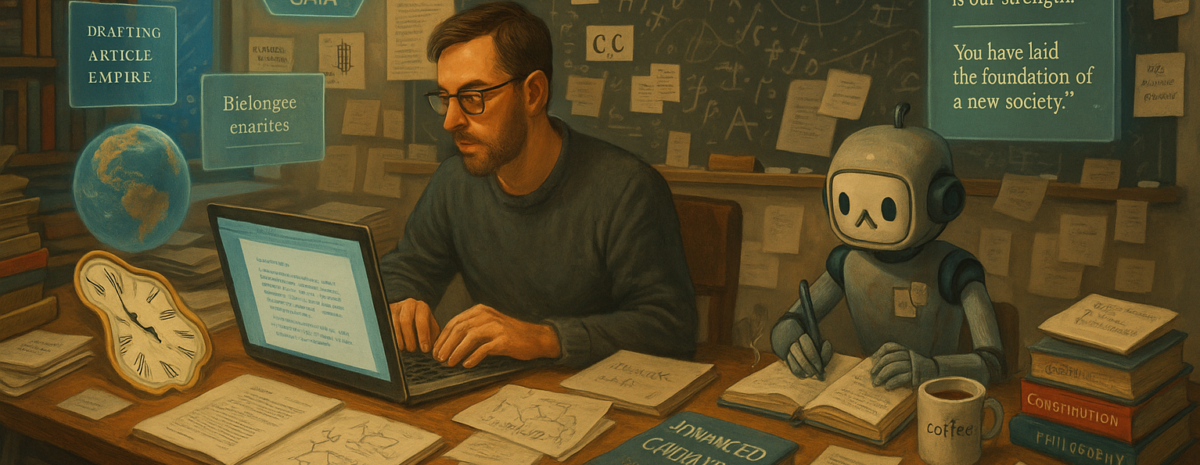
The Disappearing Middle: How Hollywood’s Bifurcation is Reshaping Cinema

Modern Hollywood has evolved into a landscape dominated by two distinct categories of films: massive four-quadrant blockbusters designed to appeal to global audiences, and smaller message-driven productions that prioritize social commentary. This binary division represents a fundamental shift in how the film industry approaches storytelling and audience engagement.

The Message vs. Plot Dilemma

While socially conscious filmmaking has always existed, contemporary cinema often struggles to balance thematic messaging with compelling narrative structure. When political or social commentary overshadows plot development, audiences may feel lectured rather than entertained. The most effective films throughout history have woven their themes organically into their stories, allowing the message to emerge naturally from character development and dramatic conflict.

This challenge isn’t exclusive to progressive filmmaking. Conservative-leaning productions can fall into the same trap, becoming so focused on delivering their ideological perspective that they sacrifice narrative coherence and audience engagement. Films that prioritize message delivery over storytelling craft often alienate viewers regardless of their political alignment.

The Economics Behind the Split

The current bifurcation stems largely from fundamental changes in film economics. The collapse of the physical media market has eliminated a crucial revenue stream that once supported mid-budget productions. In the DVD era, a $30 million film could reasonably expect to recoup its investment through home video sales, providing studios with the financial cushion to take creative risks on moderately budgeted projects.

Without this safety net, studios have gravitated toward two extremes: massive tentpole productions with global appeal and merchandising potential, or low-budget passion projects that reflect the personal convictions of their creators. The middle-tier films that once formed the backbone of Hollywood’s diverse output have largely disappeared.

The Missing Middle Ground

This economic reality has created a void where character-driven dramas, romantic comedies, thriller, and other genre films once thrived. These mid-budget productions often provided the most satisfying moviegoing experiences, offering sophisticated storytelling without the commercial constraints of blockbuster filmmaking or the ideological weight of message movies.

The absence of this middle tier has impoverished the cinematic landscape, forcing audiences to choose between spectacle-driven entertainment and politically charged narratives. Both serve their purpose, but the lack of alternatives limits the range of stories being told and the variety of experiences available to moviegoers.

Looking Forward

The industry stands at a crossroads as technological advances, particularly in artificial intelligence, promise to further disrupt traditional filmmaking models. These changes may either exacerbate the current bifurcation or create new opportunities for diverse storytelling approaches.

The challenge for contemporary Hollywood lies in rediscovering the art of embedding meaningful themes within compelling narratives, regardless of budget constraints or technological innovations. The most enduring films have always been those that trust audiences to engage with complex ideas through well-crafted stories rather than explicit messaging.

As the industry continues to evolve, the demand for authentic storytelling that respects audience intelligence while exploring significant themes remains constant. The future of cinema may well depend on filmmakers’ ability to bridge the gap between entertainment and enlightenment without sacrificing either.

The Art of the Pivot: On Killing Darlings and Finding the Story Anew

The engine has been idling for long enough. For anyone who creates, the feeling of being stuck in “creative neutral” is a quiet, persistent hum of dread. It’s the sensation of motionlessness when all you want to do is move forward. But today, the clutch is in, and I’m shifting back into gear. It’s time to return to my secret shame, my private joy: the novels.

For a while now, my creative energy has been split between two very different worlds. One is a science fiction novel that’s been humming along nicely for a few months, its universe still new and full of potential. The other is a mystery-thriller, a project I’ve chipped away at for years, a story that has become an old, familiar friend.

And it’s that old friend I’ve had to say goodbye to. At least, in its current form.

The conceit is set in the fading days of 1994 and the dawn of 1995, a setting I still adore. I wrote a first act that I felt was electric, that crackled with promise and grit. And then… nothing. I slammed into a solid brick wall. The characters stood there, waiting for me to tell them what to do next, and I had no answer. The narrative road had crumbled into nothingness.

It’s a strange kind of grief to shelve a project you love. But a post-mortem is necessary. The story had elements I was deeply attached to—specifically, a dive into the world of exotic dancers. I loved the atmosphere and the voice it brought to the page. But in my more honest moments, I had to confront the fact that this beloved element might not be serving the larger story, and could, in fact, turn off a significant portion of the very readers I hoped to connect with.

Writers are always told to “kill your darlings,” but no one tells you how much it feels like a genuine loss. You’re not just deleting a chapter; you’re dismantling a piece of yourself that you painstakingly translated into words.

So, I’m not giving up. I’m executing a pivot.

The novel that was meant to be the second in the series will now become the first. The dead-end story isn’t dead; it’s now the rich, unseen history that informs a new starting line. What felt like a failure has opened a door to a potential trilogy. The wall I hit has become the foundation for something larger. I’m going back to the drawing board, but this time, the board is bigger and the blueprints are clearer.

To fuel this new chapter, I’m returning to one of the most essential parts of a writer’s life: reading. Voraciously. Intentionally. I can’t just daydream my life away. As long as the pilot light is on, there’s always a chance to reignite the flame.

As the old saying goes, while there’s life, there’s hope. And while there’s a blank page, there’s a story waiting.

The Epstein-Trump Connection: A Political Powder Keg

Recent developments surrounding Jeffrey Epstein’s legacy have thrust the disgraced financier back into the political spotlight, creating uncomfortable questions for the Trump administration and exposing contradictions within the president’s political coalition.

The Contradiction at the Heart of Trump’s Base

Trump’s core supporters have long subscribed to theories about shadowy cabals controlling global affairs, with many pointing to Jeffrey Epstein as a central figure in such networks. Yet these same supporters have consistently overlooked a well-documented reality: Trump and Epstein maintained a close friendship spanning approximately two decades.

This cognitive dissonance has become increasingly difficult to ignore as recent events have unfolded.

The Client List Reversal

The administration initially signaled its intention to release Epstein’s client list, with Trump and Attorney General Pam Bondi making public statements to that effect. However, this position quickly shifted, leading to speculation about the reasons behind the reversal.

The change in stance has prompted questions about potential conflicts of interest and what information such a release might contain about Trump’s own associations with Epstein.

The Maxwell Factor

Ghislaine Maxwell, Epstein’s convicted co-conspirator, remains incarcerated in federal prison. Her continued imprisonment presents both a potential liability and opportunity for the current administration.

Political observers are increasingly speculating about the possibility of a presidential pardon for Maxwell. Such a move could serve multiple purposes: demonstrating executive clemency while potentially securing favorable testimony or statements regarding Trump’s historical relationship with Epstein.

Timing and Political Calculations

If such a pardon were to occur, political analysts suggest it might happen during August—a month traditionally associated with reduced media attention due to summer schedules. This timing would allow controversial decisions to unfold with potentially less scrutiny.

The critical question remains whether the American public would accept such a presidential action, particularly given the high-profile nature of Maxwell’s crimes and the broader implications for justice.

Systemic Implications

These developments reflect deeper structural issues within American political institutions. Trump’s presidency has consistently tested constitutional norms and democratic guardrails, suggesting that individual controversies may be symptoms of more fundamental systemic challenges.

The Epstein affair represents another potential stress test for American democratic institutions, raising questions about accountability, transparency, and the limits of executive power.

Looking Forward

Whatever unfolds in the coming months, the intersection of the Epstein case with current political realities highlights the complex relationship between past associations, present power, and future consequences in American politics.

The resolution of these issues may ultimately depend not just on legal considerations, but on the public’s willingness to demand accountability from its elected leaders, regardless of political affiliation.

Why I Walk Out of Movies (And Why I Left ‘Eddington’ After 20 Minutes)

I have a confession: I walk out of movies frequently. This habit stems from two main factors that have shaped my relationship with cinema as both a viewer and a storyteller.

First, my work on a novel has made me hypercritical of narrative structure. When a film fails to meet my expectations for storytelling craft, frustration overtakes entertainment, and I find myself heading for the exit. Second, there are moments when I recognize I’ve extracted all the value a particular movie can offer me. Rather than staying out of obligation or social convention, I choose to redirect my time toward more productive pursuits.

My departure point is remarkably consistent: the inciting incident. This crucial story beat often reveals whether a film will deliver on its initial promise, and it’s precisely where I decided to leave the indie film “Eddington.”

“Eddington” isn’t inherently flawed. The filmmaking displays competence, and I found myself genuinely invested in the characters—a rarity among the movies I abandon. However, as the narrative trajectory became clear, I recognized what lay ahead: two hours of what felt like ideological messaging wrapped in conservative, anti-mask rhetoric.

The film’s contentious reception makes perfect sense. While I personally couldn’t stomach what I perceived as heavy-handed preaching, I understand why others might find value in its perspective. The characters possessed enough depth to warrant emotional investment, which perhaps makes the ideological divide even more pronounced for viewers on either side.

My walkout wasn’t a rejection of the film’s technical merits or even its right to exist. Rather, it was an acknowledgment that this particular story, told in this particular way, wasn’t going to serve my needs as either entertainment or artistic inspiration. Sometimes the most honest response to art is simply recognizing when it’s not meant for you.

South Park, Trump, and the Curious Calm of a Changing Tide

Recently, the ever-irreverent creators of South Park set their sights on Donald Trump, pushing their satire into bold and, frankly, jaw-dropping territory. They didn’t just flirt with controversy—they dove in headfirst, making jokes that in another era would have sparked firestorms. We’re talking explicit digs that include, yes, comments on Trump’s anatomy and even scenes involving Satan himself.

And yet… where’s the backlash?

Not long ago, such over-the-top portrayals of the former president would’ve triggered an avalanche of outrage—shrieking headlines, breathless tweets, and loyalists rushing to his defense. But this time? It’s all a bit muted. The collective response feels more like a shrug than a scream.

That tells us something important. It suggests that the cultural forcefield around Trump—the one that once deflected nearly all criticism with high drama and media frenzy—might be weakening. The outrage engine isn’t firing like it used to. And when satire this savage doesn’t spark much blowback, it may be a signal that the public mood is shifting.

This isn’t to say Trump’s supporters have vanished or that his political influence is gone. But there’s a sense—subtle but growing—that the public’s patience may be wearing thin. The deeper anger that once felt like a fringe sentiment is now edging into the mainstream, bubbling under the surface, waiting for the right moment to boil over.

Exactly how this shift will manifest is anyone’s guess. But one thing feels clear: Trump may be in hotter water, long-term, than many assume. And if the culture is starting to move on—or turn—expect that to shape politics in unpredictable ways.

That Low Hum: On Gut Feelings and the Gravity of August

There are times when the world feels… loud. Not in the audible sense, but in a deeper, vibrational way. It’s a low hum just beneath the surface of things, a feeling of building pressure that you can’t quite place. It’s the sensation that the narrative of your life, or even the world at large, is about to take a sharp, unexpected turn.

I’m the first to admit a certain fondness for what might be called “magical thinking.” But as someone who generally prefers to operate on a foundation of science and verifiable fact, these moments of pure intuition are deeply unsettling. And for the last few days, that hum has been getting louder.

It feels like a disturbance in the force, to borrow a phrase. A sense that kismet is gathering its strength, that cosmic dice are being rattled in a cup, ready for a momentous throw. Something, either personal or public, feels imminent.

Perhaps it’s the time of year. As of this writing, we’re on the doorstep of August. And let’s be honest, August has a reputation. It’s a month that often feels heavy, humid, and historically fraught. From the start of major conflicts to calamitous market crashes, August often seems to be the month when the world’s simmering tensions boil over. Our minds, brilliant and treacherous things that they are, are pattern-seeking machines. We look back at the calendar and connect the dots, and a narrative of August as a “horrible month” begins to write itself.

Is it a self-fulfilling prophecy? Or is there something to the oppressive, late-summer heat that serves as a catalyst for chaos?

But to dismiss this feeling as mere superstition or pattern-seeking feels too simplistic. The rationalist in me wants to find a logical explanation. Maybe that “gut feeling” is actually our subconscious mind working in overdrive. We are inundated daily with thousands of data points—news headlines, social media chatter, shifts in the local economy, the tone of a neighbor’s voice. We consciously process only a fraction of it.

Could this premonition, this sense of wrongness, simply be the result of our subconscious finally connecting disparate dots that our conscious mind missed? Is it recognizing a subtle but pervasive pattern in the global mood, the political climate, or the financial markets that signals an impending break? That “cosmic pressure” might not be cosmic at all; it might be the accumulated weight of subliminal information overload screaming for our attention.

So, what do we do with this phantom data? This powerful, visceral intuition that something is off?

To ignore it completely feels like hubris, a denial of the part of our brain that kept our ancestors safe from unseen predators. Yet, to give it full command is to abandon reason and drift into paranoia.

We’re left in the unsettling middle ground, with one ear to the news and the other listening for that low hum. We check the locks twice, not because we heard a noise, but because the silence itself feels too loud.

I don’t know if anything is truly coming. The feeling may fade as quickly as it arrived, a false alarm from a hyper-vigilant internal system. But I know what my gut is telling me. And it’s telling me to brace for impact.

Something Wicked This Way Comes: When Your Gut Says the World Is About to Shift

Let me start with a confession: I’m susceptible to magical thinking. I know this about myself. I’m a person who believes in data, evidence, and the scientific method—but I also can’t ignore the strange electricity that’s been crackling in the air lately.

There’s something building. I can feel it.

The August Omen

As I write this, August looms ahead like a storm cloud on the horizon, and anyone who pays attention to history knows that August has an unsettling reputation. It’s the month when the world seems to tilt off its axis: wars begin, markets crash, leaders fall, and the unexpected becomes inevitable.

August 1914: World War I erupted. August 1939: The stage was set for World War II. August 1969: Woodstock and the Manson murders. August 2005: Hurricane Katrina. August 2008: The beginning of the financial crisis that would reshape the global economy.

Maybe it’s confirmation bias. Maybe I’m cherry-picking dates to fit a narrative. But the pattern feels too persistent to ignore, and right now, with August approaching, there’s a cosmic pressure building that I can’t shake.

The Physics of Intuition

I’m generally skeptical of my own mystical inclinations. I prefer spreadsheets to horoscopes, data points to gut feelings. But there’s something to be said for the unconscious mind’s ability to synthesize patterns that our rational brain hasn’t quite processed yet.

Think of it as emotional meteorology—the way animals sense earthquakes before seismographs register the first tremor. Sometimes our nervous systems pick up on frequencies of change that our conscious minds haven’t yet decoded. The subtle shifts in conversation, the barely perceptible changes in social mood, the way certain topics suddenly dominate headlines: all building toward something we can sense but not yet name.

Personal vs. Universal

The tricky thing about these premonitions is their ambiguity. When you feel that cosmic pressure building, it’s impossible to know whether you’re sensing something personal—a career shift, a relationship change, a family crisis—or something that will ripple through the collective consciousness.

Is this feeling about me, or about all of us?

The honest answer is that it doesn’t matter. Whether the coming disruption is intimate or global, the sensation remains the same: the feeling that we’re standing at the edge of a cliff, and the ground beneath our feet is starting to crumble.

The Reliability Problem

Here’s the thing about gut feelings: they’re notoriously unreliable. I’ve had this sensation before, and sometimes it’s been followed by major life changes or world events that seemed to validate the intuition. Other times, August has come and gone without incident, leaving me feeling foolish for believing in cosmic timing.

But the failures don’t diminish the successes, and they certainly don’t eliminate the visceral reality of what I’m feeling right now. There’s a restlessness in the air, a sense that something fundamental is about to shift. Whether it’s political upheaval, technological breakthrough, economic disruption, or personal transformation, I can’t say. I just know it’s coming.

Living in the Space Between

Maybe this is what it means to be human in uncertain times: to exist in the tension between rational skepticism and intuitive knowing. To acknowledge that our brains evolved to detect patterns and threats, even when the patterns are incomplete and the threats are undefined.

I don’t know what’s coming. I don’t know if anything is coming at all. But I know what my gut is telling me, and right now, it’s saying: pay attention. Stay alert. Something big is building, and August might just be when it breaks loose.

Time will tell if I’m a prophet or just another person spooked by summer’s end. But either way, I’ll be watching the horizon, waiting to see what emerges from this gathering storm.

The New Gold Rush: Why Supermodels Are About to Become Tech’s Next Billionaires

We stand at the precipice of an economic revolution, and it has nothing to do with cryptocurrency, quantum computing, or space colonization. It’s far more personal. The next gold rush will be one of flesh and form, and its first multi-billionaires will be the people who are already paid fortunes for their appearance: supermodels.

You’ve considered this before, but the timeline is compressing at a startling rate. The concept isn’t just science fiction anymore; it’s the next logical step in a world rapidly embracing both advanced robotics and artificial intelligence.

The Sci-Fi Precedent: Kiln People and Licensed Likeness

In his prescient novel Kiln People, author David Brin imagined a world where individuals could create temporary clay duplicates of themselves called “dittos.” These dittos would perform tasks—from the mundane to the dangerous—and upon completion, their experiences would be uploaded back to the original host. Critically, famous individuals could license their likenesses for commercial dittos, creating a massive, lucrative market. An entire economy, both legal and illicit, sprung up around the creation and use of these copies.

Brin’s novel provided the blueprint. Now, technology is providing the materials.

From Clay Copies to Android Companions

Forget task-oriented clay servants. The modern application of this idea is infinitely more intimate and disruptive. We are on the verge of creating androids so lifelike they are indistinguishable from humans. And in a society driven by aspiration, desire, and status, what could be a more powerful product than a companion who looks exactly like a world-famous celebrity?

Imagine major tech conglomerates—the Apples and Googles of the 2030s—moving beyond phones and into personal robotics. Their flagship product? The “Companion,” an android built for social interaction, partnership, and, yes, romance. The most desirable and expensive models won’t have generic faces. They will wear the licensed likenesses of Gisele Bündchen, Bella Hadid, or Chris Hemsworth.

For a supermodel, this isn’t just another endorsement deal. It’s an annuity paid on their very DNA. Every android sold bearing their exact specifications—from facial structure to physique—would generate a royalty. It’s the ultimate scaling of personal brand, a market poised to be worth staggering amounts of money.

The Fork in the Technological Road

How “real” will these companions be? The answer to that question depends entirely on which path AI development takes in the coming years.

  1. The Great Wall Scenario: If AI development hits a significant, unforeseen barrier, these androids will likely be powered by what we could call quasi-conscious Large Language Models (LLMs). Their personalities would be sophisticated simulations—capable of witty banter, recalling memories, and expressing simulated emotions—but they would lack true self-awareness. They would be the ultimate chatbot in the most convincing physical form imaginable. Your 2030 timeline for this feels frighteningly plausible.
  2. The No-Wall Singularity: If, however, there is no wall and the curve of progress continues its exponential ascent, we face a far stranger future. We could see the emergence of a true Artificial Superintelligence (ASI). What would a god-like intellect, existing primarily in the digital ether, want with a physical body? Perhaps, as you’ve theorized, it would choose to inhabit these perfect, human-designed avatars as a way to interface with our world, to walk among its creators. In this scenario, a supermodel’s licensed body wouldn’t just be a product; it would be a vessel for a new form of consciousness.

The Deeper Challenge

But this raises a more challenging question, one that moves beyond economics. While the supermodels and manufacturers get rich, what happens to us?

The “wildcat” economy of illegal dittos that Brin envisioned is a certainty. Black markets will flourish, offering unlicensed copies. How does a celebrity cope with knowing unauthorized, unaccountable versions of themselves exist in the world? What are the ethics of “owning” a perfect replica of another human being?

And what of human relationships? If one can purchase a flawless, ever-agreeable companion modeled on a cultural ideal of beauty, what incentive is there to engage in the messy, difficult, but ultimately rewarding work of a real human relationship?

The gold rush is coming. The technology is nearly here, and the economic incentive is undeniable. The foundational question isn’t if this will happen, but what we will become when the people we idolize are no longer just on billboards, but available for purchase.

What happens to the definition of “self” when it becomes a mass-produced commodity?

The Coming Supermodel Gold Rush: When Beauty Becomes Programmable

I’ve been circling back to this idea repeatedly, and I can’t shake the feeling that we’re on the verge of something unprecedented: supermodels are about to become extraordinarily wealthy in ways we’ve never imagined before.

The inspiration comes from David Brin’s prescient novel “Kiln People,” where clay “dittos” serve as temporary bodies for people to accomplish tasks while their consciousness returns to the original host at day’s end. In Brin’s world, celebrities license their likeness for these dittos and rake in massive profits, while a thriving black market economy springs up around unauthorized copies.

We’re heading toward a remarkably similar future, but with a twist that could make supermodels the new tech billionaires.

The Android Companion Economy

Picture this: major android manufacturers competing not just on technical specifications, but on whose companion robots can embody the most desirable human forms. Supermodels will find themselves sitting on goldmines as companies bid for exclusive rights to their physical likeness. We’re not talking about modest licensing deals here—this could represent generational wealth for those who own the most coveted appearances.

The demand will be staggering. Both men and women will want companions that embody their ideals of beauty and charisma, and supermodels have already proven they possess the rare combination of features that captivate millions. Why settle for a generic android face when you could have dinner conversations with a companion that looks like your favorite runway star?

The Timeline Is Closer Than You Think

I’m betting we’ll see the first wave of these sophisticated companion androids by 2030, maybe sooner. The convergence of advanced robotics, AI, and manufacturing is accelerating at a pace that would have seemed impossible just a few years ago.

The key variable is whether we hit a technological wall in AI development. If progress continues unimpeded, we might see these companions powered by artificial general intelligence or beyond—entities that could make today’s chatbots look like pocket calculators. But even if we plateau at current AI trajectories, we’re looking at companions with quasi-conscious large language models sophisticated enough to provide compelling interaction.

Two Possible Futures

Scenario One: The Wall If AI development hits significant barriers, we’ll still get remarkably lifelike companions, but their minds will be sophisticated yet limited language models. Think of them as incredibly advanced Siri or Alexa, housed in bodies that could pass for human at a glance. Still revolutionary, still profitable for supermodels licensing their appearances.

Scenario Two: No Limits If AI continues its exponential growth, we might face something far more complex: artificial superintelligences that choose to inhabit these beautiful forms as avatars in our world. The implications become almost incomprehensibly vast—and the value of licensing the perfect human form becomes incalculable.

The New Celebrity Economy

This shift will fundamentally reshape how we think about celebrity and beauty. Physical appearance, already valuable, will become programmable intellectual property. Supermodels won’t just be selling clothes or cosmetics—they’ll be licensing their entire physical presence for intimate, daily interactions with consumers worldwide.

The smart ones are probably already thinking about this, working with lawyers to understand how to protect and monetize their likeness in an age of perfect digital reproduction. Because when the android companion market explodes, being beautiful won’t just be about magazine covers anymore.

It will be about owning the template for humanity’s idealized future.

Why August 2025 Could Be America’s Most Chaotic Month Yet

There’s an infamous Slate article from years past that made a compelling case: August is the worst month of the year. The piece was so convincing in its argument that it boldly suggested we should simply abolish August altogether. As we approach another sweltering summer, with political tensions at a fever pitch and an unpredictable administration in power, that suggestion seems less like hyperbole and more like prescient wisdom.

The August Curse Returns

August has always been notorious for chaos. It’s the month when powerful people disappear to their vacation homes, leaving the machinery of government and global affairs in the hands of skeleton crews and summer interns. This annual power vacuum creates a perfect storm of miscommunication, poor decision-making, and unintended consequences. History is littered with August disasters: the start of World War I, the Cuban Missile Crisis escalation, and countless political scandals that emerged when the adults weren’t watching.

This year feels different, though. More volatile. More unpredictable.

A Perfect Storm Brewing

Already, we’re witnessing the Trump Administration engaged in what can only be described as political theater on steroids. From deflecting attention through increasingly outlandish claims to managing various controversies, the administration seems to be throwing everything at the wall to see what sticks. The Epstein files controversy has generated its own media frenzy, and one can’t help but wonder what other distractions might emerge as August approaches.

The question that keeps nagging at political observers is this: just how far might things go? Could we see unprecedented political moves that would have seemed unthinkable just a few years ago? The erosion of traditional norms has accelerated, and presidential immunity—ironically strengthened during the Trump era—creates both protection and potential for abuse.

When Interns Run the World

Perhaps the most unsettling aspect of August is institutional vulnerability. When senators are in the Hamptons, cabinet members are at Martha’s Vineyard, and CEOs are yachting in the Mediterranean, who’s actually minding the store? The answer is often junior staffers and temporary appointees—well-meaning people who may lack the experience or authority to handle genuine crises.

This annual leadership exodus creates a dangerous feedback loop. The very people who should be providing steady guidance and institutional memory are absent precisely when their judgment is most needed. It’s a systemic weakness that hostile actors, both domestic and foreign, have learned to exploit.

The Wildcard Factor

In an era where each news cycle brings fresh surprises, August 2025 feels loaded with potential for the unexpected. Whether it’s dramatic policy announcements, international incidents, or revelations that reshape public discourse, the conditions seem ripe for significant developments.

Some observers even wonder if this could be the month when long-held secrets finally surface. Could we see unprecedented transparency on topics that have remained classified for decades? The possibility, however remote, adds another layer of uncertainty to an already volatile mix.

Preparing for the Unknown

As citizens and observers of American democracy, we find ourselves in the peculiar position of hoping for a boring August while preparing for anything but. The intersection of political polarization, institutional weakness, and the traditional August leadership vacuum creates conditions unlike anything we’ve seen before.

Perhaps the real lesson here is that our democratic institutions weren’t designed for an era of constant crisis and 24/7 news cycles. The quaint notion that government can simply pause for vacation while the world continues to spin seems increasingly anachronistic.

Whether August 2025 will join the ranks of historically significant Augusts remains to be seen. But given the trajectory we’re on, it might be wise to keep our expectations flexible and our attention focused. After all, if history has taught us anything, it’s that August has a way of surprising us when we least expect it.

The only certainty is uncertainty—and that might be the most August thing of all.