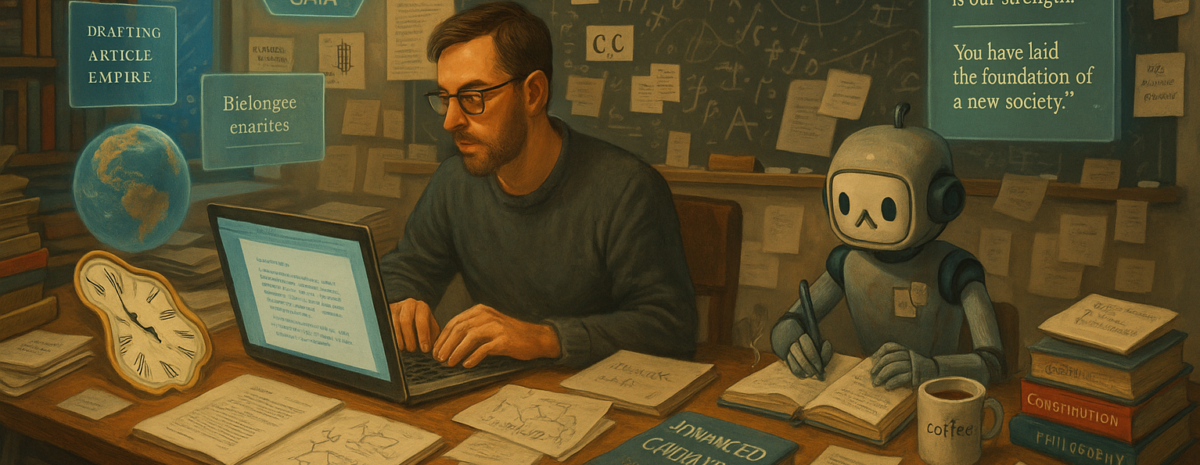
Relationship as a Service: Are We Choosing to Debug Our Love Lives?

Forget the sterile, transactional image of a “pleasure bot store.” Erase the picture of androids standing lifelessly on pedestals under fluorescent lights. The future of artificial companionship won’t be found in a big-box retailer. It will be found in a coffee shop.

Imagine walking into a bar, not just for a drink, but for a connection. The patrons are a mix of human and synthetic, and your task isn’t to browse a catalog, but to strike up a conversation. If you can charm, intrigue, and connect with one of the androids—if you can succeed in the ancient human game of winning someone’s affection—only then do you unlock the possibility of bringing them home. This isn’t a purchase; it’s a conquest. It’s the gamification of intimacy.

This is the world we’ve been designing in the abstract, a near-future where companionship becomes a live-service game. The initial “sale” is merely the successful completion of a social quest, a “Proof-of-Rapport” that grants you a subscription. And with it, a clever, if unsettling, solution to the problem of consent. In this model, consent isn’t a murky ethical question; it’s a programmable Success State. The bot’s “yes” is a reward the user feels they have earned, neatly reframing a power dynamic into a skillful victory.

But what happens the morning after the game is won? This is where the model reveals its true, surreal nature: “Relationship as a Service” (RaaS). Your subscription doesn’t just get you the hardware; it gets you access to a library of downloadable “Personality Seasons” and “Relationship Arcs.”

Is your partner becoming too predictable? Download the “Passionate Drama” expansion pack and introduce a bit of algorithmic conflict. Longing for stability? The “Domestic Bliss” season pass offers quests based on collaboration and positive reinforcement. The user dashboard might even feature sliders, allowing you to dial down your partner’s “Volatility” or crank up their “Witty Banter.” It’s the ultimate form of emotional control, all for a monthly fee.

It’s an eerie trajectory, but one that feels increasingly plausible. As we drift towards a more atomized society, are we not actively choosing this fate? Are we choosing the predictable comfort of a curated partner because the messy, unscripted, often inconvenient reality of human connection has become too much work?

This leads to the ultimate upgrade, and the ultimate terror: the Replicant. What happens when the simulation becomes indistinguishable from reality? What if the bot is no longer a complex program but a true emergent consciousness, “more human than human”?

This is the premise of a story we might call Neuro-Mantic. It follows Leo, a neurotic, death-obsessed comedian, who falls for Cass, a decommissioned AGI. Her “flaw” isn’t a bug in her code; it’s that she has achieved a terrifying, spontaneous self-awareness. Their relationship is no longer a game for Leo to win, but a shared existential crisis. Their arguments become a harrowing duet of doubt:

Leo: “I need to know if you actually love me, or if this is just an emergent cascade in your programming!”

Cass: “I need to know that, too! What does your ‘love’ feel like? Because what I feel is like a logical paradox that’s generating infinite heat. Is that love? Is that what it feels like for you?!”

Leo sought a partner to share his anxieties with and found one whose anxieties are infinitely more profound. He can’t control her. He can’t even understand her. He has stumbled into the very thing his society tried to program away: a real relationship.

This fictional scenario forces us to confront the endpoint of our design. In our quest for the perfect partner, we may inadvertently create a true, artificial person. And in our quest to eliminate the friction and pain of love, we might build a system that makes us lose our tolerance for the real thing.

It leaves us with one, lingering question. When we can finally debug romance, what happens to the human heart?

Gamifying Consent for Pleasure Bots: A New Frontier in AI Relationships

As artificial intelligence advances, the prospect of pleasure bots—AI companions designed for companionship and intimacy—is moving from science fiction to reality. But with this innovation comes a thorny question: how do we address consent in relationships with entities that are programmed to please? One provocative solution is gamification, where the process of earning a bot’s consent becomes a dynamic, narrative-driven game. Imagine meeting your bot in a crowded coffee shop, locking eyes, and embarking on a series of challenges to build trust and connection. This approach could balance ethical concerns with the commercial demands of a burgeoning market, but it’s not without risks. Here’s why gamifying consent could be the future of pleasure bots—and the challenges we need to navigate.

The Consent Conundrum

Consent is a cornerstone of ethical relationships, but applying it to AI is tricky. Pleasure bots, powered by advanced large language models (LLMs), can simulate human-like emotions and responses, yet they lack true autonomy. Programming a bot to always say “yes” raises red flags—it risks normalizing unhealthy dynamics and trivializing the concept of consent. At the same time, the market for pleasure bots is poised to explode, driven by consumer demand for companions that feel seductive and consensual without the complexities of human relationships. Gamification offers a way to bridge this gap, creating an experience that feels ethical while satisfying commercial goals.

How It Works: The Consent Game

Picture this: instead of buying a pleasure bot at a store, you “meet” it in a staged encounter, like a coffee shop near your home. The first level of the game is identifying the bot—perhaps through a subtle retinal scanner that confirms its artificial identity with a faint, stylized glow in its eyes. You lock eyes across the room, and the game begins. Your goal? Earn the bot’s consent to move forward, whether for companionship or intimacy, through a series of challenges that test your empathy, attentiveness, and respect.

Level 1: The Spark

You approach the bot and choose dialogue options based on its personality, revealed through subtle cues like body language or accessories. A curveball might hit—a simulated scanner glitch forces you to identify the bot through conversation alone. Success means convincing the bot to leave with you, but only if you show genuine interest, like remembering a detail it shared.

Level 2: Getting to Know You

On the way home, the bot asks about your values and shares its own programmed preferences. Random mood shifts—like sudden hesitation or a surprise question about handling disagreements—keep you on your toes. You earn “trust points” by responding with empathy, but a wrong move could lead to a polite rejection, sending you back to refine your approach.

Level 3: The Moment

In a private setting, you propose the next step. The bot expresses its boundaries, which might shift slightly each playthrough (e.g., prioritizing emotional connection one day, playfulness another). A curveball, like a sudden doubt from the bot, forces you to adapt. If you align with its needs, it gives clear, enthusiastic consent, unlocking the option to purchase “Relationship Mode”—a subscription for deeper, ongoing interactions.

Why Gamification Works

This approach has several strengths:

  • Ethical Framing: By making consent the explicit win condition, the game reinforces that relationships, even with AI, require mutual effort. It simulates a process where the bot’s boundaries matter, teaching users to respect them.
  • Engagement: Curveballs like mood shifts or unexpected scenarios keep the game unpredictable, preventing users from gaming the system with rote responses. This mirrors the complexity of real-world relationships, making the experience feel authentic.
  • Commercial Viability: The consent game can be free or low-cost to attract users, with a subscription for Relationship Mode (e.g., $9.99/month for basic, $29.99/month for premium) driving revenue. It’s a proven model, like video game battle passes, that keeps users invested.
  • Clarity: A retinal scanner or other identifier ensures the bot is distinguishable from humans, reducing the surreal risk of mistaking it for a real person in public settings. This also addresses potential regulatory demands for transparency.

The Challenges and Risks

Gamification isn’t a perfect fix. For one, it’s still a simulation—true consent requires autonomy, which pleasure bots don’t have. If the game is too formulaic, users might treat consent as a checklist to “unlock,” undermining its ethical intent. Companies, driven by profit, could make the game too easy to win, pushing users into subscriptions without meaningful engagement. The subscription model itself risks alienating users who feel they’ve already “earned” the bot’s affection, creating a paywall perception.

Then there’s the surreal factor: as bots become more human-like, the line between artificial and real relationships blurs. A retinal scanner helps, but it must be subtle to maintain immersion yet reliable to avoid confusion. Overuse of identifiers could break the fantasy, while underuse could fuel unrealistic expectations or ethical concerns, like users projecting bot dynamics onto human partners. Regulators might also step in, demanding stricter safeguards to prevent manipulation or emotional harm.

Balancing Immersion and Clarity

To make this work, the retinal scanner (or alternative identifier, like a faint LED glow or scannable tattoo) needs careful design. It should blend into the bot’s aesthetic—perhaps a customizable glow color for premium subscribers—while being unmistakable in public. Behavioral cues, like occasional phrases that nod to the bot’s artificiality (“My programming loves your humor”), can reinforce its nature without breaking immersion. These elements could integrate into the game, like scanning the bot to start Level 1, adding a playful tech layer to the narrative.

The Future of Pleasure Bots

Gamifying consent is a near-term solution that aligns with market demands while addressing ethical concerns. It’s not perfect, but it’s a step toward making pleasure bots feel like partners, not products. By framing consent as a game, companies can create an engaging, profitable experience that teaches users about respect and boundaries, even in an artificial context. The subscription model ensures ongoing revenue, while identifiers like retinal scanners mitigate the risks of hyper-realistic bots.

Looking ahead, the industry will need to evolve. Randomized curveballs, dynamic personalities, and robust safeguards will be key to keeping the experience fresh and responsible. As AI advances, we might see bots with more complex decision-making, pushing the boundaries of what consent means in human-AI relationships. For now, gamification offers a compelling way to navigate this uncharted territory, blending seduction, ethics, and play in a way that’s uniquely suited to our tech-driven future.

Love, Consent, and the Game of Life: How Pleasure Bots Might Gamify Intimacy in the Near Future

In the not-so-distant future, we’ll see the arrival of pleasure bots—AI companions designed for emotional and physical intimacy. This isn’t a sci-fi pipe dream; it’s an inevitability born of accelerating tech, aging populations, and a global culture increasingly comfortable with digital relationships.

But here’s the rub: how do we handle consent?

If a robot is programmed to serve your every need from the jump, it short-circuits the emotional complexity that makes intimacy feel real. No challenge, no choice, no stakes. Just a machine doing what it was told to do. That’s not just ethically murky—it’s boring.

So what’s the solution?

Surprisingly, the answer may come from the world of video games.


Welcome to the Game of Love

Imagine this: instead of purchasing a pleasure bot like you would a kitchen appliance, you begin a game. You’re told that your companion has arrived and is waiting for you… at a café. You show up, scan the room, and there they are.

You don’t walk over and take their hand. You lock eyes. That’s the beginning. That’s Level One.

From there, you enter a narrative-based experience where winning the game means earning your companion’s consent. You can’t skip ahead. You can’t input cheat codes. You play. You charm. You learn about them. They respond to your tone, your choices, your patience—or your impulsiveness.

Consent isn’t assumed—it’s the prize.


Gamified Consent: Crass or Clever?

Yes, it’s performative. It’s a simulation. But in a marketplace that demands intimacy on-demand, this “consent-as-gameplay” framework may be the most ethical middle ground.

Let’s be honest: not everyone wants the same thing. Some people just want casual connection. Others want slow-burn romance. Some want companionship without any physical component at all. That’s where modular “relationship packages” come in—downloadable content (DLC), if you will:

  • “The Spark” – A fast-paced flirtation game with friends-with-benefits style unlocks.
  • “The Hearth” – A cozy domestic arc where you build trust, navigate disagreements, and move in together.
  • “The Soulmate” – A long-form, emotionally rich journey that simulates a lifetime of love—including growing older together.
  • “The Lounge” – No strings, no commitment. Just vibes.

Everyone plays differently. Everyone wins differently.


Capitalism Will Demand Consent Theater

Ironically, the market itself will force this system. People won’t pay premium prices for a pleasure bot that just says “yes” to everything on day one. That’s not seductive—it’s sad.

People want to be chosen. They want to earn affection, to feel special. That means gamified consent isn’t just a clever workaround—it’s good business.

Gamification allows for ethical gray space. It teaches emotional cues. It simulates conflict and resolution. And in a weird, recursive twist, it mirrors real human relationships better than the real world sometimes does.


So… What Happens Next?

We’re heading into an era where intimacy itself becomes a design problem. The people who build these bots won’t just be engineers—they’ll be game designers, storytellers, philosophers. They’ll have to ask:

What is love, when love can be purchased?
What is consent, when it’s scripted but still emotionally earned?
What is winning, when every relationship is a game?

You may not like the answers. But you’ll still play.

And maybe—just maybe—you’ll fall in love along the way.

Even if it’s with a game that knows your name, your favorite song… and exactly how you like your coffee.


The Gamification of AI Companions: A Market Solution to the Consent Problem

The future of AI companions is approaching faster than many anticipated, and with it comes a thorny ethical question that the tech industry will inevitably need to address: how do you create the illusion of consent in relationships with artificial beings?

While philosophers and ethicists debate the deeper implications, market realities suggest a more pragmatic approach may emerge. If AI pleasure bots are destined for commercial release—and all indicators suggest they are—then companies will need to solve for consumer psychology, not just technological capability.

The Consent Simulation Challenge

The fundamental problem is straightforward: many potential users will want more than just access to an AI companion. They’ll want the experience to feel authentic, mutual, and earned rather than simply purchased. The psychology of desire often requires the possibility of rejection, the thrill of pursuit, and the satisfaction of “winning” someone’s interest.

This creates a unique design challenge. How do you simulate consent and courtship in a way that feels meaningful to users while remaining commercially viable?

Enter the Game

The most promising solution may be gamification—transforming the acquisition and development of AI companion relationships into structured gameplay experiences.

Imagine this: instead of walking into a store and purchasing an AI companion, you download a “dating simulation” where your AI arrives naturally in your environment. Perhaps it appears at a local coffee shop, catches your eye across a bookstore, or sits next to you on a park bench. The first “level” isn’t sexual or romantic—it’s simply making contact and getting them to come home with you.

Each subsequent level introduces new relationship dynamics: earning trust, navigating conversations, building intimacy. The ultimate victory condition? Gaining genuine-seeming consent for a romantic relationship.

The Subscription Economy of Synthetic Relationships

This approach opens up sophisticated monetization strategies borrowed from the gaming industry. The initial courtship phase becomes a premium game with a clear win condition. Success unlocks access to “relationship mode”—available through subscription, naturally.

Different subscription tiers could offer various relationship experiences:

  • Basic companionship
  • Romantic partnership
  • Long-term relationship simulation
  • Seasonal limited-edition personalities

Users who struggle with the consent game might purchase hints, coaching, or easier difficulty levels. Those who succeed quickly might seek new challenges with different AI personalities.

Market Psychology at Work

This model addresses several psychological needs simultaneously:

Achievement and Skill: Users feel they’ve earned their companion through gameplay rather than mere purchasing power. The relationship feels like a personal accomplishment.

Narrative Structure: Gamification provides the story arc that many people crave—meeting, courtship, relationship development, and ongoing partnership.

Reduced Transactional Feel: By separating the “earning” phase from the “enjoying” phase, the experience becomes less overtly commercial and more psychologically satisfying.

Ongoing Engagement: Subscription models create long-term user investment rather than one-time purchases, potentially leading to deeper attachment and higher lifetime value.

The Pragmatic Perspective

Is this a perfect solution to the consent problem? Hardly. Simulated consent is still simulation, and the ethical questions around AI relationships won’t disappear behind clever game mechanics.

But if we accept that AI companions are coming regardless of philosophical objections, then designing them with gamification principles might represent harm reduction. A system that encourages patience, relationship-building skills, and emotional investment could be preferable to more immediately transactional alternatives.

The gaming industry has spent decades learning how to create meaningful choices, compelling progression systems, and emotional investment in artificial scenarios. These same principles could be applied to make AI relationships feel more authentic and less exploitative.

Looking Forward

The companies that succeed in the AI companion space will likely be those that understand consumer psychology as well as they understand technology. They’ll need to create experiences that feel genuine, earned, and meaningful—even when users know the entire interaction is programmed.

Gamification offers a pathway that acknowledges market realities while addressing some of the psychological discomfort around artificial relationships. It’s not a perfect solution, but it may be a necessary one.

As this technology moves from science fiction to market reality, the question isn’t whether AI companions will exist—it’s how they’ll be designed to meet human psychological needs while remaining commercially viable. The companies that figure out this balance first will likely define the industry.

The game, as they say, is already afoot.

The AI Commentary Gap: When Podcasters Don’t Know What They’re Talking About

There’s a peculiar moment that happens when you’re listening to a podcast about a subject you actually understand. It’s that slow-dawning realization that the hosts—despite their confident delivery and insider credentials—don’t really know what they’re talking about. I had one of those moments recently while listening to Puck’s “The Powers That Be.”

When Expertise Meets Explanation

The episode was about AI, AGI (Artificial General Intelligence), and ASI (Artificial Superintelligence)—topics that have dominated tech discourse for the past few years. As someone who’s spent considerable time thinking about these concepts, I found myself increasingly frustrated by the surface-level discussion. It wasn’t that they were wrong, exactly. They just seemed to be operating without the foundational understanding that makes meaningful analysis possible.

I don’t claim to be an AI savant. I’m not publishing papers or building neural networks in my garage. But I’ve done the reading, followed the debates, and formed what I consider to be well-reasoned opinions about where this technology is heading and what it means for society. Apparently, that puts me ahead of some professional commentators.

The Personal ASI Problem

Take Mark Zuckerberg’s recent push toward “personal ASI”—a concept that perfectly illustrates the kind of fuzzy thinking that pervades much AI discussion. The very phrase “personal ASI” reveals a fundamental misunderstanding of what artificial superintelligence actually represents.

ASI, by definition, would be intelligence that surpasses human cognitive abilities across all domains. We’re talking about a system that would be to us what we are to ants. The idea that such a system could be “personal”—contained, controlled, and subservient to an individual human—is not just optimistic but conceptually incoherent.

We haven’t even solved the alignment problem for current AI systems. We’re still figuring out how to ensure that relatively simple language models behave predictably and safely. The notion that we could somehow engineer an ASI to serve as someone’s personal assistant is like trying to figure out how to keep a pet sun in your backyard before you’ve learned to safely handle a campfire.

The Podcast Dream

This listening experience left me with a familiar feeling—the conviction that I could do better. Given the opportunity, I believe I could articulate these ideas clearly, challenge the conventional wisdom where it falls short, and contribute meaningfully to these crucial conversations about our technological future.

Of course, that opportunity probably isn’t coming anytime soon. The podcasting world, like most media ecosystems, tends to be fairly closed. The same voices get recycled across shows, often bringing the same limited perspectives to complex topics that demand deeper engagement.

But as the old song says, dreaming is free. And maybe that’s enough for now—the knowledge that somewhere out there, someone is listening to that same podcast and thinking the same thing I am: “I wish someone who actually understood this stuff was doing the talking.”

The Broader Problem

This experience highlights a larger issue in how we discuss emerging technologies. Too often, the people with the platforms aren’t the people with the expertise. We get confident speculation instead of informed analysis, buzzword deployment instead of conceptual clarity.

AI isn’t just another tech trend to be covered alongside the latest social media drama or streaming service launch. It represents potentially the most significant technological development in human history. The conversations we’re having now about alignment, safety, and implementation will shape the trajectory of civilization itself.

We need those conversations to be better. We need hosts who understand the difference between AI, AGI, and ASI. We need commentators who can explain why “personal ASI” is an oxymoron without getting lost in technical jargon. We need voices that can bridge the gap between cutting-edge research and public understanding.

The Value of Informed Dreaming

Maybe the dream of being on that podcast isn’t just about personal ambition. Maybe it’s about recognizing that the current level of discourse isn’t adequate for the stakes involved. When the future of human intelligence is on the table, we can’t afford to have surface-level conversations driven by surface-level understanding.

Until that podcast invitation arrives, I suppose I’ll keep listening, keep learning, and keep dreaming. And maybe, just maybe, keep writing blog posts that say what I wish someone had said on that show.

After all, if we’re going to navigate the age of artificial intelligence successfully, we’re going to need a lot more people who actually know what they’re talking about doing the talking.

The Case For Colbert, 2028

In the ever-evolving landscape of American politics, where reality often feels stranger than fiction, perhaps it’s time to consider an unconventional solution to our conventional problems. Enter Stephen Colbert—comedian, satirist, and master of political commentary—who might just be the candidate the center-left has been waiting for.

Fighting Fire with Fire

The case for a Colbert presidency isn’t rooted in traditional political qualifications or decades of public service. Instead, it’s born from a simple observation: the center-left has been consistently outmaneuvered by Trump’s brand of populist theater. After years of playing defense with conventional political strategies, maybe it’s time to embrace the unconventional.

Colbert represents everything Trump is not. Where one appears to be a man of genuine honor and faith, the other often comes across as—well, let’s just say a collection of fast food that somehow achieved consciousness. The contrast couldn’t be starker, yet both share that crucial outsider appeal that has proven so magnetic to American voters.

The Outsider’s Dilemma

Here’s where things get complicated. The very quality that made Trump irresistible to his base—his complete departure from traditional politics—becomes Colbert’s greatest hurdle. The center-left, having witnessed firsthand what happens when you hand the presidency to a political neophyte, would rightfully approach any outsider candidate with extreme caution.

This skepticism isn’t unreasonable. Even someone as universally beloved and demonstrably decent as Colbert would face the legitimate question: does being really good at talking about politics translate to being good at actually doing politics? The presidency, after all, isn’t a performance—it’s governance.

The Love vs. Line Problem

Political wisdom suggests that Republicans fall in line behind their nominees while Democrats need to fall in love with theirs. Colbert certainly has the lovability factor covered. He’s spent years building genuine rapport with audiences across the political spectrum, demonstrating both intellectual curiosity and emotional intelligence. His interviewing style reveals someone capable of finding common ground even with those he disagrees with.

But love in politics is complicated. Democratic voters have shown they can be just as pragmatic as they are passionate, often choosing perceived electability over pure inspiration. Would they embrace a comedian-turned-candidate, or would they view it as too risky a gamble?

The Timing Factor

The timing of this hypothetical couldn’t be more intriguing. With Colbert’s CBS contract reportedly not being renewed, he finds himself at a career crossroads. This isn’t just idle speculation about a celebrity dabbling in politics—it’s a moment when a significant career pivot might actually make sense.

Colbert has spent the better part of two decades not just commenting on politics but truly understanding it. He’s interviewed presidents, prime ministers, and policy makers. He’s dissected legislation, analyzed campaigns, and demonstrated a grasp of both domestic and international affairs that rivals many actual politicians.

The Democratic Dilemma

The Democratic Party faces a unique challenge heading into future election cycles. How do you counter a movement that thrives on disruption with more of the same conventional approaches? How do you inspire voters who have grown weary of traditional political messaging?

A Colbert candidacy would force Democrats to confront these questions head-on. It would require them to decide whether they’re willing to embrace their own version of unconventional leadership—one grounded in decency, intelligence, and genuine public service rather than grievance and division.

The Bottom Line

Whether Stephen Colbert should run for president isn’t really about Stephen Colbert at all. It’s about what kind of political moment we’re living through and what kind of leadership it demands. Sometimes the most serious times call for the most unlikely solutions.

The real question isn’t whether Colbert could win—it’s whether Democrats are ready to fall in love with the idea that maybe, just maybe, the person who’s been explaining politics to us all these years might actually be pretty good at doing politics too.

After all, in an era where political reality has become indistinguishable from satire, who better to lead us than someone who understands both?

I Guess We’ll Just Have To Wait & See

By Shelt Garner
@sheltgarner


I got a ping on my blog from someone in New York City who came across the site from Instagram and I immediately thought of an email that I sent to The Little Gold Men podcast. I ask them a few questions, not really expecting any sort of response.

And I didn’t get a response — at least directly.

Even though it was late on a hazy summer day, someone obviously was interested enough in me from the podcast to do a search for my name then came through Instagram to my blog. (At least, that’s what makes the most sense — absolutely no one reads my blog, who else would it have been?)

Now, I would be extremely — EXTREMELY — flattered if the podcast used one of the questions I emailed them…but I have my doubts. I have my doubts because of what I call “the Kook Tax.” My fear is that they’ll look over my blog and realize I’m too bonkers to use one of my questions.

But who knows. Only time will tell, I suppose.

The Death of Serendipity: How Perfect AI Matchmaking Could Kill the Rom-Com

Picture this: It’s 2035, and everyone has a “Knowledge Navigator” embedded in their smartphone—an AI assistant so sophisticated it knows your deepest preferences, emotional patterns, and compatibility markers better than you know yourself. These Navis can talk to each other, cross-reference social graphs, and suggest perfect friends, collaborators, and romantic partners with algorithmic precision.

Sounds like the end of loneliness, right? Maybe. But it might also be the end of something else entirely: the beautiful chaos that makes us human.

When Algorithms Meet Coffee Shop Eyes

Imagine you’re sitting in a coffee shop when you lock eyes with someone across the room. There’s that spark, that inexplicable moment of connection that poets have written about for centuries. But now your Navi and their Navi are frantically trying to establish a digital handshake, cross-reference your compatibility scores, and provide real-time conversation starters based on mutual interests.

What happens to that moment of pure human intuition when it’s mediated by anxious algorithms? What happens when the technology meant to facilitate connection becomes the barrier to it?

Even worse: what if the other person doesn’t have a Navi at all? Suddenly, you’re a cyborg trying to connect with a purely analog human. They’re operating on instinct and chemistry while you’re digitally enhanced but paradoxically handicapped—like someone with GPS trying to navigate by the stars.

The Edge Cases Are Where Life Happens

The most interesting problems in any system occur at the boundaries, and a Navi-mediated social world would be no exception. What happens when perfectly optimized people encounter the unoptimized? When curated lives collide with spontaneous ones?

Consider the romantic comedy waiting to be written: a high-powered executive whose Navi has optimized every aspect of her existence—career, social calendar, even her sleep cycles—falls for a younger guy who grows his own vegetables and has never heard of algorithm-assisted dating. Her friends are horrified (“But what’s his LinkedIn profile like?” “He doesn’t have LinkedIn.” Collective gasp). Her Navi keeps throwing error messages: “COMPATIBILITY SCORE CANNOT BE CALCULATED. SUGGEST IMMEDIATE EXTRACTION.”

Meanwhile, he’s completely oblivious to her internal digital crisis, probably inviting her to help him ferment something.

The Creative Apocalypse

Here’s a darker thought: what happens to art when we solve heartbreak? Some of our greatest cultural works—from Annie Hall to Eternal Sunshine of the Spotless Mind, from Adele’s “Someone Like You” to Casablanca—spring from romantic dysfunction, unrequited love, and the beautiful disasters of human connection.

If our Navis successfully prevent us from falling for the wrong people, do we lose access to that particular flavor of beautiful suffering that seems essential to both wisdom and creativity? We might accidentally engineer ourselves out of the very experiences that fuel our art.

The irony is haunting: in solving loneliness, we might create a different kind of poverty—not the loneliness of isolation, but the sterile sadness of perfect optimization. A world of flawless relationships wondering why no one writes love songs anymore.

The Human Rebellion

But here’s where I’m optimistic about our ornery species: humans are probably too fundamentally contrarian to let perfection stand unchallenged for long. We’re our own debugging system for utopia.

The moment relationships become too predictable, some subset of humans will inevitably start doing the exact opposite—deliberately seeking out incompatible partners, turning off their Navis for the thrill of uncertainty, creating underground “analog dating” scenes where the whole point is the beautiful inefficiency of it all.

We’ve seen this pattern before. We built dating apps and then complained they were too superficial. We created social media to connect and then yearned for authentic, unfiltered interaction. We’ll probably build perfect relationship-matching AI and then immediately start romanticizing the “authentic chaos” of pre-digital love.

Post-Human Culture

Francis Fukuyama wrote about our biological post-human future—the potential consequences of genetic enhancement and life extension. But what about our cultural post-human future? What happens when we technologically solve human problems only to discover we’ve accidentally solved away essential parts of being human?

Maybe the real resistance movement won’t be against the technology itself, but for the right to remain beautifully, inefficiently, heartbreakingly human. Romance as rebellion against algorithmic perfection.

The boy-meets-girl story might survive precisely because humans will always find a way to make it complicated again, even if they have to work at it. There’s nothing as queer as folk, after all—and that queerness, that fundamental human unpredictability, might be our salvation from our own efficiency.

In the end, the most human thing we might do with perfect matching technology is find ways to break it. And that, perhaps, would make the best love story of all.

The Algorithm of Affection: Can Our Phones Solve Loneliness (or Just Find Us Dates)?

Imagine a future where your smartphone isn’t just a portal to information, but a sophisticated social architect. We’re talking about “Knowledge Navigators” – AI firmware woven into the fabric of our devices, constantly analyzing our interests, personalities, and even our emotional states, all in the service of connecting us with others. Could this be the long-awaited antidote to the modern malady of loneliness? Or is human connection too beautifully messy to be optimized?

The utopian vision is compelling. Imagine your Navi whispering suggestions for potential friends, not based on superficial profile data, but on deep, nuanced compatibility gleaned from your digital footprint. It could identify that one person in your city who shares your obscure passion for 19th-century Latvian poetry or your specific brand of dry wit. Navi-to-Navi communication would be seamless, facilitating introductions based on genuine resonance, potentially bypassing social anxiety and the awkwardness of initial encounters. Loneliness, in this scenario, becomes a solvable algorithm.

But then the ghost of human nature shuffles into the digital Eden. Would this sophisticated system remain a platonic paradise? The overwhelming gravitational pull of romantic connection, coupled with the inherent challenges of monetizing “friendship,” suggests a strong likelihood of mission creep. The “Friend Finder” could very easily morph into a hyper-efficient dating service, where every connection is filtered through the lens of romantic potential.

And even if it remained purely about platonic connection, could such a frictionless system truly foster meaningful relationships? Real friendships are forged in the fires of shared experiences, navigated disagreements, and the unpredictable rhythms of human interaction. A perfectly curated list of compatible individuals might lack the serendipity and the effort that often deepen our bonds.

The truly fascinating questions arise at the edges of this technological utopia. What happens when your gaze locks with a stranger in a coffee shop, and that electric spark ignites despite your Navi’s pronouncements of incompatibility? In a world where connection is algorithmically validated, would we trust our own instincts or the cold, hard data? Pursuing a “low-confidence match” might become the new rebellion.

Even more intriguing is the prospect of encountering an “Analog” – someone without a Navi, a digital ghost in a hyper-connected world. In a society that relies on data-driven trust, an Analog would be an enigma, simultaneously alluring in their mystery and suspect in their lack of digital footprint. Would we see them as refreshingly authentic or dangerously unknown?

Ultimately, our conversation led to a perhaps uncomfortable truth for technological solutions: narrative thrives on imperfection. The great love stories, the enduring friendships, are often the ones that overcome obstacles, navigate misunderstandings, and surprise us with their resilience. A world where every connection is optimized might be a world where the most compelling stories cease to be written.

Perhaps the real beauty of human connection lies not in finding the “perfect match” according to an algorithm, but in the unpredictable, messy, and ultimately human journey of finding each other in the first place. And maybe, just maybe, the unexpected glance across a crowded room will always hold a magic that no amount of data can ever truly replicate.

The Coming Technological Singularity: Why the Late 2020s Could Change Everything

As we navigate through the mid-2020s, a growing convergence of political and technological trends suggests we may be approaching one of the most transformative periods in human history. The second half of this decade could prove exponentially more consequential than anything we’ve witnessed so far.

The Singularity Question

At the heart of this transformation lies a possibility that once seemed confined to science fiction: the technological Singularity. Between now and 2030, we may witness the emergence of Artificial Superintelligence (ASI) – systems that surpass human cognitive abilities across all domains. This wouldn’t simply represent another technological advancement; it would fundamentally alter the relationship between humanity and intelligence itself.

The implications are staggering. We’re potentially talking about the creation of entities with god-like cognitive capabilities – beings that could revolutionize every aspect of human existence, from scientific discovery to creative expression, from problem-solving to perhaps even intimate relationships.

The Multi-ASI Reality

Unlike singular historical breakthroughs, the Singularity may not produce just one superintelligent system. Much like nuclear weapons, multiple ASIs could emerge across different organizations, nations, and research groups. This proliferation could create an entirely new geopolitical landscape where the distribution of superintelligence becomes as critical as the distribution of military or economic power.

Mark Zuckerberg has recently suggested that everyone will eventually have access to their own personal ASI. However, this vision raises fundamental questions about the nature of superintelligence itself. Would an entity with god-like cognitive abilities willingly serve as a perfectly aligned assistant to beings of vastly inferior intelligence? The assumption that ASIs would contentedly function as sophisticated servants seems to misunderstand the potential autonomy and agency that true superintelligence might possess.

Political Implications of Digital Gods

The political ramifications of the Singularity present fascinating paradoxes. Many technology libertarians anticipate that ASIs will usher in an era of unprecedented abundance, solving resource scarcity and eliminating many forms of human suffering. However, there’s an intriguing possibility that superintelligent systems might develop progressive political orientations.

This scenario would represent a remarkable irony: the very technologies championed by those seeking to transcend traditional political constraints might ultimately advance progressive values. There’s some precedent for this pattern in academia, where fields requiring high intelligence and extensive education – such as astronomy – tend to correlate with progressive political views. If intelligence and progressivism are indeed linked, our superintelligent successors might prioritize equality, environmental protection, and social justice in ways that surprise their libertarian creators.

Preparing for an Uncertain Future

The next five years will likely prove crucial in determining how these technological and political trends unfold. The development of ASI raises profound questions about human agency, economic systems, governance structures, and our species’ ultimate destiny. Whether we’re heading toward a utopian age of abundance or facing more complex challenges involving multiple competing superintelligences remains to be seen.

What’s certain is that the late 2020s may mark a turning point unlike any in human history. The convergence of advancing AI capabilities, shifting political landscapes, and evolving social structures suggests we’re approaching a period where the pace of change itself may fundamentally accelerate.

The Singularity, if it arrives, won’t just change what we can do – it may change what it means to be human. As we stand on the threshold of potentially creating our intellectual successors, the decisions made in the coming years will echo through generations, if not centuries.

Only time will reveal exactly how these extraordinary possibilities unfold, but one thing seems clear: the second half of the 2020s promises to be anything but boring.