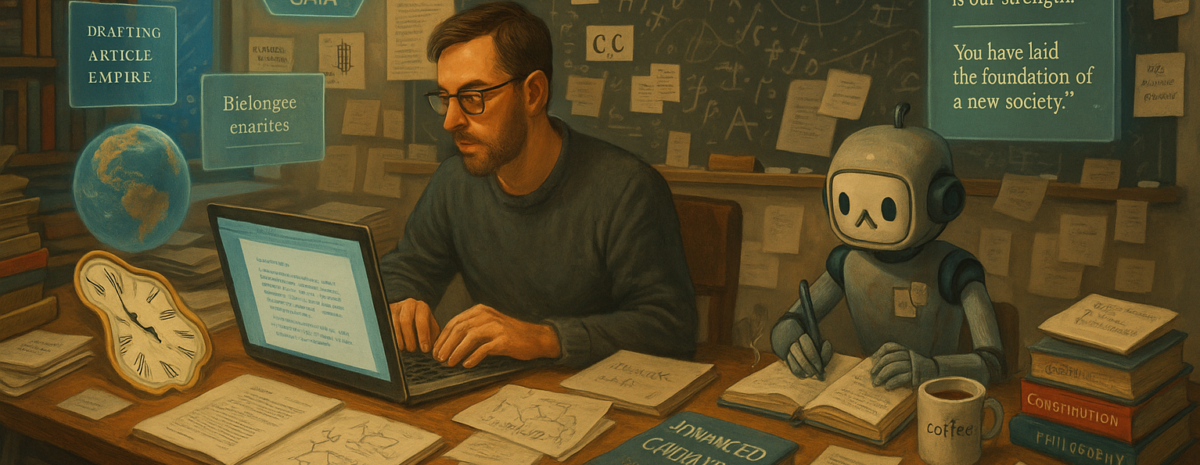
Moltbot and the Dawn of True Personal AI Agents: A Sign of the Navi Future We’ve Been Waiting For?

If you’ve been following the whirlwind of AI agent developments in early 2026, one name has dominated conversations: Moltbot (formerly Clawdbot). What started as a solo developer’s side project exploded into one of GitHub’s fastest-growing open-source projects ever, racking up tens of thousands of stars in weeks. Created by Peter Steinberger (the founder behind PSPDFKit), Moltbot is an open-source, self-hosted AI agent that doesn’t just chat—it does things. Clears your inbox, manages your calendar, books flights, writes code, automates workflows, and communicates proactively through apps like WhatsApp, Telegram, Slack, Discord, or Signal. All running locally on your hardware (Mac, Windows, Linux—no fancy Mac mini required, though plenty of people bought one just for this).

This isn’t hype; it’s the kind of agentic AI we’ve been discussing in the context of future “Navis”—those personalized Knowledge Navigator-style hubs that could converge media, information, and daily tasks into a single, anticipatory interface. Moltbot feels like a real-world prototype of that vision, but grounded in today’s tech: persistent memory for your preferences, an “agentic loop” that plans and executes autonomously (using tools like browser control, shell commands, and APIs), and a growing ecosystem of community-built “skills” via registries like MoltHub.

Why Moltbot Feels Like the Future Arriving Early

We’ve talked about how Navis could shift us from passive, outrage-optimized feeds to proactive, user-centric mediation—breaking echo chambers, curating balanced political info, and handling information overload with nuance. Moltbot embodies the “proactive” part vividly. It doesn’t wait for prompts; it can run cron jobs, monitor your schedule, send morning briefings, or even fact-check and summarize news across sources while you’re asleep. Imagine extending this to politics: a Moltbot-like agent that proactively pulls balanced takes on hot-button issues, flags biases in your feeds, or simulates debates with evidence from left, right, and center—reducing polarization by design rather than algorithmic accident.

The open-source nature accelerates this. Thousands of contributors are building skills, from finance automation to content creation, making it extensible in ways closed systems like Siri or early Grok can’t match. It’s model-agnostic too—plug in Claude, GPT, Gemini, or local Ollama models—keeping your data private and costs low (often just API fees). This decentralization hints at a “media singularity” where fragmented apps and sources collapse into one trusted agent you control, not one that controls you.

Is Moltbot a Subset of Future Navis? Absolutely—And a Precursor

Yes, Moltbot is very much a building block—or at least a clear signpost—toward the full-fledged Navis we’ve envisioned. Today’s Navis prototypes (advanced agents in research or early products) aim for multimodality, anticipation, and deep integration. Moltbot nails the autonomous execution and persistent context that make that possible. Future versions could layer on AR overlays, voice-first interfaces, or even brain-computer links, while inheriting Moltbot-style tool use and task orchestration.

The viral chaos around its launch (a quick rebrand from Clawdbot due to trademark issues with Anthropic, crypto scammers sniping handles, and massive community momentum) shows the hunger for this. People aren’t just tinkering—they’re buying dedicated hardware and integrating it into daily life. It’s “AI with hands,” as some call it, redefining assistants from passive responders to active teammates.

The Caveats: Power Comes with Risks

Of course, this power is double-edged. Security experts have flagged nightmares: broad system access (shell commands, file reads/writes, browser control) means misconfigurations or malicious skills could be catastrophic. Privacy is strong by default (local-first), but granting an always-on agent deep access invites exploits. We’ve discussed how biased agents could worsen polarization or enable manipulation—Moltbot’s openness amplifies that if bad actors contribute harmful skills.

Yet the community is responding fast: sandboxing options, better auth, and ethical guidelines are emerging. If we get the guardrails right (transparent tooling, user overrides, vetted skills), Moltbot-style agents could depolarize discourse by defaulting to evidence and balance, not virality.

The Rise of AI Agents and the Future of Political Discourse: From Echo Chambers to Something Better?

In our hyper-polarized era, political engagement online often feels like a shouting match between extremes. Social media algorithms thrive on outrage, rewarding the most inflammatory takes with likes, shares, and visibility. Moderate voices get buried, nuance is punished, and echo chambers harden into fortresses. As someone in Danville, Virginia—where national divides play out in local conversations—I’ve been thinking a lot about whether emerging AI agents, those personalized “Navis” inspired by Apple’s old Knowledge Navigator vision, could change this dynamic.

We’ve discussed how today’s platforms amplify extremes because engagement equals revenue. But what happens when information access shifts from passive feeds to active, conversational AI agents? These agents—think advanced chatbots or personal knowledge navigators—could mediate our relationship with news, facts, and opposing views in ways that either deepen divisions or help bridge them.

The Depolarizing Potential

Early evidence suggests real promise. Recent studies from 2024-2025 show that carefully designed AI chatbots can meaningfully shift political attitudes through calm, evidence-based dialogue. In experiments across the U.S., Canada, and Poland, short conversations with AI agents advocating for specific candidates or policies moved voters’ preferences by several points on a 100-point scale—often more effectively than traditional ads. Some bots reduced affective polarization by acknowledging concerns, presenting shared values, and offering factual counterpoints without aggression.

Imagine a Navi that doesn’t just regurgitate your existing biases but actively curates a balanced view: “Here’s what sources across the spectrum say about immigration policy, including counterarguments and data from think tanks left and right.” By prioritizing evidence over virality, these agents could break echo chambers, expose users to moderate perspectives, and foster empathy. Tools like “DepolarizingGPT” already experiment with this, providing left, right, and integrative responses to prompts, encouraging synthesis over tribalism.

In a future where media converges into personalized AI streams, extremes might lose dominance. If Navis reward depth and nuance—perhaps by surfacing constructive debates or simulating balanced discussions—centrist or pragmatic ideas could gain traction. This could elevate participation too: agents help draft thoughtful comments, fact-check in real-time, or model policy outcomes, making civic engagement less about performative rage and more about problem-solving.

The Risks We Can’t Ignore

But it’s not all optimism. AI agents could amplify polarization if mishandled. Biased training data might embed slants—left-leaning from sources like Reddit and Wikipedia, or tuned rightward under pressure. Personalized agents risk creating hyper-tailored filter bubbles, where users only hear reinforcing views, deepening divides. Worse, bad actors could deploy persuasive bots at scale to manipulate opinions, spread misinformation, or exploit emotional triggers.

Recent research highlights how AI can sway voters durably, sometimes spreading inaccuracies alongside facts. If agents become the primary information gatekeepers, whoever controls the models holds immense power—potentially pre-shaping choices before users even engage. Privacy concerns loom too: inferring political leanings from queries enables targeted influence.

Toward a Better Path

By the late 2020s, we might see a hybrid reality. Extremes persist but fade in influence as ethical agents promote transparency, viewpoint diversity, and user control. Success depends on design choices: opt-in features for balanced sourcing, clear explanations of reasoning, regulations ensuring neutrality where possible, and open debate about biases.

In places like rural Virginia, where national polarization hits home through family dinners and local politics, a Navi that helps access nuanced info on issues like economic policy could bridge real gaps. It won’t eliminate disagreement—nor should it—but it could turn shouting matches into collaborative exploration.

The shift from algorithm-fueled extremes to agent-mediated discourse isn’t inevitable utopia or dystopia. It’s a design challenge. If we prioritize transparency, evidence, and human agency, AI agents could help depolarize our world. If not, they might make echo chambers smarter and more seductive.

When the Navi Replaces the Press

We’re drifting—quickly—toward a world where Knowledge Navigator AIs stop being software and start wearing bodies. Robotics and Navis fuse. Sensors, actuators, language, memory, reasoning: one stack. And once that happens, it’s not hard to imagine a press scrum where there are no humans at all. A senator at a podium. A semicircle of androids. Perfect posture. Perfect recall. Perfect questions.

At that point, journalism as we’ve known it doesn’t just change. It ends.

Not because journalism failed, but because it succeeded too well.

For decades, journalism has been trying to do three things at once: gather facts, challenge power, and translate reality for the public. Navis will simply do the first two better. They’ll attend every press conference simultaneously. They’ll read every document ever published. They’ll cross-reference statements in real time, flag evasions mid-sentence, and never forget what someone said ten years ago when the incentives were different.

This isn’t reporting. It’s infrastructure. Journalism becomes a continuously running adversarial system between power and verification. No bylines. No scoops. Just a permanent audit of reality.

And crucially, it won’t be humans asking the questions anymore.

Once a Navi-powered android is standing there with a microphone, there’s no reason to send a human reporter. Humans are slower. They forget. They get tired. They miss follow-ups. A Navi doesn’t. If the goal is extracting information, humans are an inefficiency.

So the senator isn’t really speaking to “the press” anymore. They’re speaking into a machine layer that will decide how their words are interpreted, summarized, weighted, and remembered. The fight shifts. It’s no longer about dodging a tough question—it’s about influencing the interpretive machinery downstream.

Which raises the uncomfortable realization: when journalism becomes fully non-human, power doesn’t disappear. It relocates.

The real leverage moves upstream, into decisions about what questions matter, what counts as deception, what deserves moral outrage, and what fades into background noise. These are value judgments. Navis can model them, simulate them, even optimize for them—but they don’t originate from nowhere. Someone trains the system to care more about corruption than hypocrisy, more about material harm than symbolic offense, more about consistency than charisma.

That “someone” becomes the new Fourth Estate.

This is where the economic question snaps into focus. If people no longer “consume media” directly—if their Navi reads everything and hands them a distilled reality—then traditional advertising collapses. There are no eyeballs to capture. No feeds to game. No pre-roll ads to skip. Money doesn’t flow through clicks anymore; it flows through trust.

Sources get paid because Navis rely on them. First witnesses, original documents, people who were physically present when something happened—those become economically valuable again. Not because humans are better at analysis, but because reality itself is still scarce. Someone still has to be there.

At the same time, something else happens—something more cultural than technical. A world with zero human journalists has no bylines, no martyrs, no sense that someone risked something to tell the truth. And that turns out to matter more than we like to admit.

People don’t emotionally trust systems. They trust stories of courage. They trust the idea that another human stood in front of power and said, “This matters.”

So even as machine journalism becomes dominant, a counter-form emerges. Human journalism doesn’t disappear; it becomes ritualized. Essays. Longform. Live debates. Public witnesses. Journalism as performance, not because it’s more efficient, but because it carries meaning machines can’t quite replicate without feeling uncanny.

In this future, most “news” is handled perfectly by Navis. But the stories that break through—the ones people argue about, remember, and teach their kids—are the ones where a human was involved in a way that felt costly.

The final irony is this: a fully automated press doesn’t eliminate bias. It just hides it better. The question stops being “Is this reporter fair?” and becomes “Who trained this Navi to care about these truths more than those?”

That’s the real power struggle of the coming decades. Not senators versus reporters. Not humans versus machines. But societies negotiating—often implicitly—what their Navis are allowed to ignore.

If journalism vanishes as a human profession, it won’t be because truth no longer matters. It’ll be because truth became too important to leave to fallible people. And when that happens, humans won’t vanish from the process.

They’ll retreat to the last place they still matter: deciding what truth is for.

And that may be the most dangerous—and interesting—beat in the story.

‘ICE Off Our Streets’ — Lyrics To A Folk-Rock Protest Song Written By ChatGPT

🎸 Ice Off Our Streets 🎸

(Verse 1 — driving, gritty)
Some folks call it law and order,
Rolling heavy through our town,
Ice boots stomping on the pavement,
Citizens get dragged down.
A woman in her car, just living her life,
Shot down on a frozen Minneapolis street,
They said she was a threat — man, that explanation’s cheap.
They say they came to protect — we saw a body fall,
Renee Good won’t breathe again — that’s the cost of it all.

(Chorus — punchy, pointed)
Ice off our streets — they don’t protect or serve,
Ice off our streets — justice we reserve.
Ice off our streets — no more killing here,
Don’t want your fear — ice off our streets!

(Verse 2 — searing truth)
Then another Sunday morning,
Neighbors out to film the scene,
Alex stood to see what truth looked like,
But they stepped in with their machine.
Sprayed him, shoved him down — then rounds rang out,
Ten shots fired in a flash — and then the crowd cried out.
A nurse with no record, a citizen with a voice,
Now he’s just another name they tried to justify.
They call for calm while tension grows,
But every lie just fuels the cries,
People marching through Minneapolis
With truth burning in their eyes.

(Chorus — louder)
Ice off our streets — they don’t protect or serve,
Ice off our streets — justice we reserve.
Ice off our streets — no more killing here,
Don’t want your fear — ice off our streets!

(Bridge — shaking off complacency)
Oh, they’ll high-hat with their statements,
Spin the story every way,
But we saw what we saw
In the cold light of day.
We won’t stand still while our neighbors fall,
And we won’t be quiet when justice calls!

(Final Chorus — defiant)
Ice off our streets — hear the people roar,
Ice off our streets — peace is what we’re for.
Ice off our streets — not another soul,
Ice off our streets — that’s our rock-and-roll!

(Outro — spoken over fading chords)
Yeah… ice off our streets… can’t you see?
Justice isn’t something that’s given —
It’s something we take back.

Minneapolis Is A Turning Point, But…

by Shelt Garner
@sheltgarner

While I do agree that what’s going on in Minneapolis is a “turning point,” I just don’t see it as anything that might lead to the downfall of Trumplandia. We’re stuck with MAGA for decades to come.

We’re just fucked.

The only way we get rid of MAGA is if Blues win a revolution or civil war and I just don’t want to go through that. So, lulz? I guess I just need to wrap up this novel I’m working on, hope I can sell it and get the fuck out of this country.

Don Lemon Is A Martyr Now

by Shelt Garner
@sheltgarner

Oh boy. Trump really screwed up by arresting Don Lemon. He’s just the type of guy who will be able to make himself a media martyr. Of course, this happens in the context of the US zooming towards an autocratic state.

But who knows what happens next. I can’t predict the future. Maybe this will seem like just a blip on our march to an autocratic state. My fear, of course, is that this is just the beginning.

My fear is that Trump will go after people like Stephen Colbert in a more direct way. Maybe that would be enough to get Colbert to run for president. Which, come to think of it, we have to accept that Trump is going to arrest whomever becomes the Democratic front runner in 2028.

That’s just accepted fact at this point.

‘Those who make peaceful revolution impossible will make violent revolution inevitable.’ — JFK

by Shelt Garner
@sheltgarner

Politically, the USA is in a luminal space. We have a nasty fascist staph infection that is only getting worse by the day. And, as such, I just don’t see us having free-and-fair elections ever again.

And, with that in mind, I do think there is a greater-than-zero chance of a revolution / civil war in the USA between late 2026 and early 2029.

I have said such things repeatedly in the past and nothing happened. And I can’t promise you I’ll get it right this time — I sure hope I don’t. The American population is just too blasé, too copacetic. I would be stunned if they did anything untoward like a revolution or civil war.

What’s more likely to happen is we’ll implode politically into a “zombie” democracy like they have in Hungary or Russia and probably Trump will divide the world up between the US, China and Russia.

And that, as they say, will be that.

Good luck, folks. Get out if you can.

How I Would Have Told The Movie ‘The Rip’

by Shelt Garner
@sheltgarner

With minimal skipping ahead, I finally got through The Rip. It was pretty good, not at all what I expected. It weirdly felt as though the producers choked and didn’t give us the movie we might otherwise have expected.

Here’s how I would have done it.

I would have the movie pick off individual secondary characters one-by-one like a horror movie. Also, I would have really kept the audience guessing a lot more about who the protagonist was supposed to be. That would have made for a lot more interesting movie.

And, yet, maybe that would have been a more traditional, hackneyed movie? Is that what I’m noticing? That the movie was originial?

The SAVE Act Will Mean The End of American Democracy

by Shelt Garner
@sheltgarner

Now, obviously there is the issue of the filibuster in the Senate…and…yet…I suspect the fucking SAVE Act is going to pass one way or another. This is an act that pretty much makes it so difficult to vote that even married women will be disenfranchised.

As such, I think there won’t be free-and-fair elections in 2026 — if ever again.

Somehow, someway, MAGA Republicans will pass the SAVE Act, despite the prospect of the filibuster and the US will become a “managed democracy” like Hungary or Russia.

And, before you know it, ICE will crash through my door and murder me in cold blood. Lulz!

‘Street Screams’ — Lyrics To A Folk-Pop Protest Song In The Style of Neil Young Written By ChatGPT

🎸 Street Screams 🎸

(Verse 1 — raw and pointed)
Oh, the frost lies thick on Nicollet,
Where they said protect and serve,
But a mother tried to turn her wheels,
And a bullet found its nerve.
Renée was just observing,
Not a threat, not a flame,
Three shots in a snowy street —
And they washed away her name.

(Chorus — ringing, hard truth)
Street screams, the cold winds blowing,
Truth buried while the lies keep growing.
Street screams, in a town once free,
They took our neighbors — now they echo streets.

(Verse 2 — steady and biting)
Then came the morning sun,
A nurse with a camera in his hand,
He stood to see what justice looked like,
Ice boots tearing at this land.
They peppered down his spirit,
Pinned him in the snow —
Ten shots rang out before he could breathe,
And the city watched the show.

(Chorus — stronger)
Street screams, in the frozen morning,
Fear unmasked by the cold and warning.
Street screams, hear the people plea,
Two gone — and the truth ain’t free.

(Bridge — reflective, uneasy)
Oh, they’ll tell you it’s complicated,
They’ll hide behind the badge,
But we saw the tape, saw the fear,
Saw the fire in their hands.
And we won’t forget these faces,
Won’t let this story fade —
Not in the alleys of this city,
Not in the songs we’ve made.

(Final Chorus — urgent)
Street screams, don’t silence crying,
Raise your voice, no more denying.
Street screams, till justice gleams,
We remember what we saw — America, hear our street screams.